阅读视图

Call for Hosts – Digital History Tagung 2028

Alle zwei Jahre findet die Tagung „Digital History 20XX“ der AG Digitale Geschichtswissenschaft im Verband der Historiker und Historikerinnen Deutschlands (VHD) statt. An wechselnden Standorten fungiert die Konferenz als zentrale Plattform für den wissenschaftlichen Austausch der deutschen digital arbeitenden Geschichtswissenschaft. Bisherige Stationen und Tagungsmottos waren:

  • 2021: Universität Göttingen (virtuell durchgeführt), „Digital History. Konzepte, Methoden und Kritiken digitaler Geschichtswissenschaft“;
  • 2023: HU Berlin, „Digitale Methoden in der geschichtswissenschaftlichen Praxis. Fachliche Transformationen und ihre epistemologischen Konsequenzen“;
  • 2024: Universität Halle-Wittenberg, „Digital History & Citizen Science. Digitale Methoden und neue Erkenntnisse zwischen digitaler Quellenerschließung, Forschung und Bürgerwissenschaften“.

Von 28 September bis zum 1. Oktober 2026 findet die Digital-History-Tagung unter dem Motto „Doing Cultural Heritage“ an der Paris-Lodron-Universität Salzburg statt.

Die AG Digitale Geschichtswissenschaft strebt grundsätzlich an, die Konferenz in den Jahren stattfinden zu lassen, in denen kein Historikertag stattfindet, idealerweise im September. Daher bittet die AG nun um Bewerbungen um die Ausrichtung der fünften Tagung im Jahr 2028.

Die bisherigen Auflagen konnten bis zu 300 Teilnehmer:innen (davon 120 in Präsenz und 180 online) verzeichnen. Dabei verteilten sich auf bis zu vier Tagen das Hauptprogramm mit wissenschaftlichen Vorträgen, Paneldiskussionen, Posterpräsentationen und Keynotes sowie das Begleitprogramm mit (Pre-Conference) Workshops und Social Events. Die Einführung neuer Formate ist in Abstimmung mit dem Komitee der AG möglich.

Das Programm der Tagung wird eigenverantwortlich durch das Ortskomitee der ausrichtenden Institution sowie dem einzurichtenden Programmkomitee auf Grundlage eines Call for Papers und eines anschließenden Review-Verfahrens erstellt. Die Ausrichter:innen sind verantwortlich für die Bereitstellung der Tagungsräume und der notwendigen Infrastruktur, für die Organisation und Sicherstellung des reibungslosen Ablaufs der Tagung, die Planung von Social Events, die Einrichtung und Pflege einer Tagungswebsite sowie für die Öffentlichkeitsarbeit während der Veranstaltung. Die Veröffentlichung von Konferenzbeiträgen kann unterschiedlich umgesetzt werden, etwa in Form eines Tagungsbandes oder durch Bereitstellung von Abstracts auf einem Textrepositorium. Publikationen sollten in jedem Fall Open Access erfolgen.

Da die AG Digitale Geschichtswissenschaften leider nicht über eigene Mittel verfügt, ist die Tagung über Mittel zu finanzieren, die von der ausrichtenden Institution eingeworben oder bereitgestellt werden. Wird eine Tagungsgebühr erhoben, sollte diese möglichst gering gehalten werden.

Eine Bewerbung um die Ausrichtung der Konferenz für 2028 muss beinhalten:

  • einen Vorschlag für ein Tagungsmotto, der überzeugend begründet, welches für die Forschungscommunity relevante übergreifende Themenfeld im Mittelpunkt stehen soll. Mit Blick auf eine erfolgreiche Umsetzung des Tagungsmottos können die Arbeitsschwerpunkte am Ausrichtungsort, Vorschläge für mögliche Keynotereferent:innen, inhaltliche Überlegungen zum Workshopprogramm und weitere Gestaltungspunkte für die Veranstaltung angeführt werden;
  • einen Terminvorschlag (bevorzugt im September). Dabei ist auf potenziell konkurrierende Konferenzen zu achten. Der Termin ist frühzeitig auf der Website bekanntzugeben;
  • eine Aussage über die Verwendung aller für die Organisation und Abwicklung der Tagung notwendigen Systeme (z.B. Conftool, Easychair, etc.);
  • eine Einschätzung zu den Möglichkeiten einer teilweisen virtuellen Partizipation (z.B. zur Übertragung von Keynotes);
  • Ideen für Social Events;
  • Vorschläge zur Erreichung einer hohen Sichtbarkeit der Tagung;
  • Maßnahmen zur Förderung von Early Career Researchers / Studierende;
  • eine vorläufige Kostenkalkulation

Die Einreichungsfrist für Bewerbungen ist der 01.07.2026 (ca. 2-3 DIN-A4-Seiten, formlos per E-Mail an den Sprecher der AG Digitale Geschichtswissenschaft im VHD, Prof. Dr. Werner Scheltjens: werner.scheltjens@uni-bamberg.de). Die Auswahl erfolgt durch das AG-Komitee und wird auf der kommenden Digital-History-Tagung in Salzburg (28.09-01.10.2026) verkündet.


  •  

ADHC Talks Podcast: A Conversation with Jenny Shaw (3.2)

作者adhcadmin

Description

Our guest today is Dr. Jenny Shaw. Jenny is an associate professor in the department of history here at the University of Alabama. Her research focuses on transatlantic race, labor, and religion. As a member of the University of Alabama’s task force on slavery and civil rights, she served as the project manager for the website, The History of Enslaved People at UA, 1828 through 1865. This website, hosted by the Alabama Digital Humanities Center, curates documentation of enslaved people who labored on the campus of the University of Alabama.

Season: 3

Episode: 2

Date: 02/2024

Presenter: Jenny Shaw

Topic: University of Alabama History

Tags: Historty; Omeka S; Archives

The post ADHC Talks Podcast: A Conversation with Jenny Shaw (3.2) appeared first on Alabama Digital Humanities Center.

  •  

ADHC Talks Podcast: A Conversation with Jennifer Feltman (3.1)

作者adhcadmin

Description

Our guest today is Dr. Jennifer Feltman. Jennifer is associate professor of medieval art and architecture. Her research focuses on the design, interpretation, and preservation of Gothic sculpture. She is directing “Notre Dame in Color,” which is hosted by the Alabama Digital Humanities Center.

“Notre Dame in Color” investigates, documents, and virtually recreates the vibrantly painted sculptures of the Gothic cathedral of Paris. This project has received funding from the Face Foundation, Transatlantic Research Partnership, a program of the French embassy in the United States, the NAH, and the UA Collaborative Arts Initiative.

Season: 3

Episode: 1

Date: 11/2024

Presenter: Jennifer Feltman

Topic: Scultural Art History

Tags: Notre Dame Cathedral; Art History; Sculture; 3D modeling; collaborative research

The post ADHC Talks Podcast: A Conversation with Jennifer Feltman (3.1) appeared first on Alabama Digital Humanities Center.

  •  

WiMi-Stelle an der Digital History Berlin

An der Professur für Digital History Berlin ist eine WiMi-Stelle (75%, E13, 4 Jahre) zur Mitwirkung in Forschung, Lehre und Wissenschaftsmanagement ausgeschrieben.

Aufgabengebiet

  • wiss. Dienstleistungen in Forschung und Lehre im Bereich Digital History
  • Mitwirkung im Bereich Wissenschaftsmanagement der Professur (z. B. Drittmittelverwaltung, Veranstaltungsorganisation, Kommunikation)
  • Mitwirkung an der Weiterentwicklung von Forschungsschwerpunkten und Lehrkonzepten der Professur
  • Mitarbeit im Organisationsteam des Interdisziplinären Zentrums für Digitalität und Digitale Methoden (IZ Digital), insb. bei der Koordination, Kommunikation und strukturellen Weiterentwicklung gemeinsamer Aktivitäten
  • Aufgaben zur eigenen wiss. Qualifizierung (Promotion)

Anforderungen

  • abgeschlossenes wiss. Hochschulstudium (Master oder äquivalent) in Geschichtswissenschaft, Digital Humanities oder einem verwandten Fach
  • möglichst Promotionsprojekt im Forschungsfeld der Professur
  • vertiefte Kenntnisse in Methoden und Technologien der Digital History
  • sehr gute Englischkenntnisse in Wort und Schrift (mind. B2)
  • erwünscht sind:
    • Grundkenntnisse in der Wissensvermittlung
    • Kenntnisse und Erfahrungen im Wissenschafts- und Projektmanagement (z.B. Drittmittelverwaltung, Veranstaltungsorganisation, Öffentlichkeitsarbeit)
    • Programmierkenntnisse in Python
    • Grundkenntnisse in Research Software Engineering, insb. im Bereich kollaborativer Softwareentwicklung, Dokumentation, Versionierung (z. B. Git) und reproduzierbarer Workflows
    • Forschungserfahrung oder Interesse in einem oder mehreren der Schwerpunkte der Professur: Theorie und Epistemologie digitaler Methoden, Methodenkritik, Anwendung und Reflexion computationeller Methoden in den historischen Wissenschaften, insb. im Bereich Künstlicher Intelligenz
    • Erfahrung in interdisziplinären Arbeitskontexten zwischen Geisteswissenschaft und Informatik

Bewerbung bis 13.08.25

Vollständige Ausschreibung:

https://haushalt-und-personal.hu-berlin.de/de/personal/stellenausschreibungen/an24325

  •  

CfP: Empfehlungssystem R:hovono-Tipp

Empfehlen Sie kontrollierte Vokabulare für vielfältige Nutzungsperspektiven in den historisch arbeitenden Disziplinen in einem Guide!

Kontrollierte Vokabulare erfüllen heute zentrale Aufgaben bei der Verwendung von Large Language Models, der Anreicherung und Analyse von Massendaten und für die Visualisierung von Quellen. Dennoch sind Anwendungsfelder und Ressourcen für dieses wichtige Arbeitsgebiet der historischen Forschung häufig unbekannt. Wir möchten daher ein Empfehlungssystem für Vokabulare, aber auch Standards im Umgang mit bestimmten Quellen- oder Dateitypen aufbauen.

Gesucht werden daher kompetente Autoren oder Autorinnen für unser Wissens- und Empfehlungssystem für kontrollierte Vokabulare und Normdaten. Entweder einzeln oder als Teams können Sie einen Guide für ein bestimmtes Thema, eine Entität bzw. einzelne Merkmale von Entitäten verfassen, um so Empfehlungen für die Verwendung in der Wissenschaftslandschaft der historisch arbeitenden Disziplinen abzugeben.

Um Ihnen die Erarbeitung solcher Guides zu erleichtern, haben wir in einem umfassenden Workingpaper zentrale Begrifflichkeiten von Vokabularen definiert und wesentliche Relevanz- und Qualitätskritierien unserer Wissenschaftsdisziplinen diskutiert. Gerne können Sie auch diesen Teil des Workingpapers mit uns diskutieren und es kommentieren.

Hier geht es jedoch um die Erarbeitung von einzelnen Empfehlungen, die im Workingpaper ab Seite 28 zunächst allgemein beschrieben und anschließend mit zwei Musterbeispielen illustriert werden. Welche Entität möchten Sie beschreiben und so den Zugang für die Community erleichtern?

Schicken Sie uns Ihren formlosen Vorschlag bis zum 1. Oktober 2025 an die E-Mail: hinfo(at)geschichte.uni-halle.de. Nach einer Aufnahmebestätigung können Sie Ihren Guide bis zum 31. März 2025 einreichen. Sofern er die formalen Kriterien erfüllt, wird der Text einem Peer-Review-Verfahren unterzogen und bei qualitativer Eignung in unser Empfehlungssystem integriert.

Das Empfehlungssystem wird unser Register R:hovono für Vokabulare und Normdaten der historisch arbeitenden Disziplinen erweitern.

Weiterführende Links:

Workingpaper Vokabulare: Kontrollierte Vokabulare und Normdaten der historisch arbeitenden Disziplinen

Kommentierbare Fassung des Workingpapers: Working_Paper_Vokabulare_in_der_Geschichtswissenschaft – Google Docs

Liste der vergebenen Entitäten:
Beiträger Empfehlungssystem für Entitäten – Google Sheets

Vokabularregister R:hovono: 
R:hovono

Task Area Data Connectivity, NFDI4Memory, Historisches-Datenzentrum Sachsen-Anhalt
Katrin Moeller
Historisches Datenzentrum Sachsen-Anhalt
Martin-Luther-Universität Halle-Wittenberg
Emil-Abderhalden-Str. 26/27
06108 Halle (Saale)
Tel. 0345 55 24 286
hinfo@geschichte.uni-halle.de
https://4memory.de/aktuelles/news/detail/cfp-empfehlungssystem-rhovono-tipp/

  •  

Workshops im Praxislabor 2025: Programm und Anmeldung online!

Das Komitee der AG Digitale Geschichtswissenschaft im Verband der Historiker und Historikerinnen Deutschlands freut sich, Ihnen das offizielle Programm des diesjährigen Praxislabors vorzustellen! Auf dem Historikertag in Bonn warten von Dienstag, den 16.9., bis Donnerstag, den 18.9, vielfältige praxisorientierte Workshops auf Sie.

In bewährter Tradition werden damit digitale Ansätze und Methoden in ihrer Breite erfahr- und erlernbar. Angesprochen sind mit dem Programm sowohl interessierte Einsteiger:innen als auch Spezialist:innen. Das Praxislabor schafft auf diese Weise eine Plattform, um digitale Methoden und Tools für die Geschichtswissenschaft praktisch zu erkunden, Projekte hinsichtlich ihrer digitalen Methoden und Ergebnisse kennenzulernen, Fragen zu stellen und pointiert Themen zu diskutieren. Dabei handelt es sich um ein communitygestütztes Angebot – denn aus den vielfältigen und durchweg spannenden Einreichungen, die das AG-Komitee im Rahmen eines Call for Workshops erreicht haben, haben wir diese Auswahl treffen können.

Die Anmeldemodalitäten und alles weitere Wissenswerte erfahren Sie auf den Informationsseiten, die wir für jeden Workshop auf unserem AG-Blog bereitgestellt haben. Bitte beachten Sie, dass die Anmeldung zwar auf diese Weise erfolgt, das Praxislabor 2025 aber Teil des Historikertags ist, für den alle Teilnehmer:innen ebenfalls angemeldet sein müssen. Hier finden Sie sämtliche Informationen: https://digigw.hypotheses.org/6170

Mit herzlichen Grüßen, im Namen des AG-Komitees,
   Christian Wachter

  •  

Reminder: Vorschläge für das Praxislabor 2025 noch bis zum 18. Mai einreichen

Zum Historikertag 2025 organisiert  die AG Digitale Geschichtswissenschaft im VHD in bewährter Tradition ein Praxislabor. Es besteht aus Hands-on-Workshops, die von Mitgliedern der Digital-History-Community durchgeführt werden und der digitalen Weiter- und Fortbildung in den historisch arbeitenden Disziplinen dienen. Dabei sollen neue Trends bei Software, Methoden und Ansätzen vermitteln werden. Angesprochen werden können allgemein Interessierte und/oder Spezialisten rund um Themen der digitalen Geschichtswissenschaft, Quellenverarbeitung und -präsentation. Das Praxislabor möchte eine Plattform sein, um Tools praktisch zu erkunden bzw. Methoden hinsichtlich ihrer Anwendung und Analysefähigkeit kennenzulernen.

Interessent*innen, die einen solchen Workshop anbieten möchten, können sich bis zum 18.05.2025 bewerben.

Es steht ein Raum für max. 40 Teilnehmende mit Beamer und jeweils einem Zeitslot im Umfang von 100 Minuten zur Verfügung. Die Workshops werden von Dienstag (16.9.25) bis einschließlich Donnerstag (18.9.25) stattfinden.

Reichen Sie für Ihre Bewerbung gerne über dieses Formular ein. Nach der Auswahl der Praxislaborworkshops wird das finale Programm hier veröffentlicht.

  •  

CfP: Building Workflows in the Digital Humanities (Digital Academy Bielefeld & FGHO Summer School)

english version below

„Building Workflows in the Digital Humanities“ – Eine gemeinsame Veranstaltung der Digital Academy Bielefeld und der FGHO Summer School

Die digitalen Geisteswissenschaften befinden sich in einem stetigen Wandel: Neue Methoden und technische Werkzeuge verändern nicht nur die Forschungspraxis, sondern auch den Zugang zu geisteswissenschaftlicher Erkenntnis. Wie sehen dabei die konkreten Workflows aus, die hinter digitalen Forschungsprojekten stehen und welche Rolle spielt Datenmanipulation – im Sinne von Auswertung, Formatierung oder Präsentation?

Die diesjährige Digital Academy, die erstmals in Kooperation mit der FGHO Summer School stattfindet und im Rahmen des internationalen Forschungsprojekts „The Flow – From Deep Learning to Digital Analysis and their Role in the Humanities. Creating, Evaluating and Critiquing Workflows for Historical Corpora“ durchgeführt wird, stellt gemeinsam mit der Universität Bern und der Forschungsstelle für die Geschichte der Hanse und des Ostseeraums (FGHO) die oft übersehenen, aber zentralen Prozesse digitaler geisteswissenschaftlicher Forschung in den Mittelpunkt.

Unter dem Titel „Building Workflows in the Digital Humanities“ fokussiert die Veranstaltung auf die infrastrukturellen, methodischen und datenbasierten Grundlagen wissenschaftlicher Arbeit. Im Zentrum stehen dabei unter anderem folgende Fragen:

– Welche Ansätze für Workflows gibt es und wie sind diese gestaltet?

– Welche Schritte bzw. Fragen lassen sich im Forschungsprozess zu welchem Zeitpunkt sinnvoll digital beantworten?

– Welche Strategien existieren, um die Reproduzierbarkeit und Langzeitnutzung digitaler Forschung sicherzustellen?

– Wie entstehen digitale Ressourcen, welche Datenbasis ist notwendig – und wie wird ihre Qualität gewährleistet?

Ziel der gemeinsamen Veranstaltung ist es, einen Raum für die kritische Diskussion digitaler Arbeitsprozesse zu schaffen und gleichzeitig konkrete Projekte weiterzuentwickeln. In zwei Workshops und einem offenen Diskussions- und Beratungstag haben die Teilnehmenden die Möglichkeit, eigene Projekte vorzustellen und ihre Ideen weiterzuentwickeln. Darüber hinaus wird ein Entscheidungsbaum erstellt, der Forschenden helfen soll, fundierte Entscheidungen über den Einsatz digitaler Methoden im eigenen Projektkontext zu treffen. Zusätzlich findet am 12. September 2025 ein Open Space Day statt, an dem Expert*innen aus dem Bereich der Digital Humanities Einblicke in ihre Methodiken zur Bewältigung dieser Herausforderungen geben und anschließend Fragen aus dem Publikum beantworten.Die Digital Academy richtet sich an Nachwuchswissenschaftler*innen und Interessierte (M.A., PhD, Post Doc), die ein eigenes Forschungsvorhaben mitbringen, das sich digitalen Workflows, Datenprozessen oder Aspekten von Nachhaltigkeit im digitalen Arbeiten widmet.

Termine (ausschließlich digital):

Di. 09.09.2025-12.09.2025

Tagungssprachen: Deutsch, Englisch

Teilnahme:

Bitte senden Sie uns bis zum 25.07.2025 eine kurze Projektskizze (max. 500 Wörter), ein Motivationsschreiben sowie einen tabellarischen Kurz-CV an: digital-academy@uni-bielefeld.de

Für Rückfragen stehen wir Ihnen unter der gleichen Adresse gerne zur Verfügung.

——–

‚Building Workflows in the Digital Humanities‘ – A joint event organised by the Digital Academy Bielefeld and the FGHO Summer School

 The digital humanities are subject to constant change, with new methods and technical tools transforming not only research practices but also access to knowledge in the humanities. What are the specific workflows behind digital research projects, and what role does data manipulation play – in terms of evaluation, formatting or presentation? Moreover, concerns regarding the sustainability and traceability of algorithmic systems should not be disregarded.

This year’s Digital Academy, which is being held for the first time in cooperation with the FGHO Summer School and as part of the international research project “The Flow – From Deep Learning to Digital Analysis and their Role in the Humanities. Creating, Evaluating and Critiquing Workflows for Historical Corpora,” in collaboration with the University of Bern and the Research Centre for the History of the Hanseatic League and the Baltic Sea Region (FGHO), places emphasis on the frequently disregarded yet pivotal processes inherent to digital humanities research.

The event, which is shared under the title ‚Building Workflows in the Digital Humanities‘, focuses on the infrastructural, methodological and data-based foundations of scientific work. Among other things, the following questions will be addressed:

  – What approaches to workflows exist and how are they designed?

  – Which steps or questions can be answered digitally in a meaningful way in the research process?

  – What strategies exist to ensure the reproducibility and long-term use of digital research?

  – How are digital resources created, what data basis is necessary – and how is their quality ensured?

The aim of this joint event is to create a common space for critical discussion of digital work processes and, at the same time, to further develop concrete projects. In two workshops and an open discussion and consultation day, participants will have the opportunity to present their own projects and develop their ideas further. In addition, a decision tree will be created to help researchers make informed decisions about the use of digital methods in their own project context. Furthermore, an Open Space Day on 12 September 2025, during which experts in the field of digital humanities will offer insights into their methodologies for addressing these issues and then answer questions from the audience.

The Digital Academy is intended for young researchers and interested parties (M.A., PhD, post-doc) who are engaged in a research project related to digital workflows, data processes, or aspects of sustainability in digital work.

Dates (digital only):

Tue 09.09.2025-12.09.2025

Conference languages: German, English

Participation

Please send us a short project outline (max. 500 words), a letter of motivation and a short CV in tabular form by July 25th 2025 to: digital-academy@uni-bielefeld.de

If you have any questions, please do not hesitate to contact us at the same address.

  •  

Our Journey to Praxathon

My cohort just finished our second week of Praxathon and I wanted to reflect on the development of our project and how we ended up focusing on conducting text analysis of the UVa students’ satirical publication, The Yellow Journal.

For me, this project started back in 2018 when I was accepted into The Yellow Journal as a second year undergraduate student at UVa. The Yellow Journal is an anonymously-published satirical newspaper that has operated on and off since 1913. Undergraduate students know The Yellow Journal for its members’ semesterly tradition of disrupting libraries during the first day of finals by raucously distributing the publication while masked and wearing all yellow… and often blasting Yellow by Coldplay or Black and Yellow by Wiz Khalifa on giant speakers. I started my tenure as a satirical writer with the headline and article below:

Hardest Part of Getting Accepted into the Comm School is Needing to Replace All of Your Friends, Student Says

As the season of applying to the McIntire School of Commerce approaches for second years, older students reflect on their prior application experiences. Kody, a fourth year in the Comm school, explains that the application itself was easy; he had no doubt in his mind that he would get in. The hardest part was letting go of all of his non-Comm friends afterwards. “I just can’t let failure into my life,” Kody explains. “Once you’re in the Comm School, you have to start setting standards for your friends, and most of my friends weren’t meeting mine.” Kody was on the fence about keeping his Batten friends, but eventually decided against it. “Hanging out with them is bad for optics, in my opinion,” Kody stated. “While Batten kids are also good at networking, I can’t let their morals get in my way. They’re all about government intervention… hey dummies, what about the invisible hand?” Drew, an Economics major, elaborates on his ended friendship with Kody: “The minute my roommate Kody got accepted, he turned to me and asked me to move out. I was heartbroken, we had been living together since first year. In fact, he’s also my cousin. But I understand… it had to be done.” Drew wasn’t sure if it was worth it to even continue college after his rejection from Comm. To him, having no diploma at all is better than getting an non-Comm Economics degree.

Outside of writing headlines and articles, Yellow Journal members were also in the midst of digitizing and archiving the entire history of the paper on our Google Drive. The publication started in 1913, but it was only published regularly starting in 1920 and then was subsequently banned in 1934 by the UVa administration due to its anonymity. The publication then resumed in 1987, having its own office next to The Cavalier Daily with a modest amount of revenue from selling ad placements. The paper was discontinued again in 1999, but a group of students revived it in 2010 which resulted in its current, ongoing iteration.

In late 2019, I realized that we were approaching 100 years since The Yellow Journal was published regularly and I applied to a few grants that could possibly fund a special anniversary issue. I wanted to use the extensive archive work that members had so painstakingly organized for future members to look back on. The idea was to publish some highlights from our archive, especially the jokes that still remained relevant today. With quarantine in March 2020, however, interest from my collaborators waned and I eventually abandoned that project. I knew that I wanted to return to working on a project about The Yellow Journal someday because it provided such unique insight on the student experience of the University. Also, even 100 years later, many of the early issues are still so funny.

My position as a former member of The Yellow Journal was definitely the reason that the subject was brought up as a possible topic for our Praxathon, but I don’t think this project would have necessarily worked with other cohorts. The final section on our charter is titled “Make Learning a Playful Process.” That was a big goal of our cohort: to approach the work in a fun, lighthearted way. I wasn’t completely sure about the viability of that pledge when we first wrote the charter. I didn’t know the rest of my cohort well at the time and I was still very operating in “traditional graduate classroom” mode. As we are approaching the end of the year, however, I think I can now safely say that we made every single part of Praxis fun and playful. I spend a good portion of my time in Praxis attempting to stifle my laughter at Oriane’s 10,000 things to commit to Github, Shane’s river drawing, or Brandon attempts to find new phrases because we accidentally made him insecure about saying “for what it’s worth.”

When I first pitched The Yellow Journal as an idea for Praxathon, I was mainly thinking about how it made sense as a project in a practical way: we already had access to high quality digitized records of all of the issues. The scope seemed manageable and it did not require too much preparatory work. As we’ve progressed in the project, I’ve slowly realized why it resonated with us as a group beyond logistics. Since we’re all graduate students at UVa, we are all familiar with and invested in the University’s history (especially told from a student perspective). We want to have fun with the material, which has led to many instances of us sitting in the fellows lounge and reading funny headlines out loud to each other.

Most of all, I think that the way we’ve developed the project has played into our individual and collective strengths. I never even thought about looking at student records from the 1920s and 30s but Gramond, being an incredible historian and lover of data, introduced us to that possibility. Oriane has done some amazing research on the history of the University at the time period that we’re looking at and, more generally, on analyzing satire. Because of her research of poetry, Amna was already interested in many of the text analysis methods that we’re using so she has expertly led us in thinking about how to apply those to The Yellow Journal. Kristin, as always, has shown herself to be an amazing problem solver, ready to tackle any coding task with such resolve and creativity. I just love assigning tasks to people so I have commandeered our Trello board.

Our poster will hopefully be done in the next few weeks, but it is clear to me now that the process, or journey, through the Praxathon is much more important than the end product. As I read through our charter again, I realize how true to our goals we’ve been and how interdisciplinary (and fun!) our final project is.

  •  

Designing a Data Physicalization: A love letter to dot grid paper

Claudia Berger is our Virtual Artist-in-Residence 2024-2025; register for their April 15th virtual talk and a local viewing of their data quilt in the Scholars’ Lab Common Room!

This year I am the Scholars’ Lab’s Virtual Artist-in-Residence, and I’m working on a data quilt about the Appalachian Trail. I spent most of last semester doing the background research for the quilt and this semester I get to actually start working on the quilt itself! Was this the best division of the project, maybe not. But it is what I could do, and I am doing everything I can to get my quilt to the Lab by the event in April. I do work best with a deadline, so let’s see how it goes. I will be documenting the major steps in this project here on the blog.

Data or Design first?

This is often my biggest question, where do I even start? I can’t start the design until I know what data I have. But I also don’t know how much data I need until I do the design. It is really easy to get trapped in this stage, which may be why I didn’t start actively working on this part of the project until January. It can be daunting.

N.B. For some making projects this may not apply because the project might be about a particular dataset or a particular design. I started with a question though, and needed to figure out both.

However, like many things in life, it is a false binary. You don’t have to fully get one settled before tackling the other, go figure. I came up with a design concept, a quilt made up of nine equally sized blocks in a 3x3 grid. Then I just needed to find enough data to go into nine visualizations. I made a list of the major themes I was drawn to in my research and went about finding some data that could fall into these categories.

A hand-written list about a box divided into nine squares, with the following text: AT Block Ideas: demographics, % land by state, Emma Gatewood, # miles, press coverage, harassment, Shenandoh, displacements, visit data, Tribal/Indig data, # of tribes, rights movements, plants on trail, black thru-hikers
What my initial planning looks like.

But what about the narrative?

So I got some data. It wasn’t necessarily nine datasets for each of the quilt blocks but it was enough to get started. I figured I could get started on the design and then see how much more I needed, especially since some of my themes were hard to quantify in data. But as I started thinking about the layout of the quilt itself I realized I didn’t know how I wanted people to “read” the quilt.

Would it be left to right and top down like how we read text (in English)?

A box divided into 9 squares numbered from left to write and top to bottom:  
1, 2, 3  
4, 5, 6  
7, 8, 9

Or in a more boustrophedon style, like how a river flows in a continuous line?

A box divided into 9 squares numbered from left to write and top to bottom: 1, 2, 3; 6, 5, 4; 7, 8, 9

Or should I make it so it can be read in any order and so the narrative makes sense with all of its surrounding blocks? But that would make it hard to have a companion zine that was similarly free-flowing.

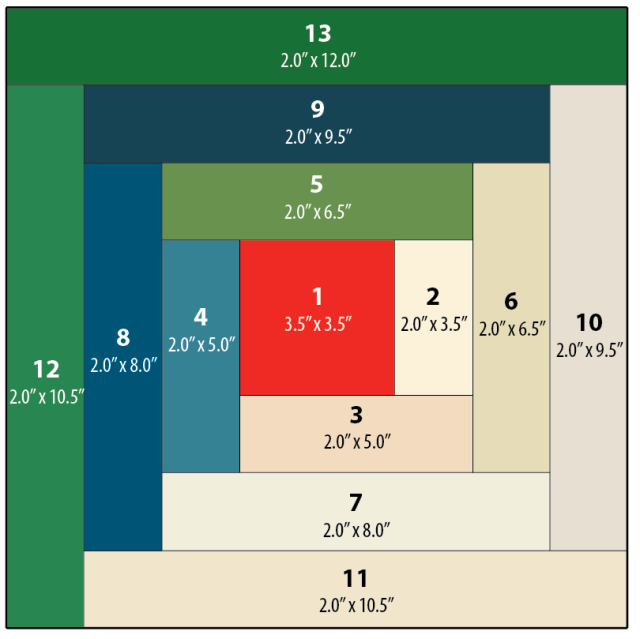
So instead, I started to think more about quilts and ways narrative could lend itself to some traditional layouts. I played with the idea of making a large log cabin quilt. Log cabin patterns create a sort of spiral, they are built starting with the center with pieces added to the outside. This is a pattern I’ve used in knitting and sewing before, but not in data physicalizations.

A log cabin quilt plan, where each additional piece builds off of the previous one.
A template for making a log cabin quilt block by Nido Quilters

What I liked most about this idea is it has a set starting point in the center, and as the blocks continue around the spiral they get larger. Narratively this let me start with a simpler “seed” of the topic and keep expanding to more nuanced visualizations that needed more space to be fully realized. The narrative gets to build in a more natural way.

A plan for log cabin quilt. The center is labeled 1, the next piece (2) is below it, 3 is to the right of it, 4 is on the top, and 5 is on the side. Each piece is double the size of the previous one (except 2, which is the same size as 1).

So while I had spent time fretting about starting with either data/the design of the visualizations, what I really needed to think through first was what is the story I am trying to tell? And how can I make the affordances of quilt design work with my narrative goals?

I make data physicalizations because it prioritizes narrative and interpretation more than the “truth” of the data, and I had lost that as I got bogged down in the details. For me, narrative is first. And I use the data and the design to support the narrative.

Time to sketch it out

This is my absolute favorite part of the whole process. I get to play with dot grid paper and all my markers, what’s not to love? Granted, I am a stationery addict at heart. So I really do look for any excuse to use all of the fun materials I have. But this is the step where I feel like I get to “play” the most. While I love sewing, once I get there I already have the design pretty settled. I am mostly following my own instructions. This is where I get to make decisions and be creative with how I approach the visualizations.

(I really find dot grid paper to be the best material to use at this stage. It gives you a structure to work with that ensures things are even, but it isn’t as dominating on a page as a full grid paper. Of course, this is just my opinion, and I love nothing more than doodling geometric patterns on dot grid paper. But using it really helps me translate dimensions to fabric and I can do my “measuring” here. For this project I am envisioning a 3 square foot quilt. The inner block. Block 1, is 12 x 12 inches, so each grid represents 3 inches.)

There is no one set way with how to approach this, this is just a documentation of how I like to do it. If this doesn’t resonate with how you like to think about your projects that is fine! Do it your own way. But I design the way I write, which is to say extremely linearly. I am not someone who can write by jumping around a document. I like to know the flow so I start in the beginning and work my way to the end.

Ultimately, for quilt design, my process looks like this:

  1. Pick the block I am working on
  2. Pick which of the data I have gathered is a good fit for the topic
  3. Think about what is the most interesting part of the data, if I could only say one thing what would that be?
  4. Are there any quilting techniques that would lend itself to the nature of the data or the topic? For example: applique, English Paper Piecing, half square triangles, or traditional quilt block designs, etc.
  5. Once I have the primary point designed, are there other parts of the data that work well narratively? And is there a design way to layer it?

For example, this block on the demographics of people who complete thru-hikes of the trail using annual surveys since 2016. (Since they didn’t do the survey 2020 - and it was the center of the grid - I made that one an average of all of the reported years using a different color to differentiate it.)

I used the idea of the nine-patch block as my starting point, although I adapted it to be a base grid of 16 (4x4) patches to better fit with the dimensions of the visualization. I used the nine-patch idea to show the percentage of the gender (white being men and green being all other answers - such as women, nonbinary, etc). If it was a 50-50 split, 8 of the patches in each grid should be white, but that is never the case. I liked using the grid because it is easy to count the patches in each one, and by trying to make symmetrical or repetitive designs it is more obvious where it isn’t balanced.

A box divided into 9 squares, with each square having its one green and white checkered pattern using the dot grid of the paper as a guide. The center square is brown and white. On top of each square is a series of horizontal or vertical lines ranging from four to nine lines.

But I also wanted to include the data on the reported race of thru-hikers. The challenge here is that it is a completely different scale. While the gender split on average is 60-40, the average percentage of non-white hikers is 6.26%. In order to not confuse the two, I decided to use a different technique to display the data, relying on stitching instead of fabric. I felt this let me use two different scales at the same time, that are related but different. I could still play with the grid to make it easy to count, and used one full line of stitching to represent 1%. Then I could easily round the data to the nearest .25% using the grid as a guide. So the more lines in each section, the more non-white thru-hikers there were.

My last step, once I have completed a draft of the design, is to ask myself, “is this too chart-y?” It is really hard sometimes to avoid the temptation to essentially make a bar chart in fabric, so I like to challenge myself to see if there is a way I can move away from more traditional chart styles. Now, one of my blocks is essentially a bar chart, but since it was the only one and it really successfully highlighted the point I was making I decided to keep it.

A collection of designs using the log cabin layout made with a collection of muted highlighters. There are some pencil annotations next to the sketchesThese are not the final colors that I will be using. They will probably all be changed once I dye the fabric and know what I am working with.

Next steps

Now, the design isn’t final. Choosing colors is a big part of the look of the quilt, so my next step is dyeing my fabric! I am hoping to have a blogpost about the process of dyeing raw silk with plant-based dyes by the end of February. (I need deadlines, this will force me to get that done…) Once I have all of those colors I can return to the design and decide which colors will go where. More on that later. In the meantime let me know if you have any questions about this process! Happy to do a follow-up post as needed.

  •  

Deadline-Verlängerung auf den 15.02.2025: Posterausstellung und Peter-Haber-Preis für digitale Geschichtswissenschaft 2025

Die AG Digitale Geschichtswissenschaft, der Verband der Historiker und Historikerinnen Deutschlands (VHD) und das Deutsche Historische Institut Paris (DHIP) vergeben seit 2021 den Peter-Haber-Preis für digitale Geschichtswissenschaft. Auch auf dem Historikertag in Bonn 2025 wird diese Tradition fortgesetzt. Prämiert werden drei herausragende Projekte, die einen innovativen Beitrag zum Gegenstandsbereich der digitalen Geschichtswissenschaften leisten und sich über ein visuell ansprechendes Poster und einen Pitch originell präsentieren. Parallel dazu wird es eine allgemeine Posterausstellung zu digitalen Projekten in Bonn geben, für die man sich ebenfalls bewerben kann (siehe unten).

Der 1. Preis ist mit 500,- Euro, der 2. Platz mit 300,- Euro und der 3. Platz mit 200,- Euro dotiert.

Mit dem Preis wird an den Schweizer Historiker und Privat-Dozenten für Allgemeine Geschichte der Neuzeit, Peter Haber (1964-2013), gedacht. Sein wissenschaftliches Werk und sein Engagement haben wichtige Impulse für die digitale Geschichtswissenschaft geliefert.

Die neue Einreichungsfrist (ursprünglich: 15. Januar 20225) endet am 15. Februar 2025

Den ausführlichen Ausschreibungstext finden Sie hier.

Kontakt und Informationen: Christian Wachter (Sprecher der AG Digitale Geschichtswissenschaft im VHD), christian.wachter [at] uni-bielefeld.de

  •  

Noch bis zum 15.01. bewerben: Posterausstellung und Peter-Haber-Preis für digitale Geschichtswissenschaft 2025

Die AG Digitale Geschichtswissenschaft, der Verband der Historiker und Historikerinnen Deutschlands (VHD) und das Deutsche Historische Institut Paris (DHIP) vergeben seit 2021 den Peter-Haber-Preis für digitale Geschichtswissenschaft. Auch auf dem Historikertag in Bonn 2025 wird diese Tradition fortgesetzt. Prämiert werden drei herausragende Projekte, die einen innovativen Beitrag zum Gegenstandsbereich der digitalen Geschichtswissenschaften leisten und sich über ein visuell ansprechendes Poster und einen Pitch originell präsentieren. Parallel dazu wird es eine allgemeine Posterausstellung zu digitalen Projekten in Bonn geben, für die man sich ebenfalls bewerben kann (siehe unten).

Der 1. Preis ist mit 500,- Euro, der 2. Platz mit 300,- Euro und der 3. Platz mit 200,- Euro dotiert.

Mit dem Preis wird an den Schweizer Historiker und Privat-Dozenten für Allgemeine Geschichte der Neuzeit, Peter Haber (1964-2013), gedacht. Sein wissenschaftliches Werk und sein Engagement haben wichtige Impulse für die digitale Geschichtswissenschaft geliefert.

Einreichungsfrist: 15. Januar 2025
Die kompletten Ausschreibungstexte sind auf dem Blog der AG Digitale Geschichtswissenschaft zu finden
Kontakt und Informationen: Christian Wachter (Sprecher der AG Digitale Geschichtswissenschaft im VHD), christian.wachter [at] uni-bielefeld.de

  •  

Finding Women in the Sloane Lab Knowledge Base

A Guide to Finding Women in the Sloane Lab Knowledge Base, available to download here

The Sloane Lab is pleased to announce the release of three new resources — an online exhibition, dataset, and research guide — developed by Dr Rosalind White, Sloane Lab Community Research Fellow at University College London, as part of her project In the Margins of Early Modern Science: Pioneering Women in Sloane’s ‘Paper Museum’.

These resources leverage the rich repository of data provided by the Sloane Lab Knowledge Base to explore the contributions of women within Sloane’s “Paper Museum” — a vast compendium comprising over 1,000 illustrated books, 100 picture albums, an estimated 60,000 drawings, prints, and paintings, as well as manuscript catalogues spanning thousands of handwritten pages.

Together, they showcase how the SLKB can serve as a dynamic resource for critical inquiry.

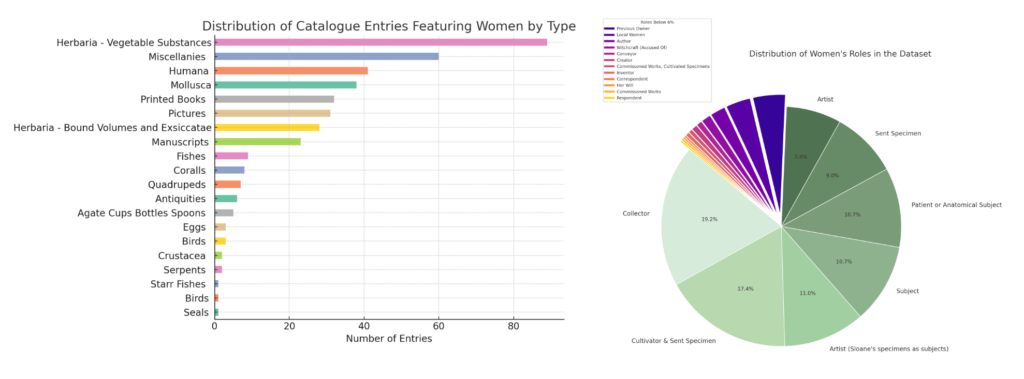
Graphs on catalogue entries mentioning women and distribution of women's roles.

The dataset establishes a foundation for enhancing the representation of women within Hans Sloane’s collections through the Sloane Lab Knowledge Base. It offers a snapshot of the various ways women are documented and represented in the collections detailing their roles (e.g., artist, author), the type of entries associated with them (e.g., Pictures Catalogue Entry, Printed Books Catalogue Entry), as well as additional information about their work or the context of their contributions. Where possible, a link has been provided to each entry in the SLKB, allowing for deeper exploration. The dataset can be downloaded as Excel file (.xlsx) or in CSV format.

A Guide to Finding Women in the Sloane Lab Knowledge Base offers a practical starting point for researchers seeking to uncover the hidden narratives of women in Sloane’s collections. It outlines the methodological approach used to identify women’s contributions, highlighting how often these roles are obscured by gaps in the original cataloguing efforts, where names and direct references to women’s involvement are frequently absent. The guide is part of a broader effort to enhance how narratives of marginalised individuals are accessed, understood, and valued within the SLKB. The guide can be downloaded as a PDF file in both double-page and single-page view.

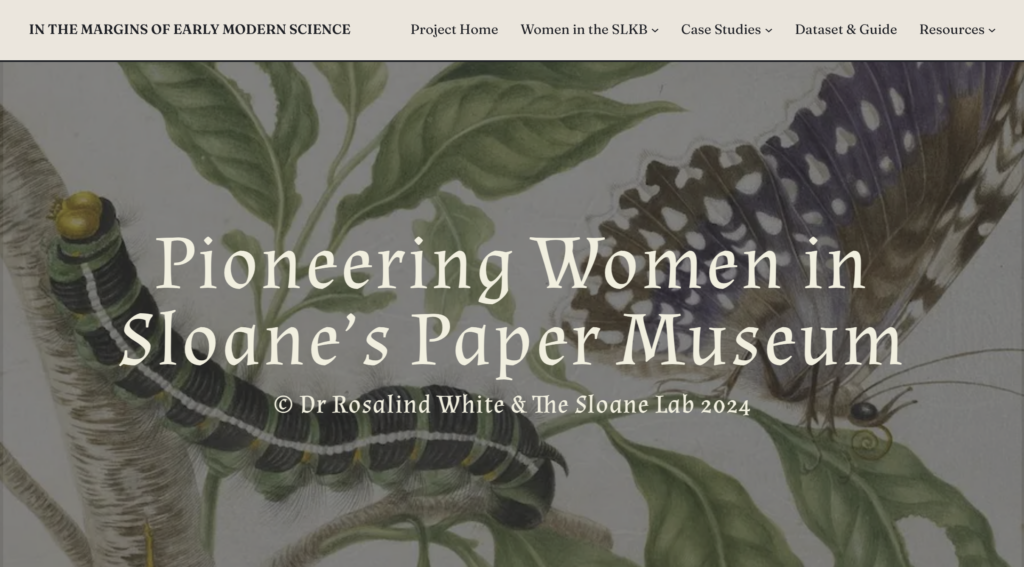
Screenshot online exhibition

The online exhibition, In the Margins of Early Modern Science: Pioneering Women in Sloane’s ‘Paper Museum’, invites users to explore the untold stories of the women who shaped Sir Hans Sloane’s vast collections. Research cases studies are brought to life through a variety of interactive exhibits.

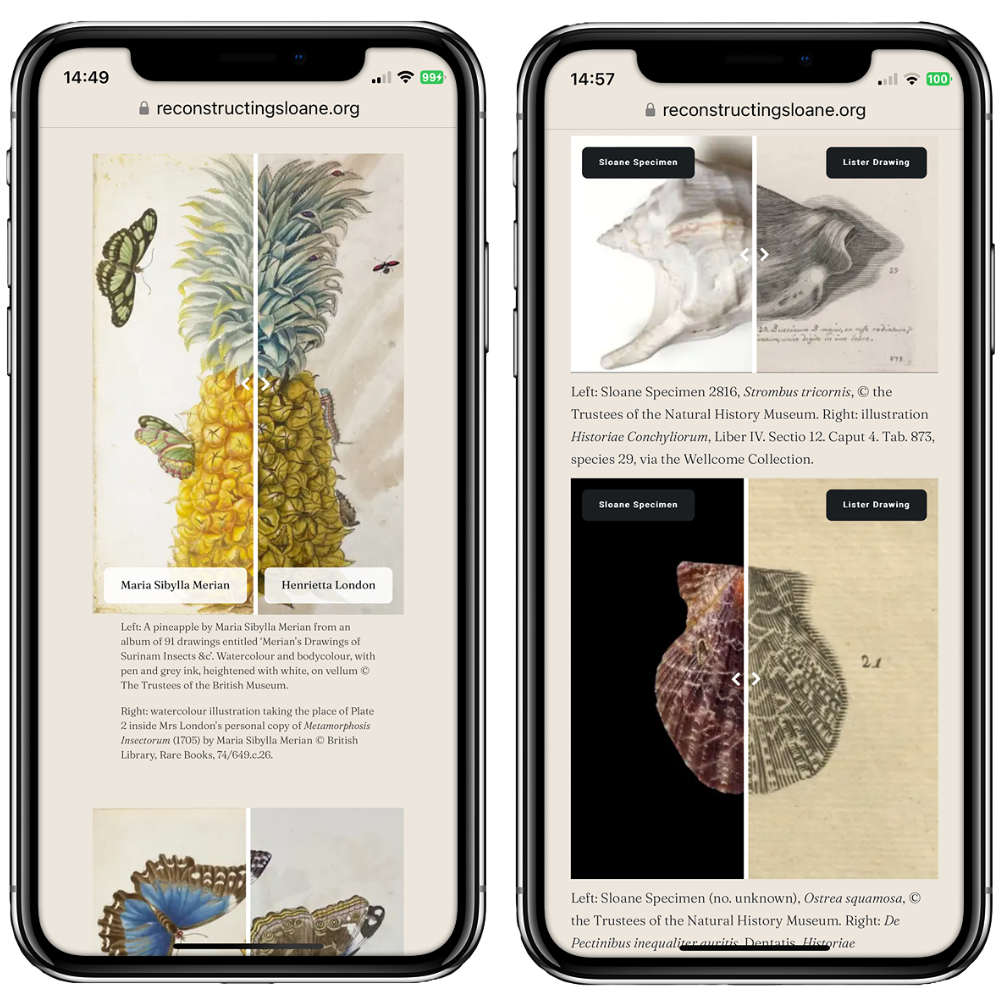
Screenshot of interactive sliders
Interactive sliders from the online exhibition, available at ReconstructingSloane.org/women

The exhibition spotlights the work of Elizabeth Blackwell, author and artist of A Curious Herbal; horticultural virtuoso Mary Somerset, the Duchess of Beaufort; and illustrators Anna and Susannah Lister, daughters of conchologist Martin Lister. It also highlights contributions from lesser-known women, such as botanical artists Ellen and Margery Power, and the mysterious ‘Mrs. London,’ whose watercolour illustrations appear in her personal copy of Maria Sibylla Merian’s Insects of Surinam.

Collectively, these resources empower users to explore the Sloane Lab Knowledge Base in innovative ways, demonstrating the impact that digital tools and critical methodologies can have in uncovering the contributions of individuals relegated to the margins of early modern science.

If you would like to follow along with Rosalind’s future research projects, you can find her on X (formerly Twitter) @DrRosalindWhite.

  •  

Workshop: Exploring Connections. A Bring Your Own Data Lab on Historical Network Analysis (17./18.10.)

Designed for researchers in the humanities and cultural sciences, this workshop of the DH Lab of the Leibniz Institute of European History (IEG) as part of the Data Competence Centre HERMES – Humanities Education in Research, Data, and Methods offers a practical, supportive and cooperative space to deepen knowledge of Historical Network Analysis. By the end of the Bring Your Own Data Lab, participants will be able to apply more confidently network analysis methods to their own data sets.

Date and Place:

17.-18.10.2024 at the Leibniz Institute of European History (IEG), Mainz

Aims and Contents:

This workshop focuses on the application of network analysis to historical research, offering a hands-on opportunity for participants to engage with their own datasets. Through interdisciplinary collaboration and expert guidance, we will explore how network analysis can be used to uncover connections, patterns, and relationships within historical data. The workshop will provide insights into both the methodological challenges and the opportunities that arise when applying digital tools to historical inquiry, fostering a dynamic exchange between academics and practitioners in the field.

The current programme and additional details can be found here.

Preparation and Prerequisites:

  • Basic programming knowledge (R, Python, …). Note that the course will be in Python. On the Leibniz-Institute of European History GitHub repository you can access some preparing material (Python programming, Data Analysis with Python): There are 2 Jupyter Notebooks: Introduction_Jupyter_Python.ipynb and Intro_Data_Analysis_with_Python.ipynb. There is also a Jupyter Notebook assignment.ipynb if you want to check your understanding (the document is not long, you may need < 1h).
  • Willingness to learn new technical skills
  • Important: install and get comfortable with Anaconda3. It contains all packages we will need (Jupyter notebooks included):
    > Installing Anaconda > Setting up a new environment, e.g. “HNR” > Installing networkX-package, pandas, matplotlib

Contact and Registration:

  • Dr Judit Garzón Rodríguez (hermes@ieg-mainz.de)
  • Registration is open until October 14, 2024
  • Please register early, as the number of places is limited to 15 participants

Funding:

Federal Ministry of Education and Research (BMBF)
Funded by the European Union – NextGenerationEU

  •  

A model building

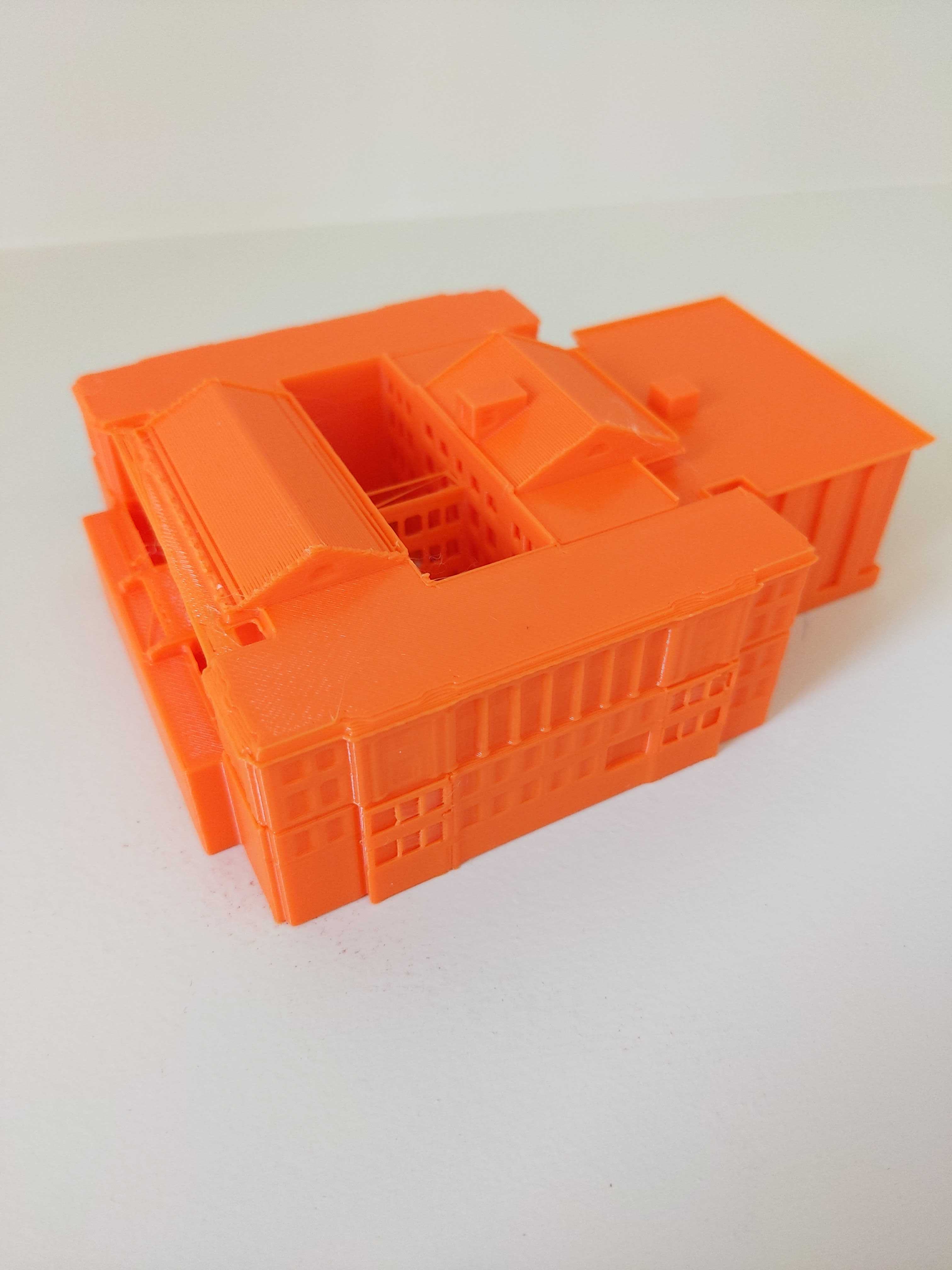
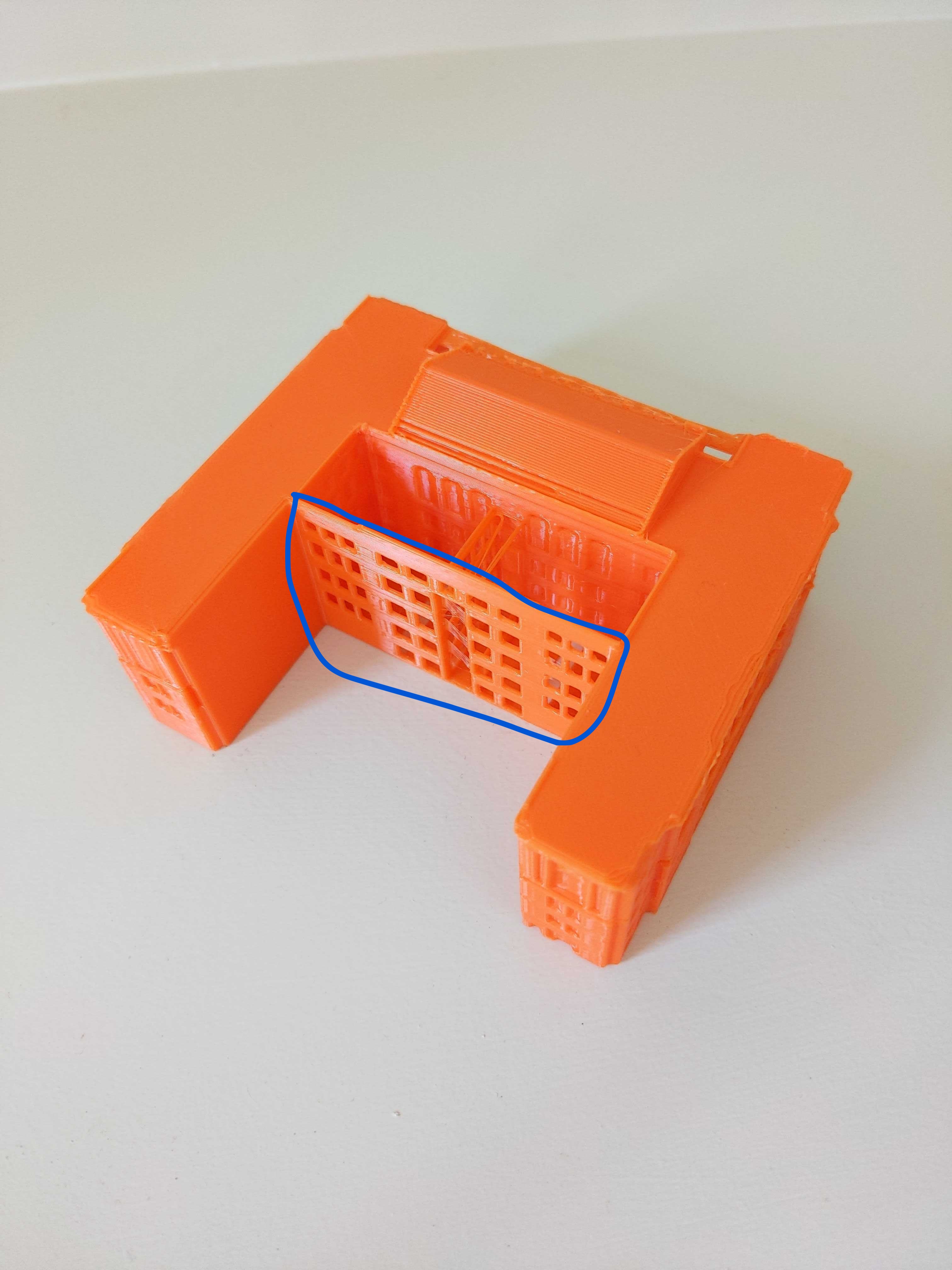
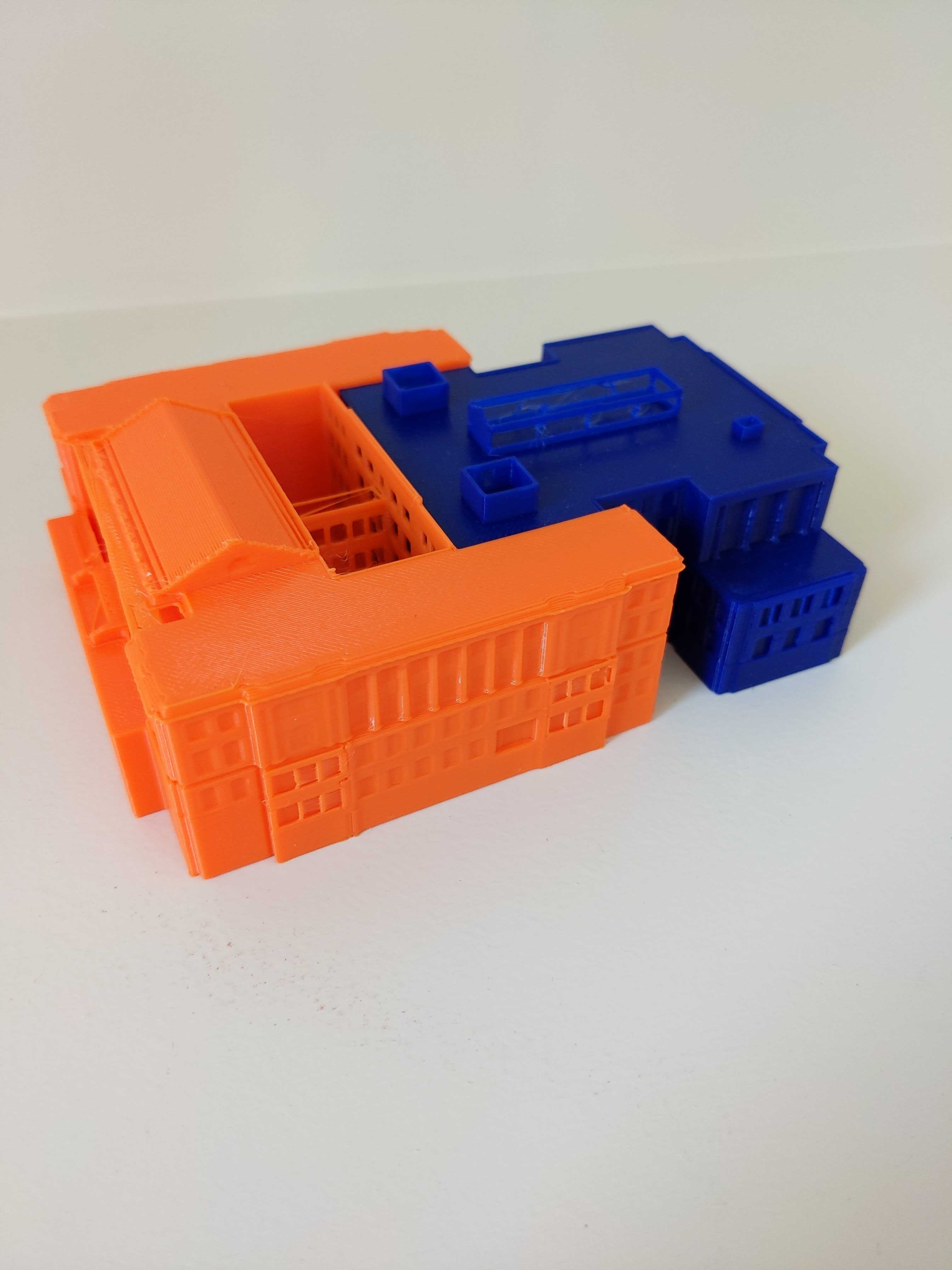
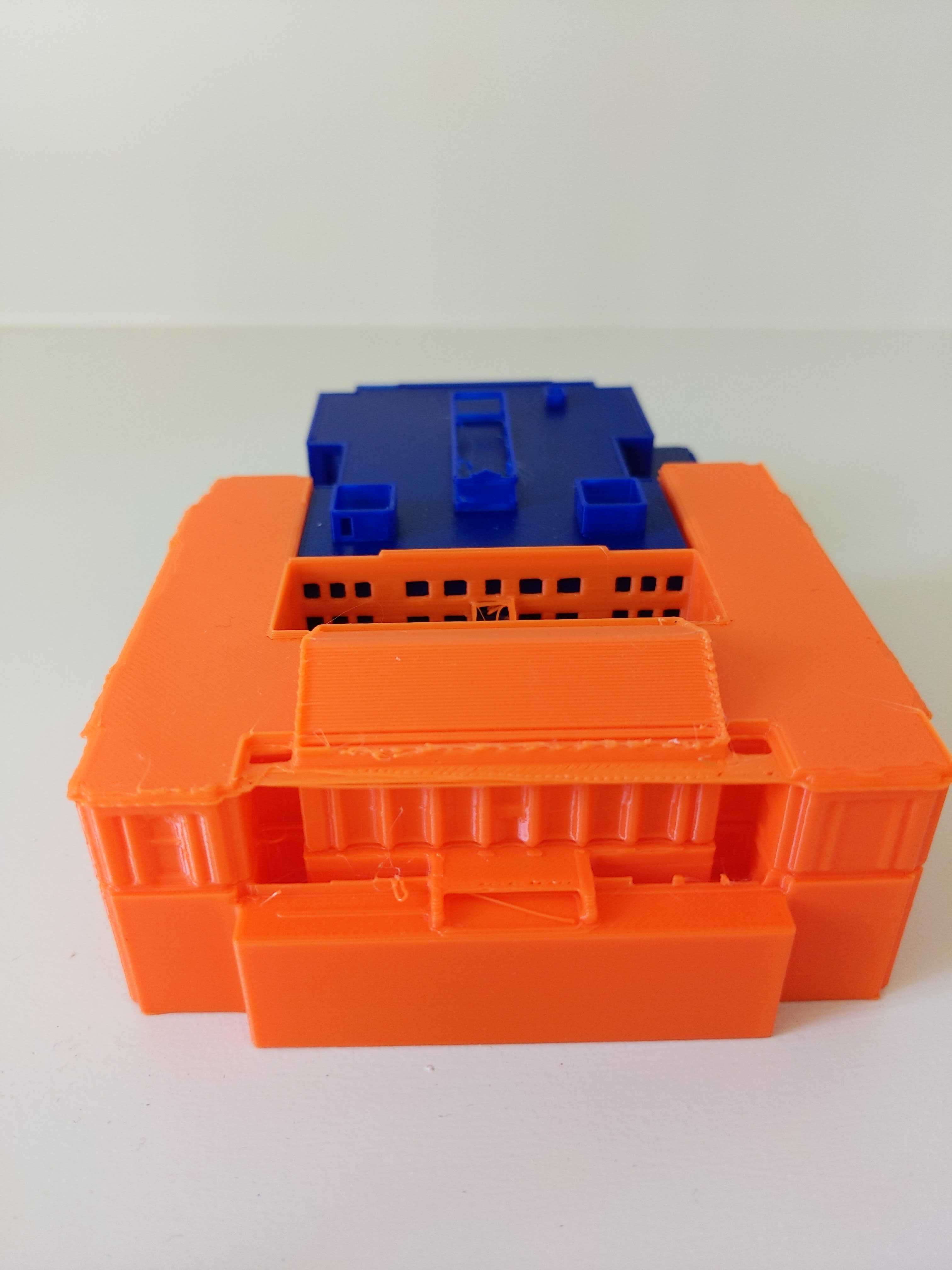
If a picture is worth a thousand words, then a three-dimensional object is worth a million words. 3D printing an object often provides unique and quick ways to present information. The main library at UVA completed major renovations from 2020 until 2023 which include removing a large center building that… here, let me show you with this 3D model instead.

This is what the library looked like before the renovation.

The main library before renovation

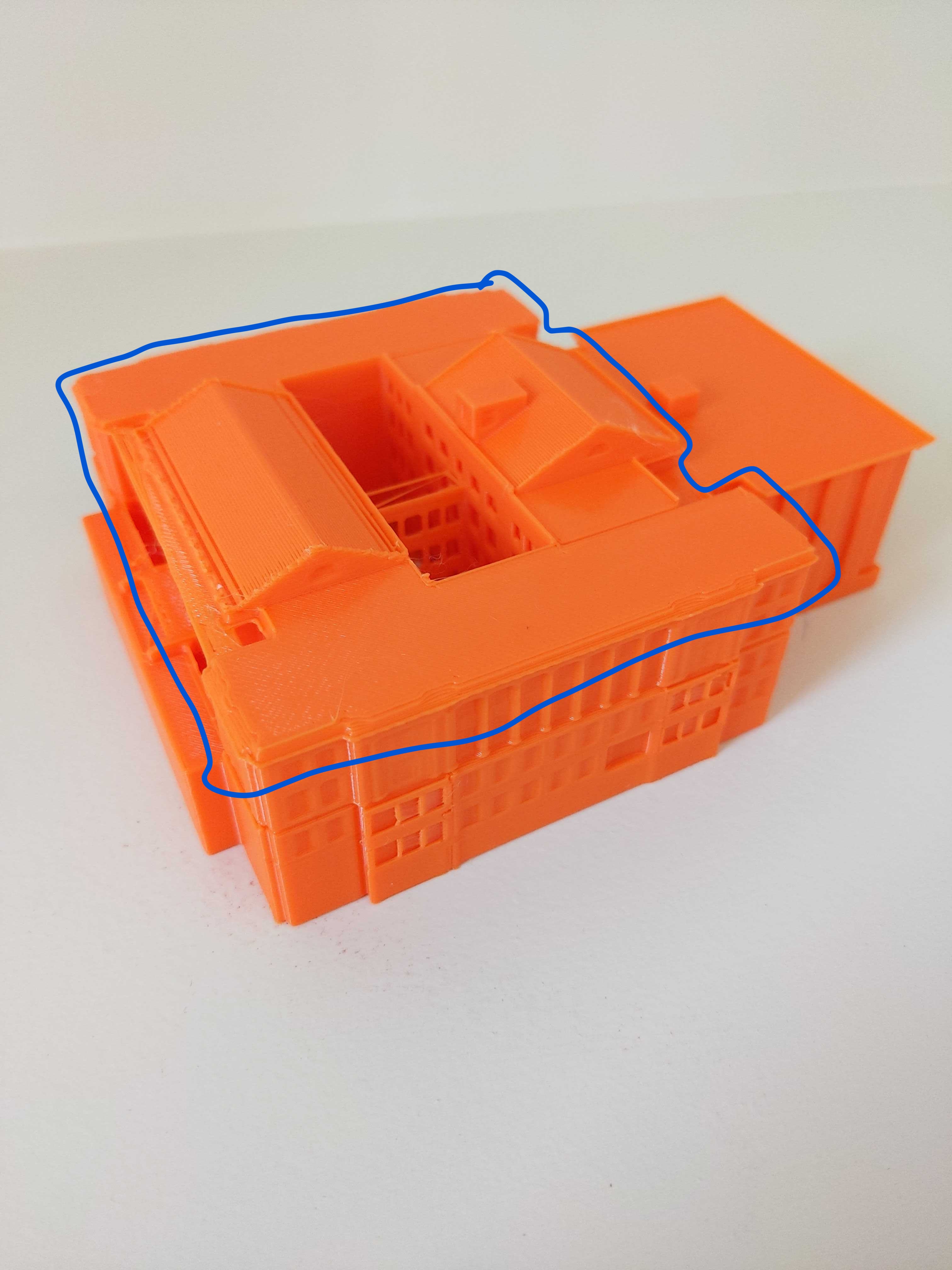
The outlined section was the original building, built in the 1930s.

The og library

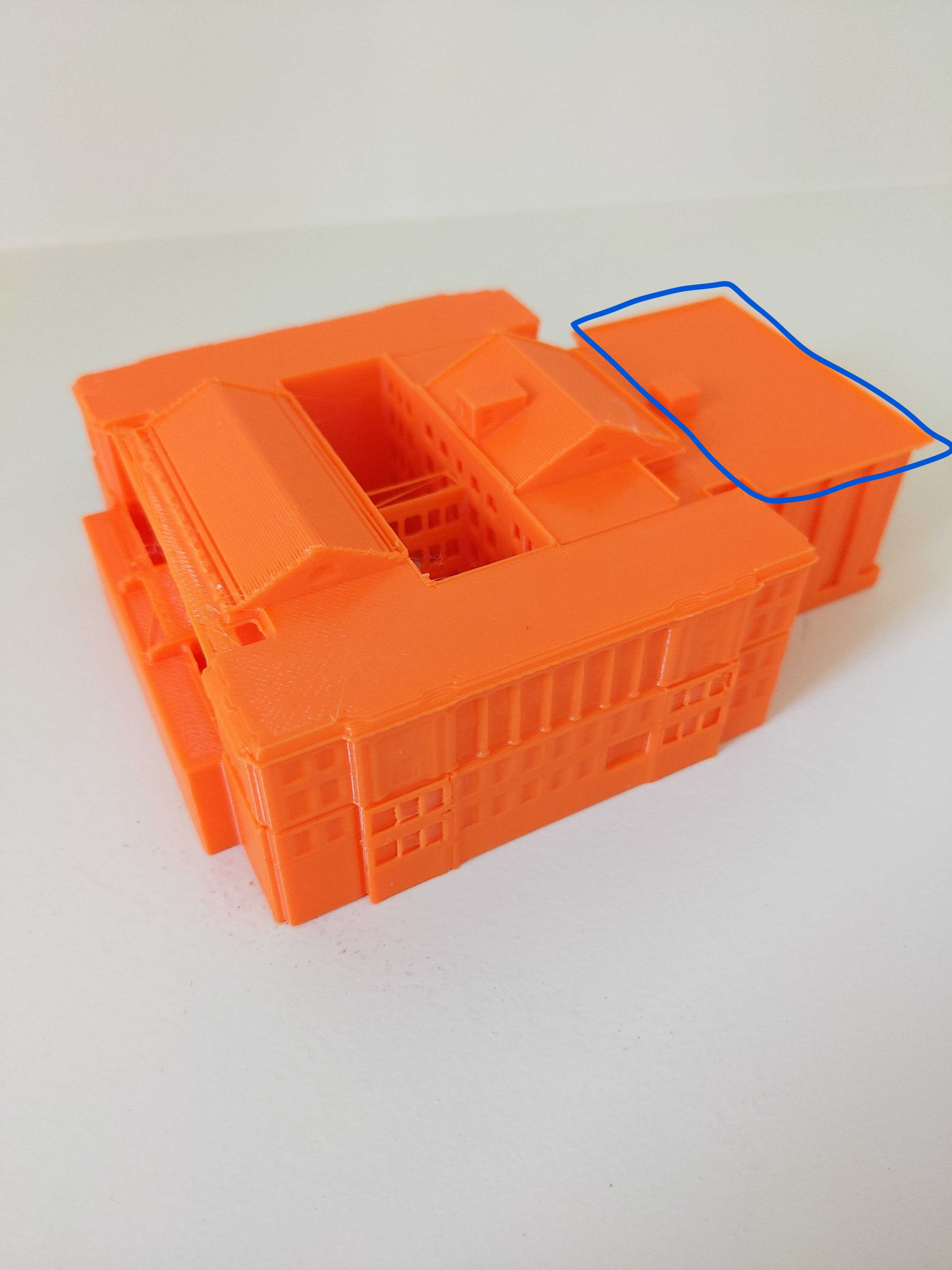
The below outlined section was the “New Stacks” built in 1967. The original, or old stacks, was 5 stories. The new stacks was 10 stories. This led to very interesting stair cases (the submarine staircases) and gave the whole stacks a labyrinthine feel. One could easily get lost in the stacks. Originally, the old and new stacks were closed to the public. A library patron would request a book, then a staff member would retrieve the book from the shelf and send it to Memorial Hall using a conveyor belt system.

The new stacks

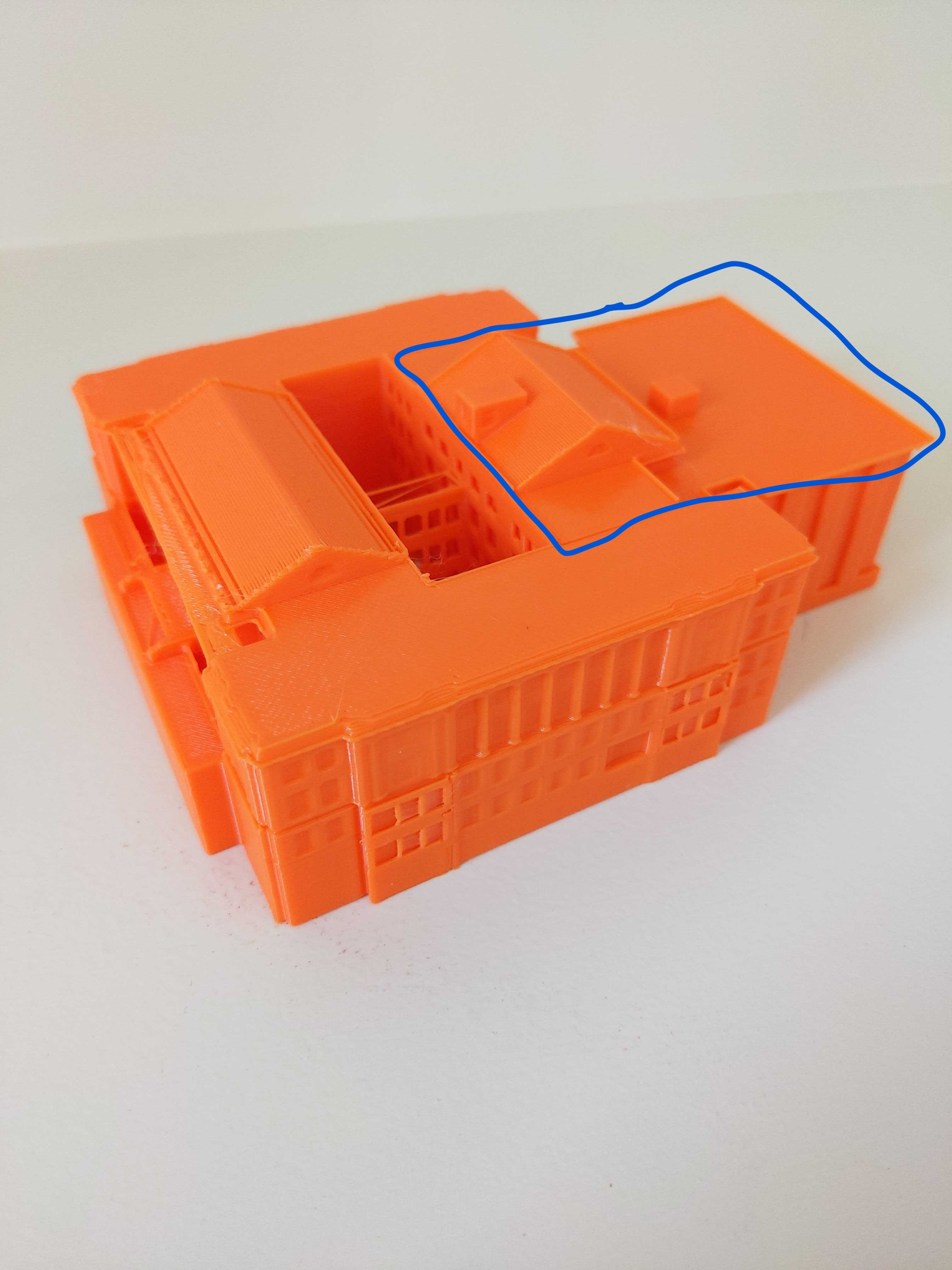
In the picture below, the outlined portion, the old and new stacks, was demolished.

Demolished!

Interestingly, the brick wall of the old stacks was retained and reused in the renovation. It can still be seen in the courtyards.

Old brick wall

The renovation gutted the original U shaped portion of the building (Memorial hall and both wings) down to the concrete walls. The new portion of the building is continuous; it is 5 stories that match the original building, and include a cafe (so you don’t hear the blaring of the espresso machine in Memorial Hall anymore).

The main library after renovation

And with a new library, came a new name. Out with Alderman, and in with Edgar Shannon.

The new

More articles about the renovation are available on the Library website.

  •  

New Nationalism, Legendary Women: Panchanan Bhattacharyya’s Ideals of Indian Womanhood (1921) after the Great War

A Co-authored Series of Posts ‘About 1919,’ that is, about English-language books published from 1914 to 1921, according to the online bibliography and database, Collective Biographies of Women.

Introduction

In the aftermath of the Great War, the Bengali educator Panchanan Bhattacharyya published a collective biography analyzing the virtues of twenty Indian women from the mythic era to the present. An unusual text among pre-1940 Anglophone collective biographies of women, Ideals of Indian Womanhood (Calcutta: Goldquin & Co., 1921) draws moral lessons from the lives of Hindu, Buddhist, and Muslim women in Indian literature and history. When formatting Bhattacharyya’s text for the Collective Biographies of Women database, I recognized important relationships to the biographical practices represented throughout the database, particularly to those examples our team selected for “A World World One Gallery of Women.” In the process of selecting and retelling the featured life narratives, Bhattacharyya portrays the ideal Indian woman as resisting the ancient injustices of religious intolerance and familial strife, while simultaneously continuing a tradition of femininity distinct from the Westernized, Christianized New Woman represented in other collective biographies of his era. At a pivotal historical moment, and with the support of various intellectuals associated with the Bengali Renaissance, Bhattacharyya’s didactic project intervenes in complex narratives of nation, empire, gender, and religious reform.

Marketing a National Collection of Biography

The presenters directly oppose Ideals of Indian Womanhood to other Anglophone collective biographies of women. More than a marketing strategy, the vehement publishers’ note contrasts Bhattacharyya’s timeless ideals of self-sacrifice with the prosaic focus on “academic laurels,” “continental travels,” and “litigation” portrayed by a “European lady” in her “sketches of five ‘distinguished’ Indian women,” the product of “a materialistic civilization” (i). Bhattacharyya’s publishers most likely referred to E. F. Chapman, Sketches of Some Distinguished Indian Women (London; Calcutta: 1891), which presents biographies of Pundita Ramabai Sarasvati, Dr. Anandibai Joshee, the Maharani of Cooch Behar, Toru Dutt, and Cornelia Sorabji. Emphasizing that “most of these ladies are Christians,” Chapman represents conversion to Christianity as a strategic advantage in pursuing “education and enlightenment” (13), and indeed Chapman’s five subjects are comparatively known in Anglophone publications in Britain and the United States. Writing for Scholars’ Lab in 2020, Zaina Ujayli argues that Chapman’s work and its predecessor Gems of India, Sketches of Distinguished Hindoo and Mahomedan Women (New York; Cincinnati: 1875) dramatize “self-sacrificing deaths” in order to advocate the “conversion [of Indian women] to Christianity or Western education.” In contrast to such biographies celebrating Christianization, Bhattacharyya lauds the self-sacrificing virtues of two Buddhist, one Muslim, and seventeen Hindu women, ranging from famous epic heroines to figures that he wishes were more widely recognized. Examining late colonial Bengal’s erasure of Muslim women from nationalist historical texts, the sociologist Mahua Sarkar cites a 1927 review of Ideals of Indian Womanhood as an example of a Hindu author blaming the Mughal conquest for the oppression of women in twentieth-century India (63, note 76). Even Bhattacharyya’s chapter structure is designed to foreground Hindu women: The table of contents divides the work into “The Mythic Cycle”; “The Epic Cycle” (subdivided into “Ramayana” and “Mahabharata”); “The Historic Cycle” (subdivided into “Ancient”, “Medieval” and “Modern”); and “The Cycle of Transition.” This plan allots two chapters to Hindu mythology, two chapters to each of the major Sanskrit epics, two chapters to Buddhist nuns periodized as “ancient”, four chapters to “medieval” women of the Rajput dynasty, five chapters to “modern” women of the sixteenth through eighteenth centuries (beginning with the sole Muslim figure Chand Sultana, who at five biographies in Collective Biographies of Women attained a higher recognition rate than Bhattacharyya’s other subjects), and three concluding chapters to nineteenth-century Bengali philanthropists. Consequently, the work’s construction underscores Bhattacharyya’s ideological curation of national biography.

*Ideals of Indian Womanhood*, table of contentsDetail: Panchanan Bhattacharyya, Ideals of Indian Womanhood (Calcutta: Goldquin, 1921) table of contents. Accession # AS-003871, Central Secretariat Library, New Delhi, India. Page images provided by the National Virtual Library of India.

Regarding the ideal readership for Ideals of Indian Womanhood, the Goldquin publishers claim that while “the young undergraduate of the Indian university” is capable of analyzing European mythological and literary classics, only a book such as this can provide him with what the Calcutta University vice-chancellor Sir Ashutosh Mukherjee (1864-1924) described in 1909 as “‘virtues appropriately selected from the great national books of Hindus and Muhammadens [sic]…cameos of character’” (v). While Mukherjee describes the Calcutta undergraduate as an “‘Indian youth,’” the publishers also hope to inspire “young boys and girls” as well as the “general reader” (iv, v). Thackers Indian Dictionary (1937-8) shows that Bhattacharyya lectured at Calcutta University and its affiliate Bethune College for Girls, and the Calcutta Gazette credits Panchanan Bhattacharyya with three textbooks on elementary English reading and composition published between 1930 and 1934. Bhattacharyya’s insistence on patriotic education reflects the two-century tradition of the Bengali Renaissance, as suggested by his use of literary and scholarly sources and endorsed by the influential Bengali jurists and literary figures presenting this work. In his author’s note, Bhattacharyya emphasizes his reliance on eight Indian authors and six European authors, and thanks two named Indian scholars and an anonymous European chair in English literature “in one of the Indian universities” for editing the work (ii-iii). The only woman thanked in the front matter is the subject of the dedication, Lady Mukhopadhyaya [Jogamaya Devi Bhattacharyya (1871–16 July 1958)], the wife of Ashutosh Mukherjee, and, as my research suggests, Bhattacharyya’s own sister.

Lending international context to the goals of national biography, English-language collective biographies of women from the 1914-21 era on non-English and non-U.S. national types include France: a358: Women of the Revolutionary Era (London: 1914) and a359 : Remarkable Women of France, 1431-1749 (London: 1914); Russia: a659: The Fair Ladies of the Winter Palace (London: 1914); Ireland: a194 : Helena Concannon, Women of ‘Ninety-Eight (Dublin and St. Louis: 1919, 1920, 1930); and Japan: a539 : Maude Whitmore Madden, Women of the Meiji Era (New York; Chicago: 1919); and a611 : Diaries of Court Ladies of Old Japan. With an Introduction by Amy Lowell (Boston and New York: 1920, London: 1921, Tokyo: 1935). Of this set, only the progressive Meiji New Women and the patriotic Irish women of the 1798 Irish Rebellion are treated as role models by their authors, with the remaining biographies emphasizing historical interest, especially the excitements of court life or revolutionary turmoil. Bhattacharyya, however, negotiates the British empire that the Irish biographer Concannon denounces; and he opposes the Westernization and Christianization that the American chronicler of Japanese women, Madden, celebrates. Bhattacharyya’s emphasis on literary, legendary, and traditional tales matches the suspense and tragedy of the court-scandal and revolutionary-drama collective biographies of women, but his insistence on the idealized qualities of each woman has more in common with martyrologies and inspires frequent comparisons to saints. At the same time, Bhattacharyya’s interest in analyzing character hints at the popularized psychoanalytic topologies we find in Gamaliel Bradford’s biographies, as examined in Mackenzie Daly’s recent Scholar’s Lab blog for our team’s World War One series. In an era of literary experimentation, Bhattacharyya’s conservative, didactic writing style sought to exert an authoritative influence over the national character of Indian women.

Ranking National Heroines after 1919

Published amid postwar reckonings with the ideology of self-determination, the work propagandizes a trajectory of India’s historical progression from heroic mythological and medieval conflicts to a peaceable modernity. Bhattacharyya is not alone in preferring continuous nationalistic typologies to direct discussion of the Great War: Of the 107 Anglophone biographies of women published between 1914 and 1921, only about three of these dealt specifically with women during the Great War. Bhattacharyya’s most explicit reference to WWI draws a shockingly, anachronistically nationalistic lesson from the sixteenth-century Rajput nursemaid Panna Dai (Panna Bai), who sacrificed her own infant’s life to thwart the intended assassination of her royal charge: “She holds her place secure in the hearts of the wondering band of patriots who have learnt to love their king and the country as manifested in the spirit of loyalty shown to our King in the recent European War” (165).

While such references to twenty-first century topics are rare, Bhattacharyya is much more eager to competitively contrast Indian and European national heroines. Generally, Bhattacharyya prefers to represent modern Indian women as continuous forces for peaceable reform, and their early modern and ancient predecessors as self-sacrificing legendary heroines. Bhattacharyya’s narrative style blurs the differences between the beneficent reign of the Maratha queen Ahilya Bai Holkar (1725-1795) and the lifelong virtues of the nineteenth-century Bengali women Devi Sarada Sundari (1819-1907), Maharani Swarnamoyee CI (1828-1897), and Devi Aghore Kamini (1856-1896). Bhattacharyya’s competitive ranking of Indian heroines with British and European heroines contrasts with delicate avoidance of criticism of the eighteenth- and nineteenth-century British empire. Bhattacharyya is far from militant in his attitudes toward British imperial rule, and largely follows Mukherjee’s 1909 call for education in “‘devotion to duty, womanly chastity, filial piety, loyalty to the King,’” as cited in the note from Bhattacharyya’s publishers (v).

Allusions and analogies to famous historical women are common narrative strategies for the genre, as shown by the BESS textual analysis schema used for Collective Biographies of Women, but for Bhattacharyya this conventional practice is a vehicle for vehement national contrasts. Bhattacharyya layers European and British symbols to articulate the valor of the sixteenth-century warrior queens Rani Durgavati (whose chapter is subtitled “Love of Country”) and Chand Sultana (subtitled “Patriotism”), among other biographical subjects. According to Bhattacharyya, Chand Sultana made wartime speeches as effectively as Elizabeth I facing the Spanish Armada, only to die like Caesar at the hands of her own allies and earn a warrior’s funeral from her imperial opponent (208, 220). Proposing to add Durgavati to the “Valhalla of nations’ heroes,” Bhattacharyya describes Durgavati as an “Indian Boadicea” who deserves the poetic and historic treatments accorded to “the British warrior queen” and to “the heroic peasant-maid of Domremy” (233). Bhattacharyya’s professed envy of the biographical treatments of European icons such as Joan of Arc (69 collective biographies to date, the highest recognition rate in the database) and Elizabeth I (59 biographies) is a framing device for his vehemently nationalistic pantheon. In this light, eighteenth-century Ahalya Bai (subtitled “The Ideal Queen”) haunts the narrative as an ideal queen coexisting with British military dictatorship and putting Pax Britannia to shame through her orderly, peaceful, self-sacrificing management of her native country.

Referring to a scholarly consensus that the ideal respectable woman in late nineteenth-century Bengal “was chaste, pious, educated and disciplined,” the historian Durba Ghosh claims that forms of respectability continued to be enforced by “an elite nationalist patriarchy” even for twentieth-century radical activists (358). Alison Booth (2004) makes a parallel observation that from 1893 through the early twentieth century, collective biographies of African-American women tended to use rhetorical and formal conventions to elevate model respectable middle-class women (214-215). However, contrasting with Bhattacharyya’s citational neglect of Indian women biographers, in 1893 African-American biographers Dr. Lawson A. Scruggs and Dr. Monroe A. Majors celebrated and credited African-American female biographers such as Susan I. Shorter and Gertrude Mossell (Booth [2004], 214-215). While Bhattacharyya writes with the early twentieth-century educator’s scholarly pomp, and proudly includes imperial honors in his recitation of his heroines’ accomplishments, the long life of transnational respectability informs this work’s relationship to a discursive form crossing ideological and generational bounds.

In an era retrospectively peopled by the New Woman debates and masculine citizenship, Bhattacharyya’s Ahalya Bai joins an imagined lineage of alternatives to Victoria: self-sacrificing avatars of a feminine patriotism indistinguishable from familial and religious devotion. Rather than wear India’s jewels, Chand Sultana fires them from a cannon; rather than hoard the property she wins back from the East India Company, Maharani Swarnamayi spends it on essential humanitarian aid (Bhattacharyya 324, 327). With a few words of justification for the minority of non-royal subjects, Bhattacharyya could have subtitled each chapter “The Ideal Queen” as he did with Ahalya Bai, fitting the work smoothly into the sea of collective biographies of royal women and queens both literal and metaphorical. Instead, Ideals of Indian Womanhood leaves each figure’s queenliness a matter of biographical accident, to be gained or lost based on a higher authority’s recognition of merit or demand for self-sacrifice. In this work promoted so variously to men, women, boys, girls, and the general reader, Bhattacharyya ushers female authority into the realm of nostalgic fantasy, displacing the contemporary New Woman in favor of a national procession of self-effacing ideal phantoms.

Works Cited

Bhattacharyya, Panchanan, and Sir A. Chaudhuri. Ideals of Indian Womanhood. With a Foreword by A. Chaudhuri. Calcutta: Goldquin, 1921. http://cbw.iath.virginia.edu/cbw_db/collections.php?id=1399.

Booth, Alison. How To Make It As A Woman: Collective Biographical History from Victoria to the Present. Chicago: University of Chicago Press, 2004.

Chapman, E. F. Sketches of Some Distinguished Indian Women; With a preface by the Marchioness of Dufferin and Ava. London: W.H. Allen & Co., Limited, 1891. http://cbw.iath.virginia.edu/cbw_db/collections.php?id=1480.

Daly, Mackenzie. “Gamaliel Bradford and Psychography.” Published July 05, 2024. https://scholarslab.lib.virginia.edu/blog/gamaliel-bradford-and-psychography/. Accessed on July 8, 2024. Previously accessed in draft.

Devi, Sunity, Maharani of Cooch Behar, CIE. Nine Ideal Indian Women. Calcutta: Thacker, 1919. https://cbw.iath.virginia.edu/cbw_db/collections.php?id=6

Ghosh, Durba. “Revolutionary Women and Nationalist Heroes in Bengal, 1930 to the 1980s.” Gender & History 25, no.2 (August 2013): 355-375.

Sarkar, Mahua. Visible Histories, Disappearing Women: Producing Muslim Womanhood In Late Colonial Bengal. Durham: Duke University Press, 2008.

Ujayli, Zaina. “Death Politics in Collections of Indian Women’s Lives.” Published October 07, 2020. https://scholarslab.lib.virginia.edu/blog/cbw-indianwomen/. Accessed on June 30, 2023.

  •  

A Limited Comparison of Louisa May Alcott and Harriet Tubman

A Co-authored Series of Posts ‘About 1919,’ that is, about English-language books published from 1914 to 1921, according to the online bibliography and database, Collective Biographies of Women.

Comparing American Women of Achievement, White or Black, in Books, Statues, and Plaques

Louisa May Alcott and Harriet Tubman

We feel compelled to say more about a connection Lloyd Sy made between Louisa May Alcott and Harriet Tubman, women who were contemporaries but so differently represented in cultural memory. Today, CBW as a modern research database brings disparate figures together, a format that encourages critique of their selective representation in older biographical texts. But Lloyd’s blog post compared tables of contents of 1919 that show Alcott and Tubman in separate cohorts, that is, they are not “siblings” as we call the female subjects of chapters in the same table of contents. They never appear in the same book of female biographies until about fifty years after World War II: 1994 and 1995, in the second wave of feminist historiography.

  1. p007 Herstory 1995
  2. p109 100 Women Who Shaped World History 1994

As a context, note especially Isabel’s painstaking bibliography of collective biographies of women 1914-1921. Each of us in this blog series has relied on selective examples, two books, two women, one or two biographers, just as we have limited ourselves to CBW texts published during and a bit after world war. Isabel aptly commented on Lloyd’s notice of Louisa May Alcott (RR=34) and Harriet Tubman (RR=16) as two notable women who occupy quite different documentary social networks in CBW. Alcott and Tubman are “members,” respectively, of an all-white and an all-Black collection of American women published in 1919, as Lloyd’s examination of Bradford’s and Brawley’s collections shows.

As a historian, Isabel wrote to Lloyd to “acknowledge some limited similarities between Alcott (1832-1888) and Tubman (1822-1913) as abolitionists, suffragists, and social reformers objecting to current conditions of labor.” Isabel rightly highlights two more types of biographical data for a prosopographical comparison of these women: war service (US Civil War circa 1863) and disability. Alcott attributed decades of illness to mercury poisoning from typhus treatment received during her three-month service as a Civil War nurse between 1862 and 1863. While contemporary scholars interpret symptoms as suggesting Alcott endured lupus before her early death, Alcott’s own hypothesis intertwines her physical suffering with national trauma. Earlier in the century, Tubman suffered a nearly fatal head injury at the hands of a white overseer and never fully recovered, with symptoms of hypersomnia, extreme fatigue, and epilepsy. During the Civil War, Tubman started her military service as army cook and nurse, before switching roles to scout and spy in early 1863.

Yet we can see great disparities between these lives, inextricable from race and U.S. history: Tubman was deprived of education, whereas Alcott grew up in an educator’s household. Isabel further suggests a spatial measure of the intersecting disadvantages of a Black formerly enslaved person in terms of “generational land and house networks,” in her words, which continue to shape different economic fates according to race in the US.

Alison picks up on Isabel’s spatial observation about the locations of these biographies. In her book Homes and Haunts, Alison traced the history of literary house museums and the writing about them, both in North America and in Britain. In How to Make It as a Woman, the basis of the CBW project, she began her studies of statues of women and other public prosopographies (lists of names, portraits, short biographies) such as Halls of Fame as well as books. Returning to Lloyd’s post about 1919 books: Gamaliel Bradford’s American Women mostly lived in New England (Concord, Boston, Hartford, Amherst) and their fame and the status of their writing led to preservation of their houses as museums, comparable to recognition of male authors.

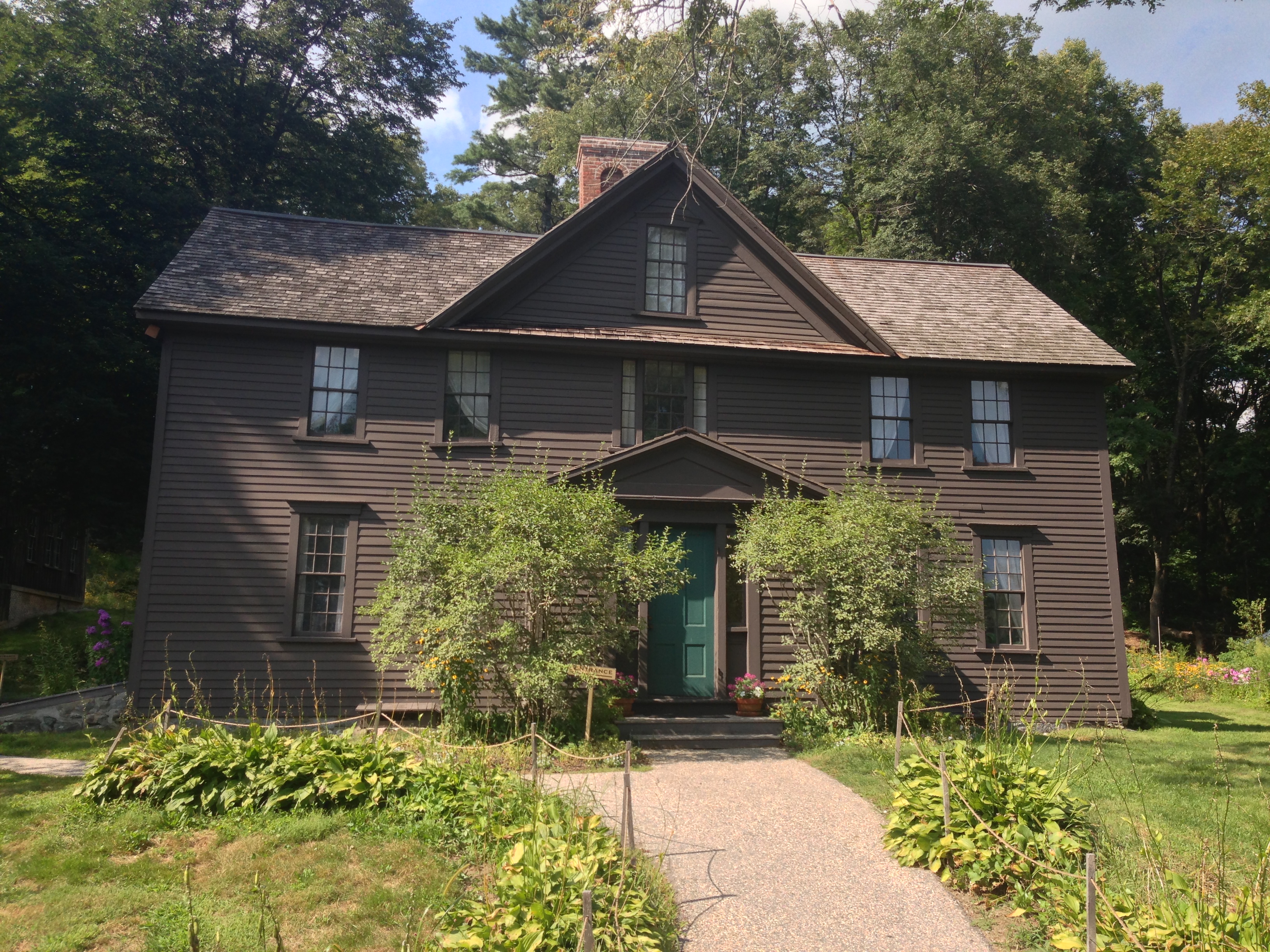
Color photograph of Louisa May Alcott's Orchard House, Concord, Massachusetts, the original for the house in her novel, Little Women
Color photograph of Louisa May Alcott’s Orchard House, Concord, Massachusetts, the original for the house in her novel, Little Women

Several of Brawley’s Women of Achievement achieved much in the Washington DC or Philadelphia circles where post-Civil War freed Blacks of some means could become prominent in arts and politics. Following Tubman’s chapter, Brawley devotes the remainder of the volume to the educators Mary Church Terrell (1863-1954), Mary McLeod Bethune (1875-1955), Nora Gordon (1866-1901), and the artist Meta Warrick Fuller (1877-1968). Tubman’s life in a previous generation, born enslaved, appears the opposite of settled in her many rescue missions. She brought her parents to Canada before settling in retirement with them in Auburn, New York, remote from her upbringing and from the hubs of (Euro)American and African American intellectual life. Historic homes associated with Tubman contrast with the single-household format of many authors’ house museums - today’s Harriet Tubman National Historical Park in New York encompasses her residence, the Harriet Tubman Home for the Aged, and the Thompson A.M.E. Zion Church. Tubman is honored in several civic statues today, ranging from the 1914 memorial tablet depicted in a120 Homespun Heroines and Other Women of Distinction, to Nina Cooke John’s 2023 statue replacing a 1927 Columbus monument. Frances E. Willard, possibly the only Midwesterner in these two books, organized internationally in the Temperance movement; she now stands as a statue in the US Capitol building. A statue of Mary McLeod Bethune stands among bronze Black children to indicate her educational mission (erected 1974), opposite a controversial 1876 statue of Abraham Lincoln with a kneeling enslaved man, in a Capitol Hill park in Washington, DC, Washington’s first public “memorial to honor an African American” and “first portrait statue of an American woman”. A statue of Mary McLeod Bethune was placed to represent Florida in the U.S. Capital building in 2022.

Further research could map plaques such as the one for Mary Church Terrell on the corner of Seventh Street and F Street, NW Washington, DC, in honor of her efforts to desegregate Washington restaurants and her suffrage activism; Terrell also helped to prevent the Daughters of the Confederacy from erecting a statue of an allegorical “Black Mammy” in that city. As statues and as biographical subjects, the memorialization of specific, named women makes important claims to local and national histories. Identifying limited similarities among the experiences of contemporaries typically depicted separately is not as directly applicable to these issues. However, the extent to which such similarities were ignored and obscured in previous eras of popular biography suggests the disruptive power of reading nineteenth-century contemporaries in less exclusionary frames.

  •  

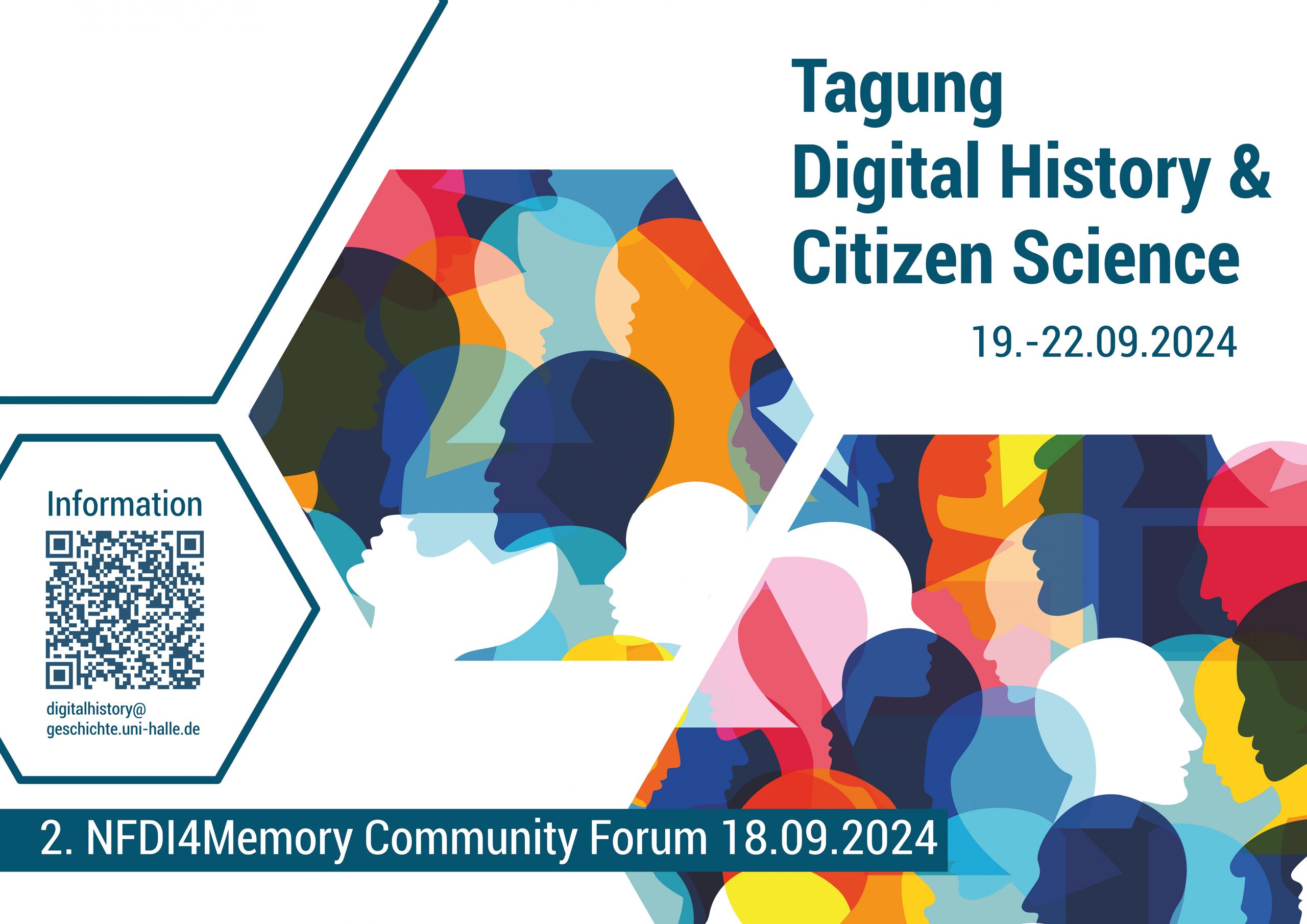
Anmeldung zur Tagung „Digital History & Citizen Science“ und zum 2. Community Forum NFDI4Memory eröffnet

Steintorcampus Halle (Saale), 18. sowie 19. bis 22. September 2024
https://www.geschichte.uni-halle.de/struktur/hist-data/dh_cs/

Die Tagung widmet sich mit einem reichhaltigen Programm wissenschaftlicher Vorträge und Diskussionsforen vielen Themen der Digitalen Geschichtswissenschaft an der Schnittstelle zwischen Wissenschaft und Citizen Science und Public History. Dabei spielen die Fragen des gemeinsamen Zugangs zu Quellen, methodischen Ansätzen und Fragestellungen ebenso eine Rolle wie Herausforderungen der digitalen Erschließung, Analyse und der langfristigen Archivierung von Citizen Science Nachlässen und Daten.

Begleitet werden diese Vorträge von vielfältigen und abwechslungsreichen Diskussionsrunden, Workshops und Projektvorstellungen. Kulturelle Angebote laden zum Kennenlernen und Mitmachen ein. Es finden sich viele Partner und Partnerinnen der digitalen Community zur Tagung ein, für die es zahlreiche Möglichkeiten des Kennenlernens und der Vernetzung geben wird. So können viele neue Impulse für gemeinsame Projekte und Ideen entstehen. Gleichzeitig feiern CompGen, Matricula und Archion ihre Jubiläumsveranstaltungen. Die Tagung „Digital History & Citizen Science“ findet vom 19. bis 22. September 2024 in Halle (Saale) statt. Zuvor veranstaltet das Konsortium NFDI4Memory das Community Forum NFDI4Memory am 18. September 2024. Sie sind herzlich zu allen Veranstaltungen eingeladen.


Es handelt sich dabei um eine Gemeinschaftstagung der AG Digitale Geschichtswissenschaft des Verbands der Historiker und Historikerinnen Deutschlands, des Vereins für Computergenealogie, NFDI4Memory, Archion und ICARUS e.V., der Historischen Kommission Sachsen-Anhalt, des Instituts für Landesgeschichte (Sachsen-Anhalt) und des Landesheimatbundes Sachsen-Anhalt.

Anmeldung

Eine Anmeldung im ConfTool und für einzelne Veranstaltungen ist bis zum 29. August 2024 erforderlich. Dabei ist zunächst das Anlegen eines Benutzerkontos notwendig, um sich dann zur Tagung anzumelden. Bitte beachten Sie, dass wir aufgrund des Caterings eine Tagungsgebühr von 30 Euro für den mehrtägigen und 15 Euro für den eintägigen Besuch der Tagung erheben. Dafür stehen Ihnen während der Tagung Getränke und ein kleiner Imbiss zur Verfügung. Für Workshops und besondere Events sind zum Teil separate Anmeldungen im Rahmen der Tagung notwendig sind, weil zum Teil begrenzte Platzkapazitäten oder zusätzliche Gebühren bestehen. Podiumsdiskussionen, Vorträge und Projektpräsentationen stehen grundsätzlich allen Teilnehmenden frei.

Kontakt:

Dr. Katrin Moeller
Institut für Geschichte, Historisches Datenzentrum Sachsen-Anhalt
Emil-Abderhalden-Str. 26/27
06108 Halle (Saale)
digitalhistory@geschichte.uni-halle.de

  •  

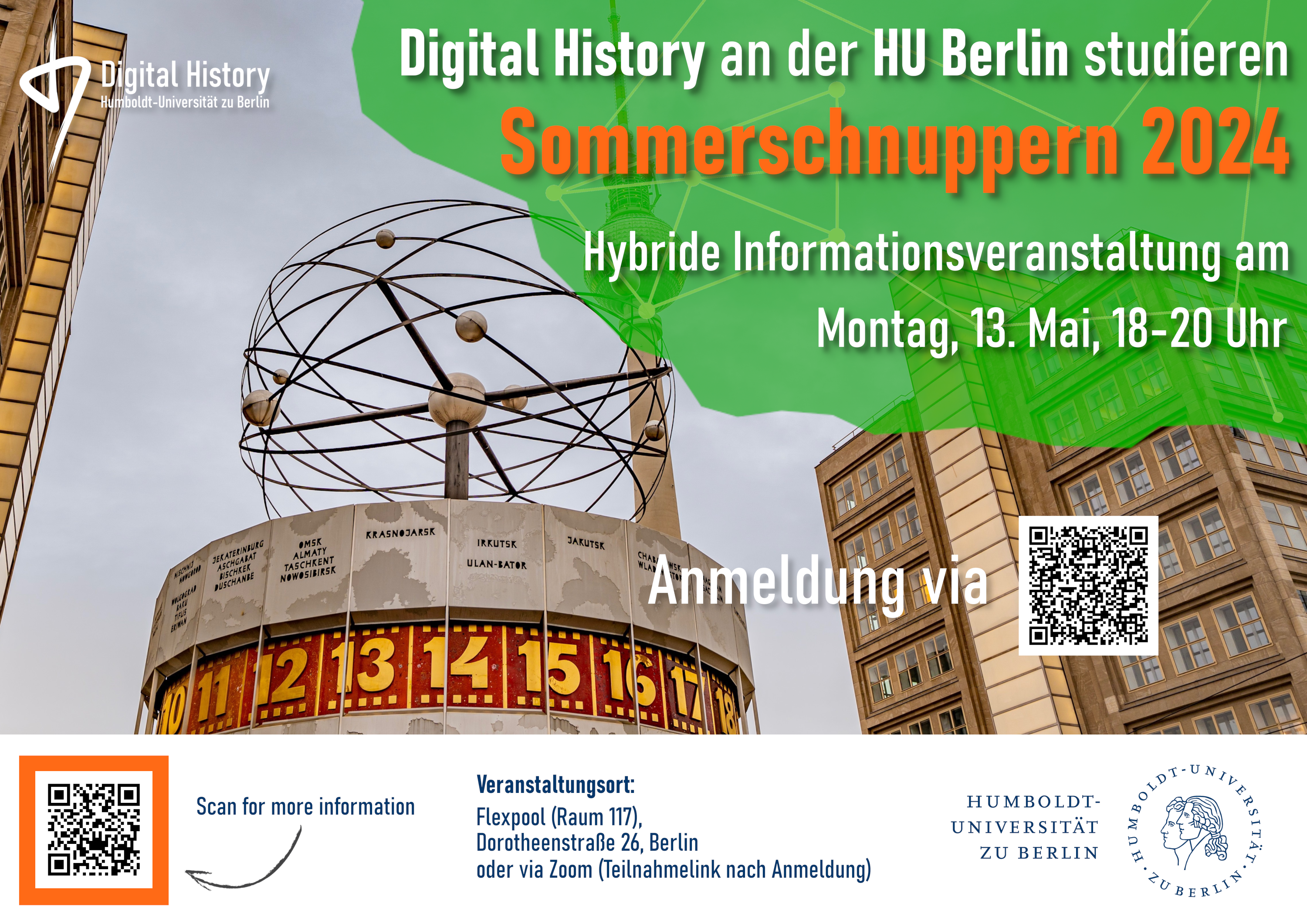
Digital History studieren an der HU Berlin – Einladung zum Sommerschnuppern 2024

Am 13. Mai 2024, 18:00 bis 20:00 Uhr, lädt die Professur für Digital History der Humboldt-Universität zu Berlin Studierende, die sich für ein Masterstudium im Bereich der digitalen Geistes- und Geschichtswissenschaften interessieren, herzlich zu einer hybriden Informationsveranstaltung ein. Im Rahmen dieser Veranstaltung wird der Masterschwerpunkt “Digital History” vorgestellt und ausreichend Gelegenheit zur Beantwortung aller hierzu anfallenden Fragen geboten. Ausführliche Informationen zum “Sommerschnuppern 2024” finden Sie auf dem Blog der Professur. Interessierte sind herzlich eingeladen, sich bis zum 10. Mai 2024 über unser Anmeldeformular zu registrieren. Wir freuen uns darauf, Sie entweder persönlich vor Ort oder online via Zoom begrüßen zu dürfen!

  •  

16.05.24: Hybrid-Vortrag von Francesco Beretta zu “Modelling Social and Legal Facts in the Context of the Semantic Data for Humanities and Social Sciences Ontology Ecosystem”

Im Rahmen der Seminarreihe ‚Legal History Meets Digital Humanities‘ am Max-Planck-Institut für Rechtsgeschichte und Rechtstheorie findet der Vortrag ‘Modelling Social and Legal Facts in the Context of the Semantic Data for Humanities and Social Sciences Ontology Ecosystem’ im hybriden Format am 16.05.2024 von 15:00 bis 17:00 statt.

In dieser Sitzung diskutieren wir das Thema der möglichen Anwendungen von Wissensgraphen und Linked Open Data (LOD) in der Forschung der Geistes- und Sozialwissenschaften. Unser Referent Dr. habil. Francesco Beretta (CNRS/ University of Lyon) wird über das Potenzial dieser semantischen Technologien für die gemeinsame Nutzung großer Mengen wissenschaftlicher Daten und die Förderung interdisziplinärer Innovation sprechen.

Weitere Informationen zur Veranstaltung und zur Anmeldung finden Sie hier. Die Vortragssprache ist Englisch.

  •