 登录
登录
[채용] 전임 / 단국대 영미인문학과 / 2026년도 2학기
학과 : 영미인문학과
초빙분야 : 영문학
초빙자격기준 : 인문지능과 인문학 융합 교육 및 연구 경험자 우대

게시물 [채용] 전임 / 단국대 영미인문학과 / 2026년도 2학기이 KADH / 한국디지털인문학협의회에 처음 등장했습니다.

학과 : 영미인문학과
초빙분야 : 영문학
초빙자격기준 : 인문지능과 인문학 융합 교육 및 연구 경험자 우대
게시물 [채용] 전임 / 단국대 영미인문학과 / 2026년도 2학기이 KADH / 한국디지털인문학협의회에 처음 등장했습니다.
한림과학원 유튜브에서 참여 가능
https://www.youtube.com/HallymHAS

게시물 2026 상반기 한림과학원 디지털인문학 특강이 KADH / 한국디지털인문학협의회에 처음 등장했습니다.
안녕하세요, 사학과입니다.
사학과 공개강의 <미래의 과거: AI의 역사>에 여러분을 초대합니다. 탁월한 디지털역사학 연구자이신 김근하 선생님께서 앨런 튜링부터 이세돌을 거쳐 챗지피티에 이르기까지 “생각하는 기계”를 만들어온 인간의 역사를 흥미진진하게 풀어주실 예정입니다.
강의는 4월 16일 오전 9시, 정하상관 311호에서 진행됩니다. 김진영 선생님의 <역사학입문> 특강이지만 수업을 듣지 않는 분들께도 열려 있습니다. 학부생과 대학원생 모두 들으실 수 있습니다.
여러분의 많은 참여 부탁드립니다, 감사합니다.

게시물 [특강] 미래의 과거: AI의 역사이 KADH / 한국디지털인문학협의회에 처음 등장했습니다.
DARIAH-ERIC is seeking a (Digital) Learning Designer to enhance its expertise in training, digital pedagogy and capacity building.
The successful candidate will support the further development of DARIAH-Campus, DARIAH’s online platform for open educational resources, and advise the DARIAH team on best practices in the design, delivery and evaluation of both online and face-to-face training activities.
The position holder will support DARIAH’s training contributions in current and future European projects in which DARIAH is involved (for example and not limited to ATRIUM, OSCARS, ECHOLOT, HABILITER). They will work in collaborative, international project environments, playing a central role in designing high-quality learning experiences that support user engagement, skills development, and network collaboration across a wide European partnership.
The Digital Research Infrastructure for the Arts and Humanities (DARIAH) enhances and supports digitally-enabled research and teaching across the arts and humanities. DARIAH is a network of people, expertise, information, knowledge, content, methods, tools and technologies from its member countries. It develops, maintains and operates an infrastructure in support of ICT-based research practices and sustains researchers in using them to build, analyse and interpret digital resources. By working with communities of practice, DARIAH brings together individual state-of-the-art digital Arts and Humanities activities and scales their results to a European level. It preserves, provides access to and disseminates research that stems from these collaborations and ensures that best practices, methodological and technical standards are followed.
DARIAH was established as a European Research Infrastructure Consortium (ERIC) in August 2014. Currently, DARIAH has 24 member countries and numerous cooperating partners.
If you are interested in applying for the position, please send your CV and a short cover letter by email to recruitment@dariah.eu by 8 May 2026 at the latest.
For more information and details on the application procedure, please download the full post description.
Overall, DHd 2026 was a truly memorable experience for me. What stood out was not only the diversity of research topics and approaches, but also the opportunity to engage with such talented and dedicated researchers. Being able to exchange ideas, receive feedback, and gain inspiration from other projects was both motivating and rewarding, and offered perspectives that I would not have encountered within my own academic environment. It also encouraged me to think more critically about how my own work fits into the broader field of digital humanities, and how it might contribute to ongoing discussions on combining computational methods with traditional manuscript studies.
I would like to sincerely thank the organizers for planning such a well-structured and inspiring conference. I am also very grateful for the travel grant, without which my participation would not have been possible.
Overall, DHd 2026 was a truly memorable experience for me. What stood out was not only the diversity of research topics and approaches, but also the opportunity to engage with such talented and dedicated researchers. Being able to exchange ideas, receive feedback, and gain inspiration from other projects was both motivating and rewarding, and offered perspectives that I would not have encountered within my own academic environment. It also encouraged me to think more critically about how my own work fits into the broader field of digital humanities, and how it might contribute to ongoing discussions on combining computational methods with traditional manuscript studies.
I would like to sincerely thank the organizers for planning such a well-structured and inspiring conference. I am also very grateful for the travel grant, without which my participation would not have been possible.
Overall, DHd 2026 was a truly memorable experience for me. What stood out was not only the diversity of research topics and approaches, but also the opportunity to engage with such talented and dedicated researchers. Being able to exchange ideas, receive feedback, and gain inspiration from other projects was both motivating and rewarding, and offered perspectives that I would not have encountered within my own academic environment. It also encouraged me to think more critically about how my own work fits into the broader field of digital humanities, and how it might contribute to ongoing discussions on combining computational methods with traditional manuscript studies.
I would like to sincerely thank the organizers for planning such a well-structured and inspiring conference. I am also very grateful for the travel grant, without which my participation would not have been possible.
Overall, DHd 2026 was a truly memorable experience for me. What stood out was not only the diversity of research topics and approaches, but also the opportunity to engage with such talented and dedicated researchers. Being able to exchange ideas, receive feedback, and gain inspiration from other projects was both motivating and rewarding, and offered perspectives that I would not have encountered within my own academic environment. It also encouraged me to think more critically about how my own work fits into the broader field of digital humanities, and how it might contribute to ongoing discussions on combining computational methods with traditional manuscript studies.
I would like to sincerely thank the organizers for planning such a well-structured and inspiring conference. I am also very grateful for the travel grant, without which my participation would not have been possible.
Overall, DHd 2026 was a truly memorable experience for me. What stood out was not only the diversity of research topics and approaches, but also the opportunity to engage with such talented and dedicated researchers. Being able to exchange ideas, receive feedback, and gain inspiration from other projects was both motivating and rewarding, and offered perspectives that I would not have encountered within my own academic environment. It also encouraged me to think more critically about how my own work fits into the broader field of digital humanities, and how it might contribute to ongoing discussions on combining computational methods with traditional manuscript studies.
I would like to sincerely thank the organizers for planning such a well-structured and inspiring conference. I am also very grateful for the travel grant, without which my participation would not have been possible.
Overall, DHd 2026 was a truly memorable experience for me. What stood out was not only the diversity of research topics and approaches, but also the opportunity to engage with such talented and dedicated researchers. Being able to exchange ideas, receive feedback, and gain inspiration from other projects was both motivating and rewarding, and offered perspectives that I would not have encountered within my own academic environment. It also encouraged me to think more critically about how my own work fits into the broader field of digital humanities, and how it might contribute to ongoing discussions on combining computational methods with traditional manuscript studies.
I would like to sincerely thank the organizers for planning such a well-structured and inspiring conference. I am also very grateful for the travel grant, without which my participation would not have been possible.
Overall, DHd 2026 was a truly memorable experience for me. What stood out was not only the diversity of research topics and approaches, but also the opportunity to engage with such talented and dedicated researchers. Being able to exchange ideas, receive feedback, and gain inspiration from other projects was both motivating and rewarding, and offered perspectives that I would not have encountered within my own academic environment. It also encouraged me to think more critically about how my own work fits into the broader field of digital humanities, and how it might contribute to ongoing discussions on combining computational methods with traditional manuscript studies.
I would like to sincerely thank the organizers for planning such a well-structured and inspiring conference. I am also very grateful for the travel grant, without which my participation would not have been possible.
Overall, DHd 2026 was a truly memorable experience for me. What stood out was not only the diversity of research topics and approaches, but also the opportunity to engage with such talented and dedicated researchers. Being able to exchange ideas, receive feedback, and gain inspiration from other projects was both motivating and rewarding, and offered perspectives that I would not have encountered within my own academic environment. It also encouraged me to think more critically about how my own work fits into the broader field of digital humanities, and how it might contribute to ongoing discussions on combining computational methods with traditional manuscript studies.
I would like to sincerely thank the organizers for planning such a well-structured and inspiring conference. I am also very grateful for the travel grant, without which my participation would not have been possible.
Overall, DHd 2026 was a truly memorable experience for me. What stood out was not only the diversity of research topics and approaches, but also the opportunity to engage with such talented and dedicated researchers. Being able to exchange ideas, receive feedback, and gain inspiration from other projects was both motivating and rewarding, and offered perspectives that I would not have encountered within my own academic environment. It also encouraged me to think more critically about how my own work fits into the broader field of digital humanities, and how it might contribute to ongoing discussions on combining computational methods with traditional manuscript studies.
I would like to sincerely thank the organizers for planning such a well-structured and inspiring conference. I am also very grateful for the travel grant, without which my participation would not have been possible.
Overall, DHd 2026 was a truly memorable experience for me. What stood out was not only the diversity of research topics and approaches, but also the opportunity to engage with such talented and dedicated researchers. Being able to exchange ideas, receive feedback, and gain inspiration from other projects was both motivating and rewarding, and offered perspectives that I would not have encountered within my own academic environment. It also encouraged me to think more critically about how my own work fits into the broader field of digital humanities, and how it might contribute to ongoing discussions on combining computational methods with traditional manuscript studies.
I would like to sincerely thank the organizers for planning such a well-structured and inspiring conference. I am also very grateful for the travel grant, without which my participation would not have been possible.
Die Deutsche Nationalbibliothek als eine der großen Gedächtnisinstitutionen Deutschlands bietet ihre Datenbestände und digitalen Sammlungen für forschendes, experimentelles und kreatives Arbeiten an und unterstützt dabei nach Möglichkeit umfassend.
Wir freuen uns, Sie hiermit über die aktuelle Ausschreibung unseres DH-Calls zu informieren, den wir seit 2020 jährlich veröffentlichen. Im Rahmen des DH-Calls unterstützen wir vielfältige Forschungsvorhaben durch die Bereitstellung von Metadaten, digitalen Objekten und Infrastrukturen. Auch unser Twitterarchiv steht in diesem Rahmen zur Analyse zur Verfügung. Dabei gelten die Regelungen des § 60d UrhG.
Bewerbungen für den aktuellen DH-Call sind bis noch zum 30. April 2026 möglich. Weitere Informationen finden Sie unter https://www.dnb.de/dhdcallcfp.
Wir freuen uns, wenn Sie diese Informationen an weitere Interessierte weitergeben.
Am 29. Mai 2026 veranstaltet der FID Media einen Workshop für die Forschungscommunity in Leipzig. Die Teilnahme ist offen für alle Interessierten und – wie alle Angebote des FID Media – kostenlos. Registrieren Sie sich jetzt unter diesem Link!
Titel: Von digitalen Korpora zu Forschungsdaten in der Kommunikations- und Medienwissenschaft: Verantwortung, Methoden, Infrastrukturen
Datum und Ort: 29. Mai 2026 von 10 bis 16 Uhr im Vortragssaal der Bibliotheca Albertina (Beethovenstr. 6, 04107 Leipzig)
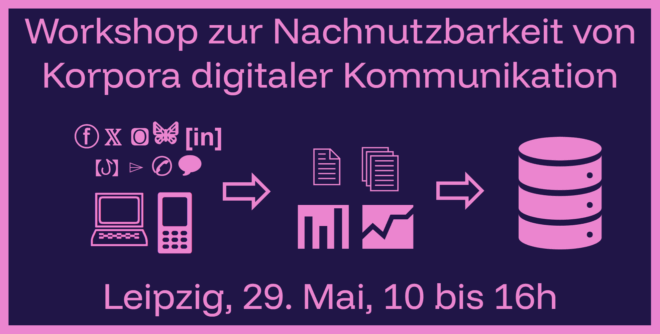
Der Workshop steht unter der Leitfrage: Was bleibt von digitalen Kommunikationskorpora nach Projektende und wie kann ihre wissenschaftliche Nachnutzung verbessert werden?
Beschreibung: Digitale Kommunikationsräume, von Social-Media-Plattformen über Messenger-Dienste bis hin zu digitalen und digitalisierten Zeitungsarchiven, erzeugen eine Vielzahl potenzieller Forschungsdaten für die Kommunikations- und Medienwissenschaft. In vielen Projekten entstehen daraus umfangreiche digitale Korpora. Nach Projektende bleiben diese jedoch häufig schwer auffindbar und nur eingeschränkt nachnutzbar, etwa aufgrund urheber- und datenschutzrechtlicher Rahmenbedingungen sowie komplexer technischer Anforderungen an ihre Reproduzierbarkeit. Der Workshop nimmt diese Herausforderungen zum Ausgangspunkt und diskutiert, wie digitale Kommunikationskorpora erhoben, dokumentiert und wissenschaftlich nachnutzbar gemacht werden können. Dabei sollen sowohl methodische als auch epistemische Fragen der Datafizierung von Kommunikation behandelt werden. Ein besonderer Fokus liegt auf den Bedingungen, unter denen digitale Korpora – auch wenn sie häufig nicht vollständig archiviert werden können – durch einheitliche Dokumentation und Vernetzung noch größere analytische Mehrwerte für die Kommunikations- und Medienwissenschaft liefern können, sowie auf der Frage, welche Rollen Forschungsinfrastrukturen dabei künftig spielen können.
Programm:
Registrierung, Kaffe (9:00-10:00)
Begrüßung (10:00-10:15)
Panel 1 (10:15-12:15)
Titel: „Von digitaler Kommunikation zu Korpora für die Forschung“
Leitfragen: Wie werden Spuren digitaler Kommunikation und digital(isiert)e journalistische Inhalte zu Forschungsdaten – wie prägen methodische, epistemische und praktische Entscheidungen diesen Prozess und welche Potenziale für neue Perspektiven birgt er?
Referent:innen:
Katharina Kinder-Kurlanda (D!ART Universität Klagenfurt; CAIS): Titel folgt
Eric Koenen (ZeMKI Bremen) zu epistemischen Fragen der Digitalität und Digitalisierung ;
Vanessa Angenendt (Universität Duisburg-Essen) zu Datenspenden und Misogynie in Chat-Kommunikation
Mittagsbuffet im Vorraum (11:45-12:45)
Panel 2 (12:45 – 14:15)
Titel: Vom Korpus-Silo zur nachnutzbaren Forschungsdatenlandschaft
Leitfragen: Warum verschwinden digitale Korpora nach Projektende und wie kann ein nicht vollständig teilbarer Korpus trotzdem auffindbar, zitierbar und für Synergien nutzbar werden?
Referent:innen:
Vincent Fröhlich (Universität Erlangen-Nürnberg): Infrastrukturelle Bedarfe der Social-Media-Forschung zu Rechtsextremismus und Verschwörungstheorien
Birte Kuhle (CAIS): Titel folgt
Philipp Knöpfle (IfKW der LMU München) zu Replizierbarkeit von CCS-Studien
Kaffepause (14:15-14:30)
Panel 3 (14:30 – 16:00)
Titel: Vernetzte Kommunikationskorpora analysieren – neue Erkenntnispotenziale und Fallstricke für die KMW
Leitfragen: Welche Voraussetzungen müssen Daten erfüllen, damit CCS Analysen überhaupt valide sind? Welche neuen Analyse- und Erkenntnispotenziale entstehen, wenn digitale Kommunikationskorpora auffindbar, gut dokumentiert, und verknüpfbar werden?
Referent:innen:
Marko Bachl (FU Berlin, Weizenbaum Institut) zu Bias und epistemische Konsequenzen von CCS;
Jakob Jünger (IfK der Universität Münster) Titel folgt
N.N.
Abschlussdiskussion (16:00-16:15)
Die FID Media Bites bieten praxisnahe Wissenshappen für die Kommunikations- und Medienwissenschaft. Zu jedem Termin steht ein Thema aus den Bereichen wissenschaftliches Publizieren, Urheberrecht, Open Science, Tools oder Forschungsdaten im Mittelpunkt, und zwar jeweils mit dem Fokus auf den fachspezifischen Rahmenbedingungen der Kommunikations- und Medienwissenschaft.
Die FID Media Bites finden während der Vorlesungszeit freitags von 11 bis 12 Uhr via Zoom statt. Im ersten Teil der Veranstaltung wird es einen thematischen Input geben und im zweiten Raum für Diskussion und Fragen.
Im Sommersemester setzen sich die FID Media Bites mit Predatory Publishing, digitalen Zugangsmöglichkeiten und aktuellen (KI-)Anwendungen von/für Archivbeständen sowie manueller und KI-assistierter Annotation auseinander. Die Inhalte basieren auf Themenwünschen der Teilnehmenden des Wintersemesters.
Die FID Media Bites richten sich an Forschende aller Karrierestufen, Mitarbeitende aus Infrastruktureinrichtungen in den entsprechenden Fachgebieten, Studierende sowie Interessierte. Organisiert und moderiert werden die FID Media Bites durch das Koordinationsteam des FID Media.
Die „FID Media Bites“ finden in diesem Zoom-Raum statt. Es ist keine Anmeldung nötig.
8. Mai 2026, 11:00 bis 12:00 Uhr
Maximilian Heimstädt (Hamburg): Predatory Publishing. Ein kleines Bestiarium des Raubtierverlegens
12. Juni 2026, 11:00 bis 12:00 Uhr
Götz Lachwitz (Potsdam): Bestände des Deutschen Rundfunkarchivs
3. Juli 2026, 11:00 bis 12:00 Uhr
Josephine Diecke und Eric Müller-Budack (Zürich/Hannover): Zwischen manueller Annotation und generativer KI. Hybride Workflows für audiovisuelle Analysen mit VIAN & TIB-AV-A
Alle Informationen und Zoomlink unter: https://tcdh.uni-trier.de/de/event/programm-des-tcdh-forschungskolloquiums-perspektiven-der-digital-humanities-1
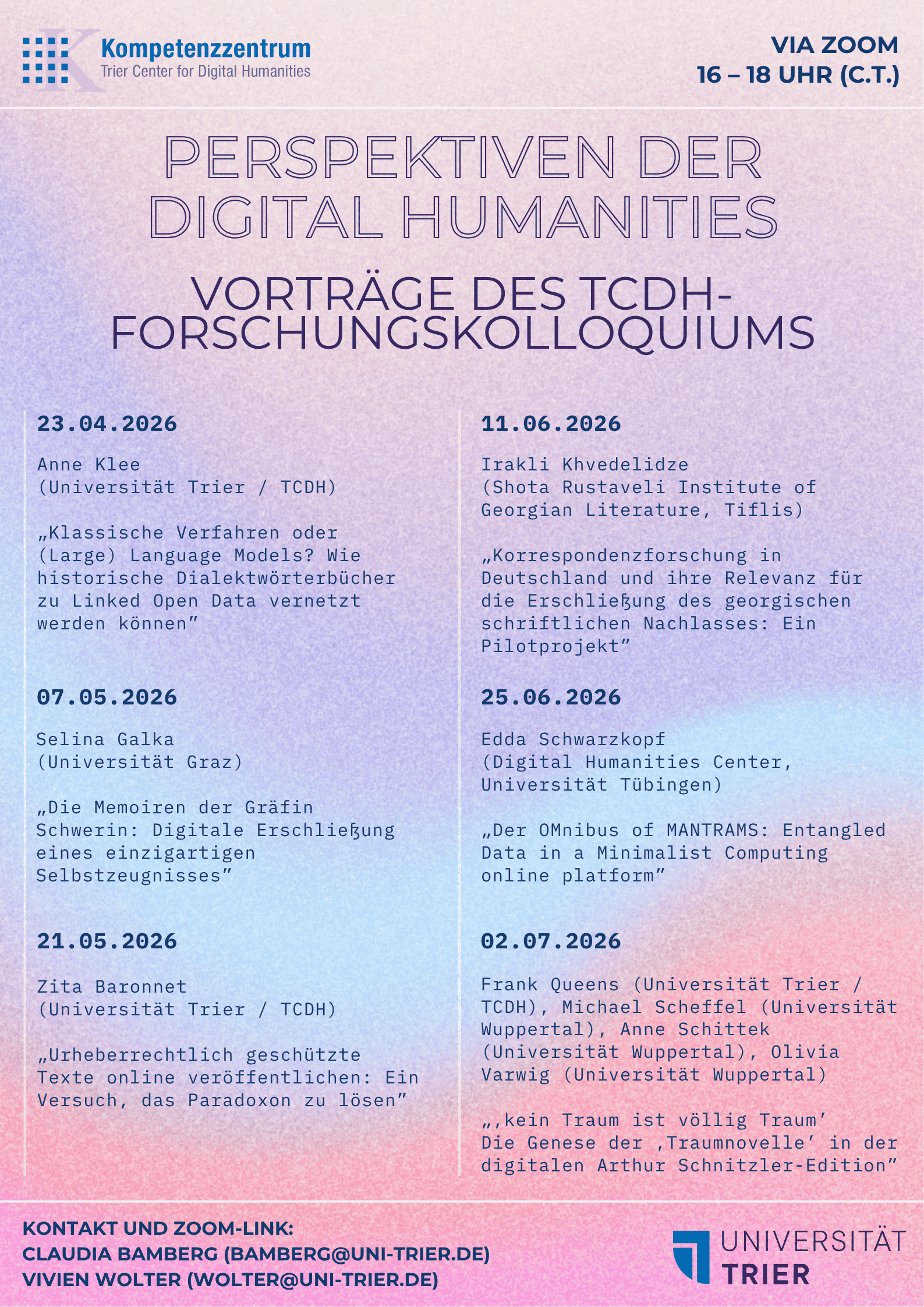
Im Sommersemester 2026 setzen wir unsere Vortragsreihe im Rahmen des TCDH-Forschungskolloquiums fort. Das Spektrum reicht in diesem Semester von Fragen der digitalen Erschließung und Vernetzung historischer Texte und Wörterbücher über rechtliche und ethische Herausforderungen im Umgang mit Forschungsdaten bis hin zu digitalen Editionen und Plattformlösungen für die geisteswissenschaftliche Forschung.
Sie sind herzlich eingeladen, teilzunehmen und mitzudiskutieren!
Programm:
23.04.2026
07.05.2026
21.05.2026
11.06.2026
25.06.2026
02.07.2026
2025년 포르투갈 리스본에서 열린 세계 디지털인문학 학술대회인 <DH2025>의 초록집(The Book of Abstracts)이 공개됐습니다.
천페이지가 넘는 PDF 파일입니다. 본인 발표 및 각종 발표를 살펴볼 수 있는 기회입니다.
https://doi.org/10.5281/zenodo.19494801

게시물 DH2025 Book of Abstracts 공개이 KADH / 한국디지털인문학협의회에 처음 등장했습니다.
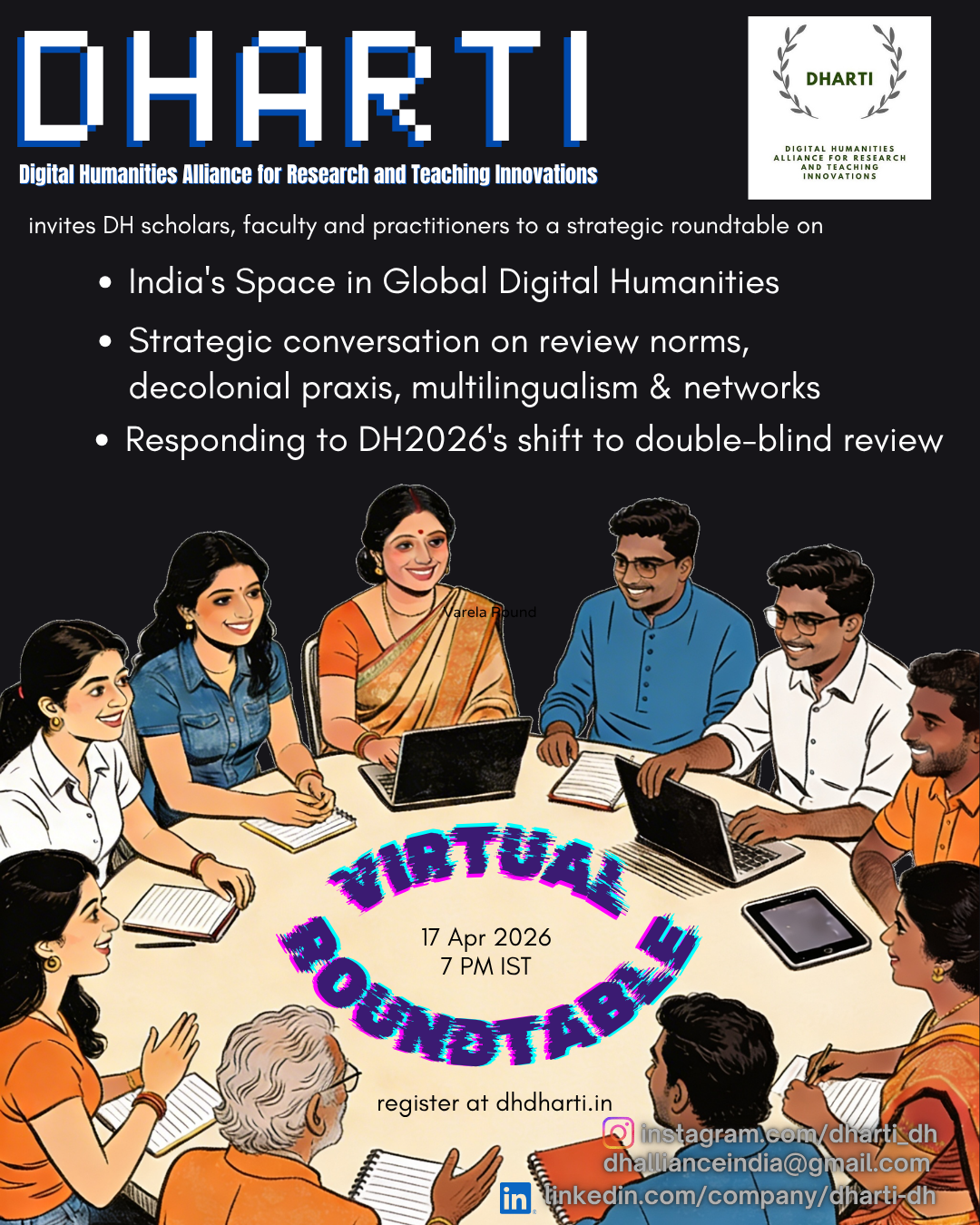
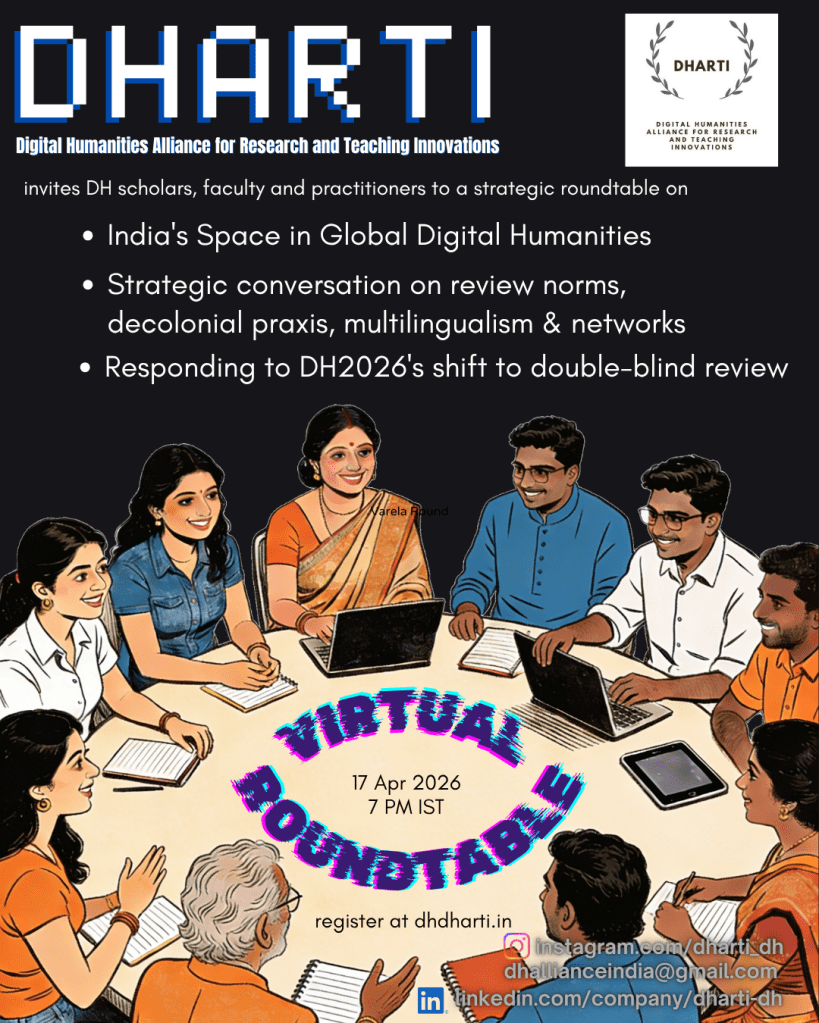
안녕하세요! 카이스트 디지털인문사회과학부의 김태균입니다.
올해 여름, KAIST에서 계산사회과학(Computational Social Science, CSS)에 관심 있는 분들을 위한 집중 프로그램인 <2026 SICSS-Korea (Summer Institute in Computational Social Science)>를 KDI School과 함께 개최할 예정입니다(with 윤지성 교수님, 조성아 교수님).
최근 들어 계산사회과학은 그 어느 때보다 중요해지고 있습니다. 이는 새로운 방법론의 등장 때문만이 아니라, 사람, 정보, 기술, 제도 등이 서로 얽혀 만들어내는 사회적 과정을 사회과학의 이론적 관점과 데이터·컴퓨팅을 결합하여 이해하는 것의 중요성이 매우 커지고 있기 때문입니다. 특히나 인공지능이 이러한 사회적 과정 위에서 작동하고 이를 다시 재구성하는 핵심 기술로 자리 잡으면서, 이러한 이해의 필요성은 아주 커지고 있습니다.
이런 맥락에서 계산사회과학은 사회과학 연구에 컴퓨팅을 적용하는 것을 포함하는 건은 물론이거니와, 사람, 정보, 기술, 제도 등이 어떻게 상호작용하는지를 이해하려는 다학제적 시도입니다. 정치학, 지리학, 사회학, 커뮤니케이션, 경제학 등 다양한 사회과학 분야와, 산업공학, 컴퓨터과학, 정보학, 네트워크과학 등의 통찰을 연결하며, 그동안 분절적으로 다뤄져 왔던 연구 흐름들을 하나의 관점으로 통합합니다.
—
이번 프로그램에는 국내외에서 활동하는 계산사회과학 분야의 탑 클래스 연구자들이 참여하여 강연을 진행할 예정입니다. 최신 연구 흐름과 방법론을 직접 접할 수 있는 기회가 될 것입니다. 이와 더불어, 이번 프로그램은 단순한 강의 중심 프로그램에 그치지 않고, 참가자들이 직접 아이디어를 발전시키고 함께 연구를 논의하는 작고 밀도 있는 1주 프로그램으로 구성되어 있습니다.
약 15명 내외로 소수 인원을 선발하며, 선발된 참가자에게는 KAIST 기숙사 숙박 및 다수의 식사가 지원됩니다(단, 이동 비용은 지원되지 않습니다).
다음은 주요 일정입니다. 특히 4월 23일 2시에 온라인 설명회가 예정되어 있으니 많이 참여 부탁 드립니다(RSVP 링크 및 줌 링크는 포스터 참고):
일정: 2026년 6월 22일–27일
장소: KAIST 대전 캠퍼스 N4 디지털인문사회과학부
온라인 설명회: 2026년 4월 23일 (오후 2시, KST)
지원 마감: 2026년 5월 4일
결과 발표: 2026년 5월 6일

게시물 2026 SICSS-Korea이 KADH / 한국디지털인문학협의회에 처음 등장했습니다.
https://site.hanyang.ac.kr/web/faculty/26-3-5

게시물 [채용] 전임 / 한양대 인문과학대학 / 2026년도 2학기이 KADH / 한국디지털인문학협의회에 처음 등장했습니다.
In schnellen Schritten geht es auf die DHd2027 in Marburg zu. Daher möchten wir uns an dieser Stelle noch einmal herzlich für die Konferenzbegleitungsbeiträge unserer Reisestipendiat:innen der DHd2026 bedanken. Stipendien gab es für Doktorand:innen und (very) early career DHers. Sie wurden vom DHd-Verband sowie von NFDI4Culture, NFDI4Memory und CLARIAH-AT vergeben.
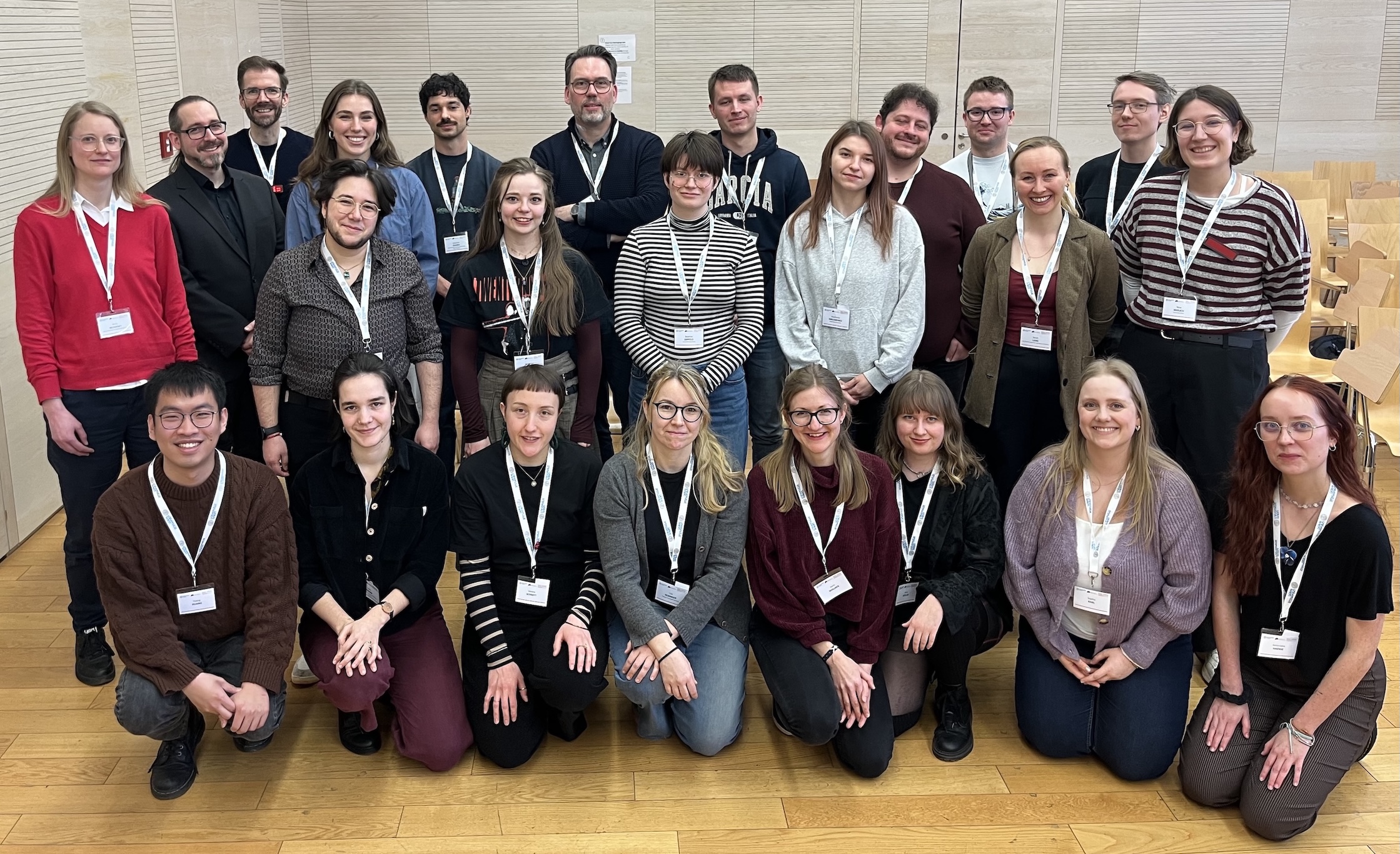
Die Stipendiat:innen konnten im Gegenzug die Konferenz entweder auf Social Media begleiten oder haben im Anschluss an die Tagung jeweils einen Blogpost verfasst, der die breite Palette an Themen und Ansätzen auf der DHd dokumentiert. Nachfolgend findet sich eine Übersicht über die verschiedenen Blogposts mit den dazugehörigen Links:
Diese Blogposts in ihrer Themenvielfalt zeigen die Bandbreite der Methoden und Ansätze in den Digital Humanities im deutschsprachigen Raum. Die vielseitigen Beiträge der Stipendiat:innen sind ein wertvoller Beitrag zur Dokumentation der Diskurse und Erlebnisse der DHd2026, wofür wir uns ganz herzlich bedanken!
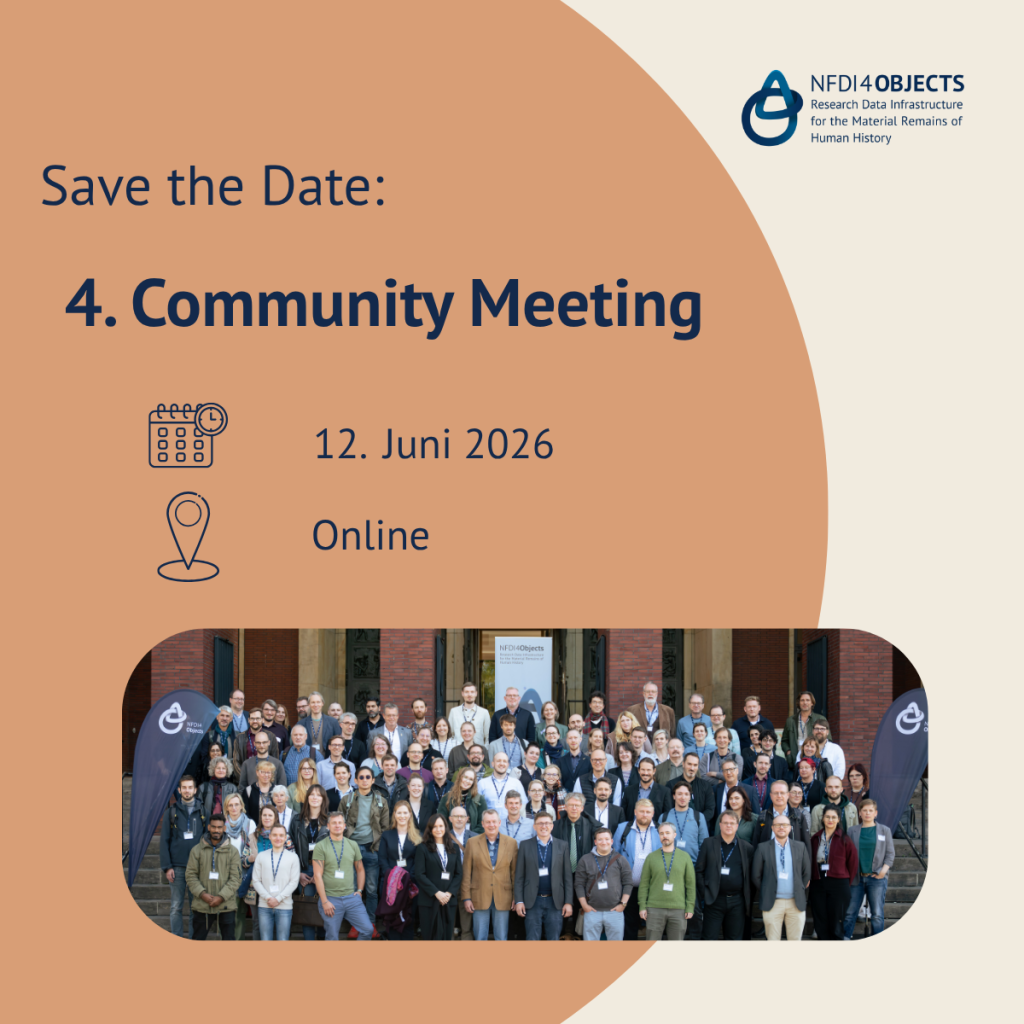
Das vierte Community Meeting 2026 von NFDI4Objects findet virtuell statt! Die Veranstaltung richtet sich an Einsteiger:innen und Interessierte und bietet spannende Einblicke in die Arbeit des Konsortiums. Freut euch auf interaktive Formate, Austauschmöglichkeiten und dezentrale Online-Workshops.
Programm und Workshop-Termine folgen in Kürze – merken Sie sich den Termin schon jetzt vor!
Hiermit laden wir Euch sehr herzlich zum nächsten Clustertreffen des CC „Authority Files and Community-driven Vocabularies“ am 29. April 2026, von 13 bis 14:30 Uhr, ein. Dieses Mal wird es ein Hands on für DANTE mit unserem Chair Michael Markert von der VZG geben.
DANTE ist ein Webservice zur Pflege und Veröffentlichung von Vokabularen, der von der Verbundzentrale des GBV auch für NFDI4Objects-Institutionen bereitgestellt wird. Zu unserem Hands-On-Treffen wollen wir gemeinsam Datensätze im DANTE-Testpool anlegen und bearbeiten, damit neue Nutzer:innen sich mit der Funktionalität vertraut machen können.
Bringt gern Beispieldaten aus dem Bereich Personen, Körperschaften, Orte und Sachbegriffe zum Ausprobieren mit!
Es wäre schön, wenn auch erfahrene DANTE-Nutzer:innen zur Unterstützung bei Fragen dabei sein könnten.
Hier sind die Zoom-Zugangsdaten: https://dainst-org.zoom.us/j/93752320746?pwd=HTwLEQw0aUraauAoZbx8hpnKnse6PD.1
Meeting-ID: 937 5232 0746
Kenncode: 673534
Dieses Mal würde wir uns aus Planungsgründen über Anmeldungen im Vorfeld sehr freuen.
Am Dienstag, 28. April 2026 von 9 bis 11 Uhr findet die nächste Sitzung des Community Clusters Protected Heritage Sites online statt.
Themen der Sitzung sind:
Abschluss: Datenmodelle für Maßnahmenobjekte und Schutzflächen
Voraussichtlich wird dies die letzte Sitzung sein, in der die Modelle Thema sind. Falls Sie keine Zeit haben, an dem Treffen teilzunehmen, schicken Sie daher gerne Ihre Anmerkungen per E-Mail, damit sie in der Diskussion berücksichtigt werden können.
Zoom-Raum: https://zoom.us/j/91094521138?pwd=zJLwXZetdBcpMpssA9RpZPVCRFUWDP.1
Meeting-ID: 910 9452 1138
Kenncode: 286763
Das Protokoll der 15. Sitzung des CC Protected Heritage Sites vom 12.03. ist ab sofort via OSF verfügbar: https://osf.io/pwzg4/.
Hier finden Sie auch die aktuellen Entwürfe der Datenmodelle.
Im Rahmen des Community Clusters Data Capture and Creation findet am 12. Mai 2026 von 14:30-16:00 Uhr die Vorstellung der App und Datendrehscheibe Fund-Logbuch statt. Die im Aufbau befindliche Infrastruktur bietet eine digitale Lösung für die Erfassung archäologischer Kleinfunde in der Citizen Science. Sie soll sicherstellen, dass Neufunde zukünftig schneller und ohne Umwege in Forschung und Denkmalschutz einfließen und Citizen-Science-Daten in der Archäologie sichtbarer werden. Die Präsentation beinhaltet eine Live-Demonstration der bereits als Prototyp existierenden App in einem realen Anwendungsszenario.
Unsere vortragenden Kolleg:innen Niels Cederstrom (Dataport AöR) und Johanne Lefeldt (GDKE) freuen sich auf den Austausch mit Euch.
Hier sind die Zugangsdaten zu Zoom:
https://dainst-org.zoom.us/j/93071809817?pwd=YVscWm2i20FHyG8hgVhcO712Wya9Vv.1
Meeting-ID: 930 7180 9817
Kenncode: 032259
Eine vorherige Anmeldung ist nicht notwendig.
