普通视图

Received before yesterday

The SSH Open Marketplace Editorial Board is happy to invite you to a series of 8 hands-on workshops to strengthen FAIR and digital research skills

2026年1月22日 16:26

The SSH Open Marketplace Editorial Board is happy to invite you to a series of 8 hands-on workshops to strengthen FAIR and digital research skills.

Click here to see the flyer for the events.

Save the dates and register here!

The Social Sciences and Humanities Open Marketplace is a discovery portal which pools and contextualises resources for Social Sciences and Humanities research communities: tools, services, training materials, datasets, publications and workflows.

The Marketplace highlights and showcases solutions and research practices for every step of the SSH research data life cycle.

Training Series Learning objectives 

  1. Understand Open Science, FAIR and CARE principles in practice
    Participants will be able to explain the Open Science paradigm and the FAIR and CARE principles, and assess their implications for responsible research data management across the full data lifecycle in the arts and humanities, social sciences, language sciences, and GLAM-related research.
  2. Navigate and critically use the SSH Open Marketplace
    Participants will be able to confidently navigate the SSH Open Marketplace to discover, evaluate, and select relevant tools, services, datasets, workflows, and training materials for their research needs.
  3. Integrate digital resources into research workflows
    Participants will be able to incorporate SSH Open Marketplace resources into discipline-specific research workflows, enhancing transparency, reproducibility, and efficiency in arts and humanities, social sciences, language sciences, and GLAM-related research.
  4. Contribute to and curate resources
    Participants will be able to contribute their own communities’ high-quality resources to the SSH Open Marketplace by applying editorial guidelines, metadata standards, and best practices for documentation, interoperability, and reuse, as well as reuse Marketplace resources to support reproducible and transparent research practices.
  5. Apply domain-specific standards, resources and research practices
    Participants will be able to document, share, and reuse domain-specific research workflows, data, and tools within arts and humanities (DARIAH), social sciences (CESSDA), language sciences (CLARIN), cultural heritage contexts, thereby fostering interoperability, FAIR compliance, and sustainable knowledge exchange within national and European research infrastructures
  6. Leverage the SSH Open Marketplace for community-specific applications

Participants will be able to design and implement customized application scenarios by utilizing the SSH Open Marketplace to create, curate, and disseminate tailored resource lists or complex catalogs that meet the specific needs and standards of their respective research communities.

Overview of sessions and learning objectives per session

Training sessionLearning objectives
20 February: FAIR, CARE & Open Science Principles      1. Explain the core principles of Open Research and their relevance for SSH research practices.2. Distinguish between FAIR and CARE principles and understand their complementary roles in data governance.3. Identify key FAIR-compliant research infrastructures relevant to SSH research.4. Assess the implications of Open Science requirements for data management planning and project design.5. Apply FAIR and CARE principles to a concrete research use case or project scenario.
20 March: Introduction to SSH Open Marketplace     1. Describe the purpose, scope, and added value of the SSH Open Marketplace for SSH research.2. Navigate the SSH Open Marketplace interface to locate resources (tools, services, datasets, training materials, and workflows).3. Use search and filtering functions to identify relevant resources for a specific research question.4. Understand how the Marketplace connects community use-cases to European SSH research infrastructures.5. Select appropriate resources from the Marketplace for early-stage or exploratory research tasks.
17 April: Making the most of the SSH Open Marketplace     1. Explore and differentiate advanced resource types such as workflows.2. Integrate Marketplace resources into existing research workflows.3. Evaluate the quality, relevance, and reuse potential of Marketplace entries using metadata and relations.4. Enrich existing Marketplace records by adding metadata, links, and contextual information.5. (Re)use Marketplace resources to support reproducible and transparent research practices.
15 May: Contributing to the SSH Open Marketplace      1. Understand the role of community contributions in sustaining the SSH Open Marketplace.2. Add new tools, datasets, workflows, or training materials to the Marketplace.3. Apply editorial guidelines and quality standards for resource curation.4. Use metadata schemas and controlled vocabularies to improve interoperability and discoverability.5. Critically review and improve existing Marketplace entries to enhance reuse and FAIRness.6. Understand programmatic access and re-use of marketplace material via API and WordPress plug-ins.
19 June: Thematic Art and Humanities     1. Identify DARIAH services and workflows relevant to arts and humanities research.2. Understand how arts and humanities research workflows are represented in the SSH Open Marketplace.3. Apply DARIAH tools and workflows (e.g. ATRIUM) to concrete research scenarios.4. Integrate heterogeneous data types typical of arts and humanities research into FAIR-aligned workflows.5. Share and document arts and humanities workflows for reuse within the SSH community.
18 September: Thematic GLAM institutions     1. Understand the specific characteristics and challenges of cultural heritage and GLAM data.2. Identify relevant tools, standards, and services for GLAM data in the SSH Open Marketplace.3. Apply FAIR principles to digitised and born-digital cultural heritage data.4. Integrate GLAM datasets into interdisciplinary SSH research workflows.5. Promote reuse and sustainability of cultural heritage data through documentation and sharing practices.
16 October: Thematic language data     1. Identify CLARIN services and standards for managing and analysing language data.2. Understand FAIR and legal/ethical challenges specific to language data (e.g. sensitive or personal data).3. Use the SSH Open Marketplace to discover language resources, tools, and workflows.4. Integrate CLARIN tools into linguistic research workflows.5. Prepare and document language datasets for reuse within national and European infrastructures.
20 November: Thematic Social sciences     1. Identify CESSDA services, standards, and tools relevant to social science research.2. Understand best practices for managing, documenting, and sharing social science data.3. Use the SSH Open Marketplace to locate CESSDA-related datasets and services.4. Apply FAIR and ethical principles to quantitative and qualitative social science data.5. Connect social science research workflows to European data services and infrastructures.

FAIR-by-design learning materials

The training series are conceptualised following the FAIR-by-design methodology developed in skills4EOSC (Filiposka et al. 2024), which consists in taking a systematic approach for conceptualizing each training session, e.g. defining the target audience, the learning objectives and the means to achieve them in each training session, publishing the materials and guides about how to use them, among others. FAIR learning materials enable the reuse of the materials both by learners and by trainers.

Target audience

The workshop series is aimed at a broad audience with links to the social sciences and humanities – from beginners to experienced researchers and practitioners who want to contribute their perspectives or benefit from the experiences of others.

More about the SSH Open Marketplace

The SSH Open Marketplace is:

  • a discovery portal, to foster serendipity in digital methods
  • an aggregator of useful and well curated resources
  • a catalogue, contextualising resources
  • an entry point in the EOSC for the Social Sciences and Humanities researchers

The SSH Open Marketplace is not:

  • a repository. Nothing is hosted in the SSH Open Marketplace. Workflow content type can be hosted, but this is an exception.
  • a data catalogue. The goal is not to collect all the SSH datasets, but selected datasets are indexed to support the contextualisation (dataset mentioned in a publication or used in a training material for example).
  • a commercial Marketplace. There is nothing to sell in the SSH Open Marketplace. Commercial software/services can be referenced

SSH Open Marketplace & FAIR Practices Training Series 2026

2025年12月4日 00:04

Das SSH Open Marketplace Editorial Board startet 2026 eine achtteilige praxisorientierte Online-Workshopreihe, um digitale Kompetenzen und FAIR-Praktiken in den Sozial- und Geisteswissenschaften zu stärken. Jeden dritten Freitag im Monat von 13:00 bis 14:30 Uhr (CET), geht es online um offene Wissenschaft, gute Datenpraxis und den smarten Einsatz des SSH Open Marketplace im Forschungsalltag. Die Termine reichen von Feburar bis November 2026 – mit einer Pause im Juli und August.

Worum geht es?

Die SSH Open Marketplace & FAIR Practices Training Series 2026 verbindet Schlüsselfragen von FAIR, CARE und Open Science mit praktischen Hands-on-Sessions rund um den SSH Open Marketplace als Discovery-Portal für Tools, Services, Trainingsmaterialien, Daten und Workflows. Der Adressatenkreis sind allgemein Interessierte mit Bezug zu den Social Sciences and Humanities, aber insbesondere Forschende, Datenmanager:innen und Forschungsservices in den SSH, die ihre Daten und Workflows besser auffindbar, nachnutzbar und anschlussfähig machen wollen – ohne sich allein durch die Vielzahl an Angeboten kämpfen zu müssen.

Weitere Hintergrundinformationen rund um den SSH Open Marketplace sowie das Editorial Team gibt es hier.

Save the dates

– 20. Februar: FAIR, CARE & Open Science Principles

– 20. März: Introduction to SSH Open Marketplace

– 17. April: Making the most of the SSH Open Marketplace

– 15. Mai: Contributing to SSH Open Marketplace

–  19. Juni: Thematic Arts and Humanities

– 18. September: Thematic GLAM institutions

– 16. Oktober: Thematic language data

– 20. November: Thematic Social sciences

Die Teilnahme ist online, kostenfrei und auf Interaktion ausgelegt: In allen Sessions sind Fragen, Use Cases aus laufenden Forschungsprojekten wie auch der Blick in eigene Datenbestände gerne gesehen. Wer sich nun den Vorsatz gesetzt hat, im kommenden Jahr die eigenen digitalen Forschungspraktiken weiter auszubauen, kann sich hier registrieren, um auf dem Laufenden zu bleiben.

Download

SSHOMP_2026 Online Training Series (PDF)

GKFI-/Text+-Editathon zur Beschreibung von Ressourcen im SSH Open Marketplace am 24. Juni 2024

2024年4月10日 13:51

Der Verein Geistes- und Kulturwissenschaftliche Forschungsinfrastrukturen (GKFI e.V.) und Text+ führen in Zusammenarbeit mit dem SSH Open Marketplace auf Einladung der Max Weber Stiftung am 24. Juni 2024 einen Editathon durch.

HIER direkt zur Anmeldung!

Ziel

Ziel unserer Veranstaltung ist es, Ressourcen für die geistes- und kulturwissenschaftliche Community, bspw. Dienste, Tutorials, Software oder ganze Workflows, im SSH Open Marketplace entweder neu anzulegen oder bestehende Beschreibungen zu kuratieren.

Warum?

Mit dem Verein Geistes- und kulturwissenschaftliche Forschungsinfrastrukturen und Text+ bieten sich zwei Anwendungsfälle, die den SSH Open Marketplace für die Darstellung der eigenen Angebote nutzen. Anstelle von (ggf. proprietären) Eigenentwicklungen setzen GKFI und Text+ auf den Marketplace als eine bestehende Lösung

  • die verfügbar und auch mindestens mittelfristig verfügbar bleiben wird,
  • intuitiv manuell bedienbar ist,
  • über Harvesting gut in andere Infrastrukturen einbindbar ist, sowie
  • mit einem aktiven Editorial Board als Scharnier zur Community ausgestattet ist.  


Ablauf

Der Editathon wird mit einem kurzen Impuls von Michael Kurzmeier (Austrian Centre for Digital Humanities and Cultural Heritage) beginnen. Michael ist Mitglied des Editorial Board des SSH Open Marketplace und wird einen Einblick in die Struktur des Marketplace und Anwendungsbeispiele aus verschiedenen Kontexten geben.

Danach werden Nanette und Stefan uns kurz die Anwendungsfälle von GKFI und Text+ zeigen und die Arbeitsweise und Ziele des Editathons erklären, wobei ein Schwerpunkt auf der Anwendbarkeit der vorgestellten Verfahren in anderen Kontexten liegen wird. Andere Kontexte können jegliche geistes- und kulturwissenschaftliche Initativen sein, wobei wir uns eine Anwendbarkeit insbesondere im FID- oder NFDI-Kontext gut vorstellen können.

Anschließend werden wir uns in Einzelarbeit und in Gruppen die Zeit nehmen, in entspannter Atmosphäre zusammen, Ressourcen im Marketplace zu kuratieren. Idealerweise haben wir am Ende als Ergebnis neu hinzugekommene Ressourcen, viele angereicherte bestehende Ressourcen sowie vielleicht auch zwei, drei neu angelegte Workflows.

Wer Zeit und Lust hat, ist dann Abends noch bei einem Besuch eines örtlichen Restaurants auf Selbstzahlerbasis dabei.

Wer kann mitmachen?

Wir sprechen in erster Linie die Mitglieder des GKFI sowie Beteiligte von Text+ und den geistes- und kulturwissenschaftlichen NFDI-Konsortien an. Herzlich eingeladen sind aber auch Kolleginnen und Kollegen aus anderen Kontexten, die den SSH Open Marketplace für die Beschreibung ihrer Ressourcen oder Workflows nutzen möchten. Die disziplinäre Klammer sind Ressourcen mit einem geistes- und kultur- sowie sozialwissenschaftlichen Bezug gemäß der SSH-Ausrichtung.

Wie kann ich mitmachen?

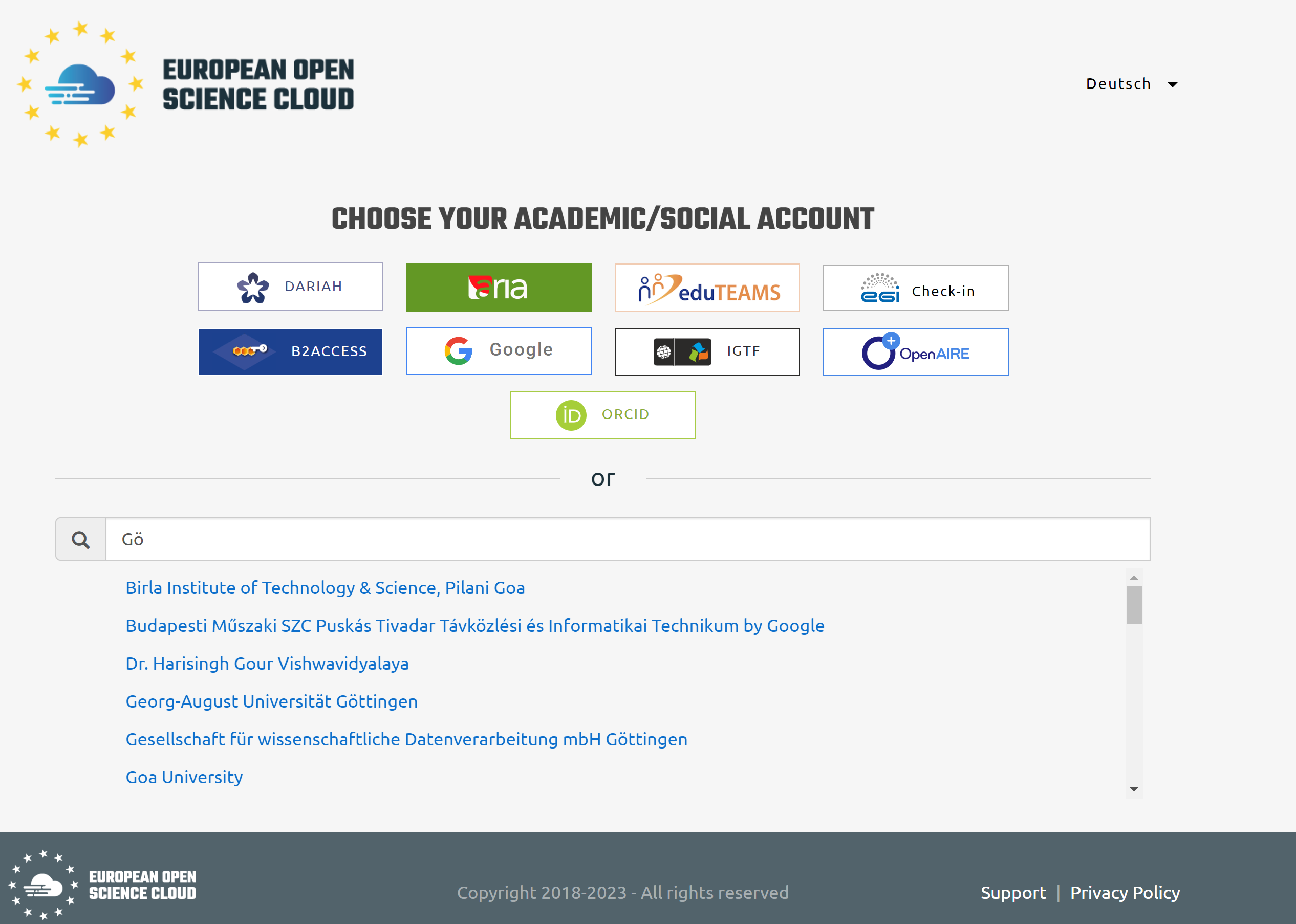
Relativ einfach! Bitte prüfen Sie vor der Anmeldung, ob Sie sich mit bereits vorhandenen Credentials im SSH Open Marketplace anmelden können. Dafür einfach auf https://marketplace.sshopencloud.eu/ rechts oben die Sign In-Funktion nutzen, die auf u.g. Seite führt. 

Falls Sie dabei auf Probleme stoßen, melden sich gerne bei uns. Auch alle weiteren Fragen oder Wünsche können jederzeit gerne an uns gerichtet werden: textplus-operations-office@lists.gwdg.de

Muss ich was mitbringen?

Wir werden Material vorbereiten, mit dem die Teilnehmerinnen und Teilnehmer ohne Vorkenntnisse vor Ort arbeiten können. Damit man aber auch „mit etwas nach Hause gehen kann“, wäre es wichtig, wenn sich jede/jeder konkrete Ressourcen überlegt, die neu in den Marketplace aufgenommen werden könnten. Für die Partnereinrichtungen des GKFIs ist dies eine sehr gute Gelegenheit, die eigenen in den Verein eingebrachten Angebots zu beschreiben und ihnen eine internationale Plattform zu bieten. Für Text+ können das bspw. Ressourcen aus den Daten- und Kompetenzzentren sein, die – sobald sie im Marketplace erschlossen sind – automatisch auch auf dem Text+ Portal erscheinen. Für alle anderen: die Sichtbarkeit eigener Ressourcen im Marketplace ist auch für sich bereits ein lohnenswerter Anreiz und sinnvoll für Uptake und Sichtbarkeit, außerdem ermöglicht der Eintrag das Harvesten von verschiedener Stelle mittels gut dokumentierter API.

Darüber hinaus ist es wichtig, dass jede/jeder ein Arbeitsgerät dabei hat. Ob Smartphone, Tablet oder Notebook ist dabei egal.  

Hier könnt ihr euch anmelden: https://events.gwdg.de/event/765/ und findet ihr weitere Informationen.

Die Teilnahmemöglichkeit vor Ort in der Geschäftsstelle der Max Weber Stiftung ist auf 20 Personen beschränkt.

Wir freuen uns auf euch!

Noch ein paar Informationen zur Vorbereitung…

Über den SSH Open Marketplace

Der Social Sciences and Humanities Open Marketplace, der im Rahmen des Social Sciences and Humanities Open Cloud-Projekts (SSHOC) aufgebaut wurde, ist ein Discoveryportal, das Ressourcen für sozial- und geisteswissenschaftliche Forschungsgemeinschaften bündelt und kontextualisiert: Werkzeuge, Dienste, Schulungsmaterialien, Datensätze, Veröffentlichungen und Workflows. Auf dem Marktplatz werden Lösungen und Forschungspraktiken für jeden Schritt im Lebenszyklus der SSH-Forschungsdaten vorgestellt.

Der SSH Open Marketplace wird für Text+ eine wichtige Rolle hinsichtlich der Dienstepräsentation einnehmen. Über die Entität Dienste wird ein vom Marketplace geharvestetes Subset in der Text+ Registry angezeigt werden.

Der SSH Open Marketplace ist:
* ein Discoveryportal, das Search Serendipity bei digitalen Methoden fördert
* ein Aggregator für nützliche und gut kuratierte Ressourcen
* ein Katalog, der Ressourcen kontextualisiert
* ein Einstiegspunkt in das EOSC für Forscher aus den Sozial- und Geisteswissenschaften

Bibliographie

Stefan Buddenbohm, Melina Jander, Thorsten Trippel, Lukas Weimer & Nathalie Walker(2021). In-kind Contributions for two ERICs in one National Initiative: Practices and Experiences in CLARIAH-DE. Zenodo. https://doi.org/10.5281/zenodo.5516817

Nanette Rißler-Pipka, Melina Jander, Laure Barbot, Stefan Buddenbohm, & Edward Gray. (2022). Guidelines for adding DARIAH National Resources to the SSH Open Marketplace (0.1). Zenodo. https://doi.org/10.5281/zenodo.7410294

Nanette Rißler-Pipka, Melina Jander, Laure Barbot, Stefan Buddenbohm, & Edward Gray. (2022). Handreichung für das Einpflegen von DARIAH National Resources im SSH Open Marketplace (0.1). Zenodo. https://doi.org/10.5281/zenodo.7342474

Nanette Rißler-Pipka, Melina Jander, Laure Barbot, Stefan Buddenbohm, & Edward Gray. (2023). Handreichung für das Einpflegen von Angeboten des GKFI e.V. in den SSH Open Marketplace (0.1). Zenodo. https://doi.org/10.5281/zenodo.7646522

Laure Barbot, Edward Gray, Frank Fischer, Matej Ďurčo, Alexander König, Marie Puren, Stefan Buddenbohm, Cesare Concordia, & Klaus Illmayer. (2022). The SSH Open Marketplace: a multi-voiced story. Storytelling – DARIAH Annual Event 2022, Athens, Greece and online. Zenodo. https://doi.org/10.5281/zenodo.6580303

❌