
普通视图

Received before yesterday

My digital humanities makerspace research

2024年8月6日 12:00

My DH 2024 conference talk on my recent book-adjacent data physicalizations and makerspace research, as part of co-facilitating the #DHmakes mini-conference. What is #DHmakes? Briefly: anyone (you?) DH-adjacent sharing their (DH or not) crafty or making work with the #DHmakes hashtag, getting supportive community feedback. Resulting collaborations have included conference sessions and a journal article. For an in-depth explanation of #DHmakes’s history, rationale, goals, examples, see the peer-reviewed article I recently co-authored with Quinn Dombrowski and Claudia Berger on the topic.

Hey! I’m Amanda Wyatt Visconti (they/them). I’m Director of the Scholars’ Lab at the University of Virginia Library.

My background’s in librarianship, literature and textual scholarship, so a lot of my making is reading- or book-adjacent. I know the ways we do and share knowledge work can take really any format, as can the things that influence our scholarly thinking. I have been informed or inspired by, for example, a literal bread recipe; fictional creative work that explores new possibilities, or conveys an ethos I took back to my research; tutorials, informal discussions, datasets, infrastructural and administrative work, zines, social media posts, and countless other of the ways humans create and share thinking*.

First slide from my DH2024 #DHmakes talk, showing screenshots of my zine grid and zine database, and saying "to amplify & credit more formats of knowledge: data => making!"

Why make book-adjacent prototypes?

“Generous” citation—in whom we cite, and what formats of work we cite—is actually just accurate citation. Academia routinely lags in citing all the emails, attended conference talks, social media posts, elevator conversations, podcasts, reviewer comments, and more that inspire and inform our scholarship. With my particular context of a library-based lab: physical scholarship displays in academic libraries tend to disinclude relevant reads that aren’t in a print scholarly book or journal format.

It’s hard to display many of the formats I just listed, but also many people don’t think of them as worth displaying? This sends a message that some scholarly formats or methods are lesser, or not relevant to the building and sharing of knowledge. We know there’s systemic racism, sexism, and other harms in publishing and academia. Limiting ourselves to displaying and amplifying just some of the most gatekept formats of knowledge sharing—books and journal articles—fails at presenting a welcoming, inclusive, and accurate picture of what relevant work exists to inform and inspire around a given topic.

So, I’ve been using making projects to change what scholarly formats and authors the Scholars’ Lab will be able to amplify in its public space…

Data-driven research making

I started by focusing on collecting and describing a variety of DHy digital and physical zines, though I hope to expand the dataset to other formats eventually. (Briefly, you can think of zines as DIY self-published booklets, usually intended for replication and free dissemination, usually in multiple copies as opposed to some artists’ books being single-copy-only or non-replicable.) In the upper-left of the slide is a slice of my digital “zine quilt”, a webpage grid of zine covers from zines in my collection.

Second slide from my DH2024 #DHmakes talk, showing photos of my digital zine cover grid, themed reading card decks, a notebook open to design drawings, and a pile of makerspace supplies including a neon loop and a book cover

Having a richly described zine-y database I know by heart, because I researched and typed in every piece of it, has opened my eyes to ways data can suggest data-based research making.

I’ve got 3 crafting projects based on this zine database so far:

1st, I created a playing card deck that fits in a little case you can slip into your pocket. Each card has the title and creators of a zine, and a QR code that takes you to where you can read the zine for free online. This lets me hand out fun little themed reading lists or bibliographies, as shuffle-able card decks… or potentially play some really confusing poker, I guess?

2nd, I’m learning to work better with LEDs, sheet acrylic, and glass by reverse-engineering a simple and less gorgeous version of Aidan Kang’s Luminous Books art installation. Kang’s sculptures fills shelves with translucent, glowing boxes that are shaped and sized like books with colorful book covers. I’ve been prototyping with cardboard, figuring out how to glue glass and acrylic securely, and figuring out programmable lights so I can make these book-shaped boxes pulse and change color. I hope to design and print fake “covers” for non-book reads like a DH project or a dataset. This would let me set these glowy neon fake books on our real book shelves, where the colored light might draw people to look at them, and follow a link to interact with the read further.

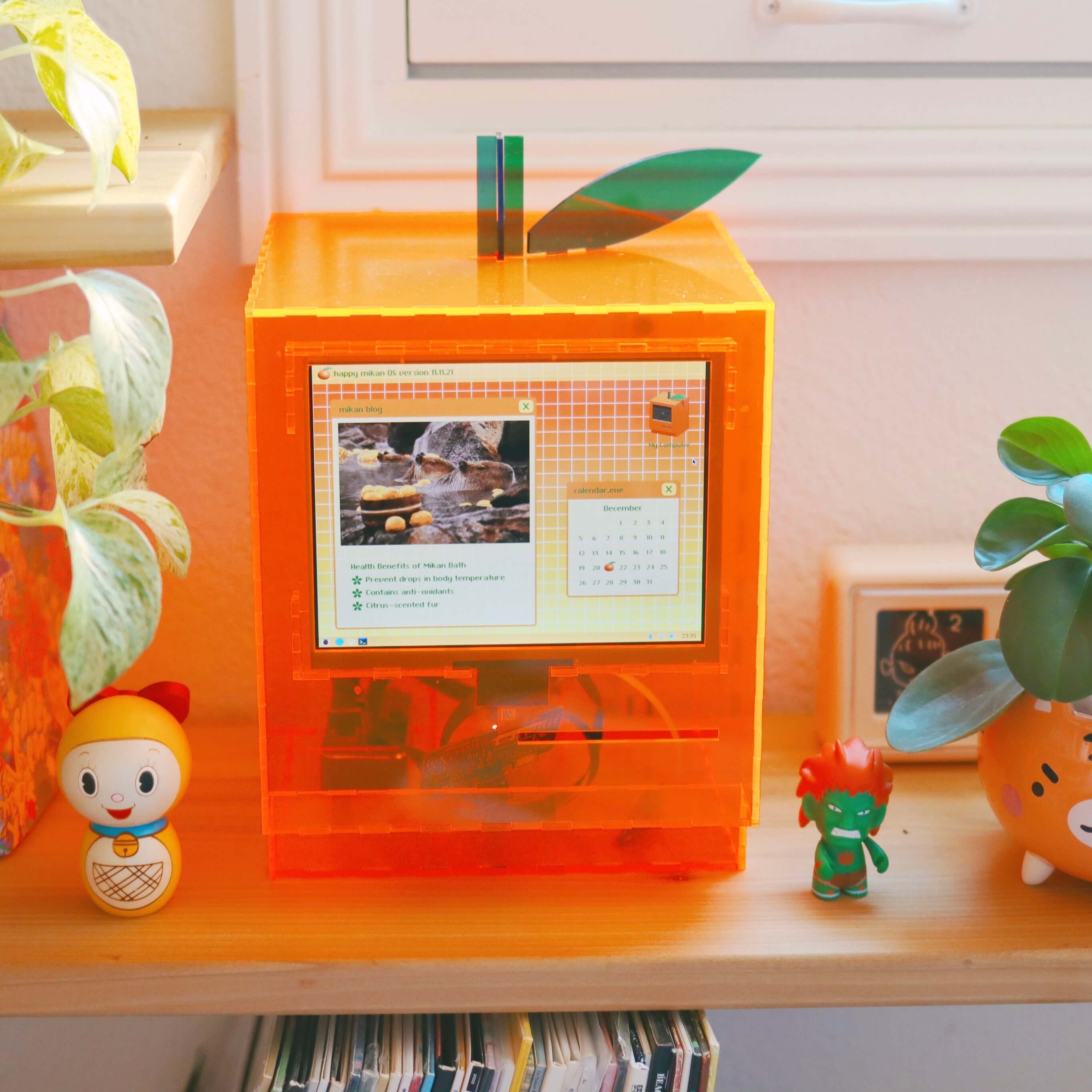
3rd, I’m hooking up a tiny thermal printer, like the ones that print receipts, to a Raspberry Pi and small display screen. I’m hoping to program a short quiz people can take, that makes the printer print out a little “receipt” of reading recommendations you can take away, based on metadata in my reading database. I’d been working to construct a neon acrylic case that looks like a retro Mac to hold the display and printer, again figuring out how to make a simpler approximation of someone else’s art, in this case SailorHg’s “While(Fruit)”. But naming my collection a “Zine Bakery” got me excited about instead hiding the receipt printer inside a toaster, so the receipt paper could flow out of one of the toaster’s bread holes. You can read more about these book-adjacent making projects at TinyUrl.com/BookAdjacent, or the zine project at ZineBakery.com.

Unrelatedly: resin!

Completely unrelated to reading: I’ve been learning how to do resin casting! You can think of resin like chemicals you mix up carefully, pour carefully into molds over multiple days and multiple layers of pouring with various pigments and embedded objects, and carefully try not to breathe. It hardens into things like this silly memento mori full-size skull I made, where I’ve embedded novelty chatter teeth and a block of ramen for a brain. Or for this necklace, I embedded multicolor LED bulbs in resin inside of D&D dice molds.

Third slide from my DH2024 #DHmakes talk, showing photos of a translucent frosted resin skull with a ramen brain and chatter teeth, and a light-up D&D dice necklace

(See my recent post on resin casting for more about this work!)

Come #DHmakes with us!

I’ve discovered I really like the experience of learning new crafts: what about it is unexpectedly difficult? How much can I focus on the joy of experimenting and learning, and grow away from frustration that I can’t necessarily make things that are pretty or skillful yet? So I’ve got a weird variety of other things cooking, including fixing a grandfather clock, building a small split-flap display like in old railway stations (but smaller), mending and customizing clothes to fit better, prototyping a shop-vac-powered pneumatic tube, carving and printing linoleum, and other letterpress printing.

To me, the digital humanities is only incidentally digital. The projects and communities I get the most from take a curious and capacious approach to the forms, methods, fields we can learn from and apply to pursue knowledge, whether that’s coding a website or replicating a historical bread baking recipe. #DHmakes has helped me bring more of that commitment to experimentation into my life. And with that comes the joy of making things, being creative, and having an amazing supportive community that would love yall to share whatever you’re tinkering with using the #DHmakes hashtag, so I hope you join us in doing that if you haven’t already!

* Some of the text of this talk is replicated from my Spring 2024 peer-reviewed article, “Book Adjacent: Database & Makerspace Prototypes Repairing Book-Centric Citation Bias in DH Working Libraries”, in the DH+Lib Special Issue on “Making Research Tactile: Critical Making and Data Physicalization in Digital Humanities”.

Resin casting projects

2024年6月10日 12:00

I completed two resin casting projects recently: a full-size skull, and a light-up TTRPG dice necklace.

Photo of a full-size-skull (front half) made of translucent resin, with embedded ramen noodle block in the brain area, and chatter teeth in the teeth area, held up to the sun so the light shines through the translucent resin from the back.Photo of a person in a dark room, wearing a necklace of TTRPG transparent resin dice lit up from inside with LEDs in various colors

Memento mori (skull)

High-level resin casting steps are: measuring the resin components, mixing them together very slowly to avoid introducing air bubbles, pouring, adding embeds, and allowing the resin 2-3 days to cure. Pouring more than one inch or so at a time can cause the resin to never harden, so I poured shallow amounts each time to make sure the whole 4-5” deep object hardened equally. This project took 4 days of 1 resin pour per day, plus an additional final 3 days of curing.

Setting up and using PPE: Photo of several incongruous items arranged neatly on a cutting board: a large kitchen knife, a packet of ramen noodles, a round of dried ramen boodles that has been cut in two, a small screwdriver, 2 medium-size googly eyes, a life-size plastic chatter teeth with the chatter mechanism removed and laid next to itPhoto of a desk laid out with various tools and supplies for resin casting, including a life-size skull silicone mold, two big jugs of resin, measuring cups, safety mask, and a heat gunSelfie photo of me giving the camera a thumbs-up while wearing a respirator, latex gloves, and eye protection

The brain is half a dry ramen noodle block; the teeth are novelty chatter teeth with the chatter mechanism removed.

The mold is the size of an avergae adult skull, but because it’s intended for baking cakes it’s divided in half. I wasn’t sure making two halves and gluing them together would look good, so I just made the front half. In the future, I can try that. I could also glue the two mold halves together and make a small hole for pouring in resin at the top, though that would make adding embeds difficult, and the mold would be ruined after one project.

The skull was supposed to have large googly eyes embedded under the eye sockets, but they migrated under the nose during curing. Photo of a black silicone full-size-skull cake mold. You can see half a cake of dried ramen noodles lodged in the skull's brain area, and blue painter's tape holding chatter teeth in place in the skull's teeth area. There is a small amount of resin on the very bottom of the mold, less than 1" deep.Photo of a black silicone full-size-skull cake mold. You can see half a cake of dried ramen noodles lodged in the skull's brain area, and blue painter's tape holding chatter teeth in place in the skull's teeth area. There is a small amount of resin on the very bottom of the mold, around 1" deep.Photo of a black silicone full-size-skull cake mold. You can see half a cake of dried ramen noodles lodged in the skull's brain area, and blue painter's tape holding chatter teeth in place in the skull's teeth area. There is a small amount of wet resin on top of dried resin on the very bottom of the mold, around 1.5" deep. Two 1" googly eyes have been set upside-down into the resin over the skull's eye areas.Photo of a black silicone full-size-skull cake mold. You can see half a cake of dried ramen noodles lodged in the skull's brain area, and blue painter's tape holding chatter teeth in place in the skull's teeth area. There is a small amount of set resin on the very bottom of the mold, around 1.5" deep. Two 1" googly eyes had been set upside-down into the resin over the skull's eye areas, but while the resin dried the googly eyes migrated to the center of the mold so are no longer over the eye socket areas.Photo of a black silicone full-size-skull cake mold. You can see half a cake of dried ramen noodles lodged in the skull's brain area, chatter teeth in the skull's teeth area, and upside down googly eyes in the center but not correctly over the eye sockets. There is a of set resin on the very bottom of the mold, around 2" deep.Photo of a black silicone full-size-skull cake mold. You can see half a cake of dried ramen noodles lodged in the skull's brain area, chatter teeth in the skull's teeth area, and upside down googly eyes in the center but not correctly over the eye sockets. There is a of set resin on the very bottom of the mold, around 3" deep. The chatter teeth, googly eyes, and ramen noodles are now all fully encased/embedded inside the transparent resin.

You can see the googly eyes set back behind the nose, in the second photo below. I’m considering gluing on googly eyes to the outside of the cast (photo 4), but might just leave it without googly eyes, as I think that probably looks best.

Lit dice necklace

I used a string of LED fairy lights and silicone TTRPG dice molds to make a light-up necklace: Photo of a life-size resin skull (front half), transparent, with embedded chatter teeth in the teeth place and ramen noodle block in the brain area. The skull is next to a metal clipper tool to show full-size scale.Photo of a full-size-skull (front half) made of translucent resin, with embedded ramen noodle block in the brain area, and chatter teeth in the teeth area, held up to the sun so the light shines through the translucent resin from the back.Photo of a full-size-skull (front half) made of translucent resin, with embedded ramen noodle block in the brain area, and chatter teeth in the teeth area, held sideways so you can see how it looks from the side.Photo of a full-size-skull (front half) made of translucent resin, with embedded ramen noodle block in the brain area, and chatter teeth in the teeth area, with large googly eyes placed on top of the eye sockets.

Resin learning

My previous resin attempts yielded nothing worth keeping—some never cured all the way, and others had too many air bubbles. Knowing the skull would use a lot of resin and days of pouring and curing, I made some changes to my process that seem to have helped:

  • new resin (not bottles that had been opened a while before)

  • using a timer while mixing (avoids counting matching stirring speed, which should be very slow; avoids “surely it’s been 3 minutes”)

  • using tape to hold embeds in place until resin cures around them (though this proved too difficult to manage with the googly eyes, without the tape also touching the resin and getting hardened into it)

  • generally more care, slowness, laying supplies out before use, frequent cleaning to keep my gloved fingers unsticky when manipulating things, and covers/airflow to avoid dust

I didn’t predict the outside of the skull resin would be frosted, given previous castings’ transparency; but I expect that’s due to something about the different silicone mold I used for this project.

I haven’t achieved rollable resin dice yet. LED wires coming out of one die face gets around the challenge of getting the top of the mold to closely match the other die faces. In the future, I’m hoping to carve my own dice molds out of a solid block, as the squeezability of the dice-shaped molds made it difficult to latch the lid on without too much resin getting forced out.

❌