阅读视图

DHARTI Speaks!

作者DHARTI
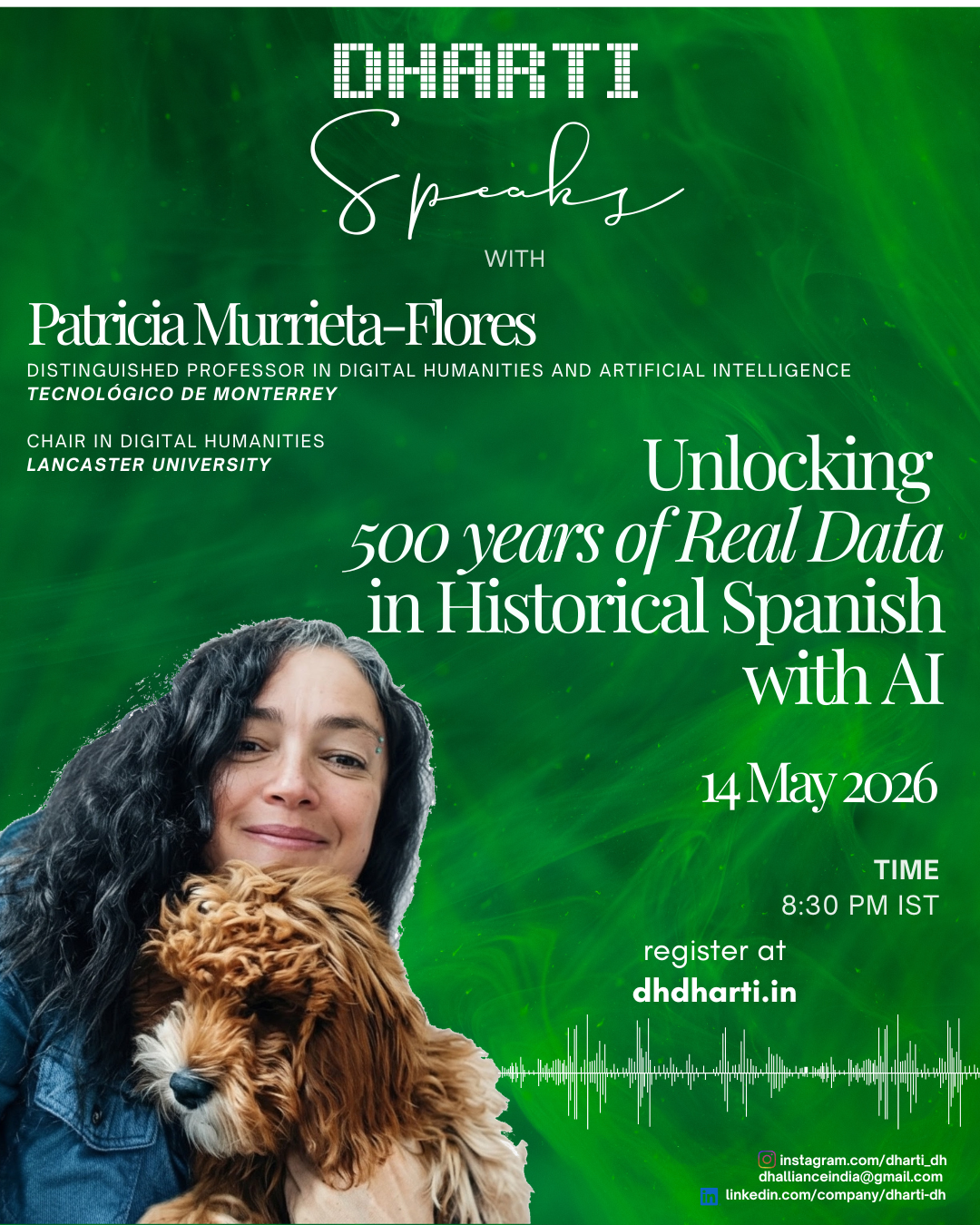
Title:Unlocking 500 years of Real Data in Historical Spanish with AI Speaker:Prof Patricia Murrieta-Flores, Distinguished Professor in Digital Humanities and Artificial Intelligence at Tecnológico de Monterrey, and Chair in Digital Humanities at Lancaster University Date and time:14 May 2026, 8:30 PM IST Registration:Registration is free for DHARTI members. DHARTI members need to register for the […]

  •  

Getting back on track

Alt text

The Train Moves On!

Progress is happening. Much of it reworking what I already did. End of year projects crept in and put this project on the back burner for a couple of weeks. But despite the delay, the train moves forward! And what once was done is now redone!

Servo Motors

For example, the servo motors. The first version worked, sort of. They didn’t move a full 180°, and they were kind of weak.

So I found new motors, bought a couple, and tested them out. That of course, required recreating the servo gear and the whole housing unit.

After many iterations of the servo gear…

Alt text Alt text

I dialed in the tolerances and sizing so the new servo horn/arm fits and stays in place. But just to be safe, I’ll be screwing in each of the servo gears.

Alt text

Holder

The new servo motor is bigger than the previous. That means the holder needs altering. Fortunately, I designed it measurements so that a quick change of a few select dimensions and the holder fits the new motor snug, but not as tight as a fat kid in the middle seat. Hence the screw.

Also note that I started writing the version number on the object.

I also opened up the back side so it is easier to install the gears, especially the servo gear. I tightened up the tolerances here, too.

Alt text (New version on the left.)

And here’s the new gear train all assembled with the new servo. It moves so much more cleanly and smoothly.

And just for fun, here are most of the parts I 3D printed so far.

Alt text

Moving On

This got me to the point of creating the states. I first needed to calculate how big this project was going to be more accurately.

So I counted all of the hexagons horizontally, and vertically to get a much better calculation than we had used in the past.

Alt text

I plugged these numbers into a spread sheet, and iterated over a few hexagon dimensions in order to see how big this map can be, or how small it needs to be. Two factors weighted the dimensions the most: 1) the maximum size that the laser cutter can cut, 2) the size of a doorway. I figure that I can cut the map out in multiple pieces, so the size of the laser cutter is not too much of an issue. But if this thing needs to travel, then it definitely needs to fit through a doorway. So that is really the limiting factor, because it will need to travel at some point in it’s existence.

Our original dimensions called for a map that was nearly 4 feet by 3 feet. Too large for the laser cutter, and too large to fit through a door.

A good size ended up being a hexagon that is 20mm from side to side, which creates a map about 30 inches long and 23 inches wide. A common, indoor doorway in the US is 30-32 inches wide. Such a table will definitely slide through at 23 inches wide.

All posts in this series:

Funding provided through a generous grant from UVA Arts Council. Alt text

  •  

Stellenausschreibung: Digital Humanities Fachkraft (m/w/d) an der Heidelberger Akademie der Wissenschaften


Wir sind eine renommierte Gelehrtengesellschaft und außeruniversitäre Forschungseinrichtung des Landes Baden-Württemberg und suchen in einem inspirierenden Arbeitsumfeld in der Heidelberger Altstadt zum nächstmöglichen Zeitpunkt ganztags für die Dauer von zunächst zwei Jahren eine


Digital Humanities Fachkraft.


Zu den Aufgaben gehört die Entwicklung von Software-Lösungen zur Unterstützung von Forschungsprojekten im Akademienprogramm im Bereich Digital Humanities z. B. im Bereich von eXist-DB, XML und XQuery. Ein weiterer Fokus liegt auf dem Bereich digitaler Editionen und der visuellen Datenpräsentation sowie der Zusammenarbeit mit Wissenschaftler*innen aus verschiedenen Disziplinen bei der Entwicklung von Forschungsfragen und der Konzeption von digitalen Methoden im Rahmen der Projektberatung und Projektumsetzung.


Dieses Profil zeichnet Sie aus:

  • ein einschlägiges Digital Humanities-bezogenes Studium (mit mindestens Masterabschluss) und mehrjährige Berufserfahrung oder eine vergleichbare Qualifikation
  • Kenntnisse aktueller Webtechnologien und Erfahrung mit Webentwicklung und KI
  • fundierte Kenntnisse in verschiedenen Programmiersprachen (z. B. Java, JavaScript, Python, XQuery, XSLT)
  • Kenntnisse im Bereich XML (z. B. TEI-XML, eXist-DB, XML-Editoren) und Linux
  • ausgeprägte Teamfähigkeit
  • einschlägige Erfahrungen in der Projektarbeit und fachliche Unterstützung bei der Einwerbung von Drittmittelprojekten
  • Erfahrung im Umgang mit Forschungsdaten im Bereich der Digital Humanities und Forschungsdatenmanagement.


Wir bieten Ihnen:

  • einen attraktiven Arbeitsplatz im ehemaligen Großherzoglichen Palais am Karlsplatz
  • flexible Gleitzeitregelungen und abwechslungsreiche Tätigkeitsfelder
  • eine betriebliche Altersvorsorge sowie vermögenswirksame Leistungen
  • sehr gute Erreichbarkeit mit dem ÖPNV und Jobticketzuschuss
  • Vergütung nach Entgeltgruppe 13 TV-L (Öffentlicher Dienst der Länder).


Schwerbehinderte Bewerber*innen werden bei gleicher Eignung bevorzugt berücksichtigt.


Ihre Bewerbung mit aussagekräftigen Unterlagen und Angabe der Kennziffer 02/2026 richten Sie bitte bis zum 31. Mai 2026 in einer einzigen PDF-Datei per E-Mail an verwaltung@hadw-bw.de.

  •  

correspSearch knackt 400.000-Marke – mit Helmina von Chézy

Der Webservice correspSearch, der historische Briefe durchsuchbar macht und vernetzt, hat einen wichtigen Meilenstein erreicht. Mit der jüngsten Integration der Briefe an Helmina von Chézy, die durch ein Explorationsprojekt an der Berlin-Brandenburgischen Akademie der Wissenschaften (BBAW) ermöglicht wurde, weist die Plattform nun mehr als 400.000 Metadatensätze von edierten oder wissenschaftlich erschlossenen Briefen nach.  

Initiiert von der BBAW-Arbeitsgruppe „Gender & Data“ und mit institutioneller Unterstützung der Akademie wird seit 2025 an der Erschließung der Korrespondenzen in Helmina von Chézys Nachlass im Akademiearchiv gearbeitet (Mitwirkende s. u.). Innerhalb von acht Monaten wurde die umfangreiche Korrespondenz von rund 3.500 Briefen mit Unterstützung von TELOTA und unter Nutzung des CMIF Creators erfasst und für die Aufnahme in correspSearch vorbereitet. Etwa 2.000 Briefe wurden an Chézy gerichtet und knapp 1.400 von ihr verfasst. Erstere sind nun freigeschaltet, die Briefe von Chézy selbst werden in Kürze ebenfalls integriert. Zukünftig sollen die Informationen auch zurück in das Findbuch des BBAW-Archivs fließen, um die Nutzung der Bestände vor Ort zu verbessern.

Die Aufnahme der Briefe in correspSearch stellt sicher, dass die Daten standardisiert und langfristig recherchierbar und für die Forschung nutzbar sind. Auch weitere Datenlieferungen trugen dazu bei, die Marke von 400.000 Briefversionen zu erreichen, u.a. der Briefwechsel zwischen Heinrich Mann und Inés Schmied, die Korrespondenz Wilhelm Wieprechts, Frank Wedekinds Korrespondenz digital, der Briefwechsel von Alice und Ludwig Klein, die Historisch-Kritische Ausgabe der Briefe von Goethe oder die Korrespondenz von Else Lasker-Schüler.

Helmina von Chézys Korrespondenznetzwerk

Helmina von Chézy (1783–1856) war als Schriftstellerin, Journalistin und Intellektuelle in vielfältige Netzwerke eingebunden. Mit rund 20 Jahren ging sie nach Paris und verbrachte dort ein prägendes Jahrzehnt, in dem sie Kontakte zu den Romantikern Dorothea und Friedrich Schlegel knüpfte und journalistisch für französische und deutsche Zeitschriften arbeitete. Ein besonderes Kapitel stellte ihr humanitäres Engagement 1815/16 dar, als sie in Lazaretten in Köln und Namur verwundete Soldaten pflegte. Ihr kritischer Bericht über deren schlechte Behandlung führte zu einer Gefängnisstrafe, vor der sie nach Berlin floh, wo E. T. A. Hoffmann erfolgreich ihre Verteidigung übernahm. Ihre Dresdner Jahre (1817–1823) markierten einen Höhepunkt ihres Schaffens durch die Mitgliedschaft im Dresdner Liederkreis und die Zusammenarbeit mit Carl Maria von Weber am Libretto zur Oper „Euryanthe“.

Helmina von Chézys Korrespondenz bildet den zentralen Bestandteil ihres Nachlasses. Rund 3.500 Briefe dokumentieren ein weitreichendes Netzwerk aus Personen aus Literatur, Kunst, Politik und Verlagswesen. Die Briefe geben Einblick in literarische Arbeitszusammenhänge und soziale Beziehungen und zeigen zugleich die Lebensbedingungen einer Frau, die sich im frühen 19. Jahrhundert in einem überwiegend männlich geprägten kulturellen Umfeld behauptete. Ein nicht unerheblicher Teil der Korrespondenz entfällt auf den Austausch mit Frauen und verweist auf die Bedeutung weiblicher Netzwerke in dieser Zeit.

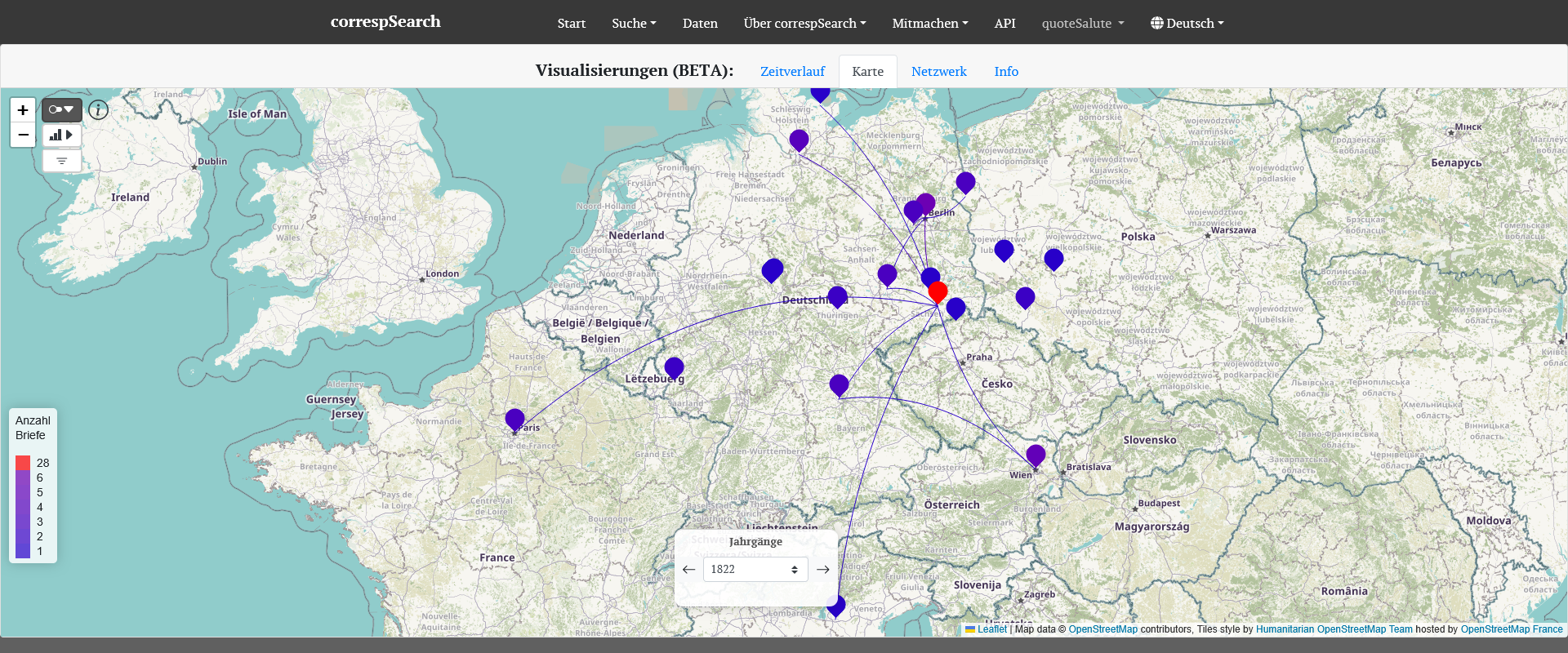
Helmina von Chézys internationales Briefnetzwerk im Jahr 1822 während ihres Aufenthalts in Dresden. [Screenshot der Visualisierung in correspSearch]

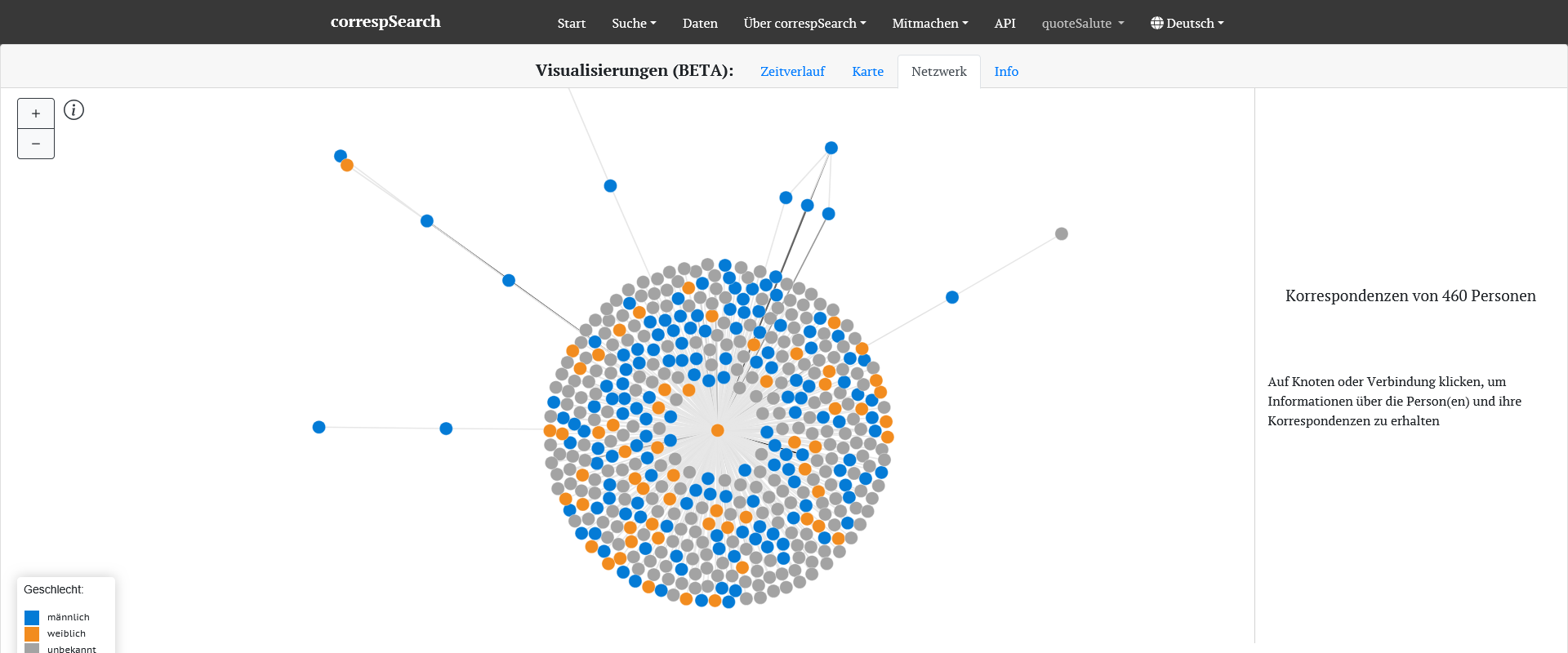
Netzwerk der an Helmina von Chézy gerichteten Briefe mit farblicher Kennzeichnung des Geschlechts der Briefpartner. Graue Punkte markieren Personen ohne Normdaten, für die bislang keine Geschlechtsinformation vorliegt. [Screenshot der Visualisierung in correspSearch]

Aktiv gegen den Gender-Data-Gap

Wie in vielen anderen digitalen Diensten und Sammlungen besteht auch in correspSearch ein deutlicher Gender-Data-Gap. Dieser geht zum Teil auf historisch bedingte Ungleichheiten zurück, wird jedoch durch Überlieferungsbrüche und -lücken sowie eine häufig unzureichende Erschließung vorhandener Bestände weiter verstärkt.

Die systematische Aufarbeitung von Nachlässen wie dem Helmina von Chézys trägt dazu bei, Frauen als historische Akteurinnen im digitalen Raum sichtbarer zu machen und eröffnet neue, auch geschlechtergeschichtliche Perspektiven für die Forschung. Dieses Anliegen wird an der BBAW seit April 2026 von einer auf zwei Jahre geförderten Initiative „Gender & Data“ weitergeführt, die sich unter anderem mit der Rolle der Digital Humanities für eine inklusivere geisteswissenschaftliche Forschung befasst.

***

Mitwirkende an der Erschließung des Chézy-Nachlasses: Michael Rölcke (Bearbeiter), Bénédicte Savoy und Frederike Neuber (Leitung, Herausgeberschaft), Stefan Dumont und Steven Sobkowski (correspSearch), Sandra Miehlbradt (BBAW-Archiv).

  •  

Lecture: Embedding the Past: From Visual Artefact to Semantic Data – AI-Supported Workflows in Digital Scholarly Editing, 22.05.2026, online

We invite you to the online lecture by Prof. Dr. Michael Schonhardt (TU Darmstadt) on 22.05.2026 from 10:00 to 11:30, organised as a part of the seminar series ‘Legal History Meets Digital Humanities’ at the Max Planck Institute for Legal History and Legal Theory.

The presentation will focus on the AI-driven datafication of historical sources, ranging from medieval manuscripts to early modern correspondence, into structured and semantic data. It will explain the Digital Editing Toolkit, a modular AI-based editorial workflow, and discuss the potential of vector embeddings and entity linking for new heuristic approaches to digitised source corpora. Finally, it will evaluate how these methods reshape the role of the editor in the age of large-scale datafication

Registration and more information here: https://plan.events.mpg.de/event/762

  •  

Fallado el V Premio a la Mejor Tesis Doctoral en Humanidades Digitales 2025 HDH-FBBVA

Fallado el Premio Sociedad Internacional de Humanidades Digitales Hispánicas-Fundación BBVA a la Mejor Tesis Doctoral en Humanidades Digitales 2025

El jurado del Premio Sociedad Internacional de Humanidades Digitales Hispánicas-Fundación BBVA a la Mejor Tesis Doctoral 2023, reunido el 27 de abril de 2026, ha decidido conceder el galardón a:

“GLU – A Gradient Model for Language Universals: A Computational Revisitation of Greenberg Universals”, de Antoni Brosa Rodríguez, profesor ayudante doctor en la Universitat Rovira i Virgili.

Para la concesión del premio, el jurado ha valorado en esta tesis las “aportaciones muy relevantes e innovadoras relativas al procesamiento del lenguaje natural multilingüe y a los modelos de inteligencia artificial desarrollados para las lenguas minoritarias”, menciona el acta.

Composición del Jurado

El jurado ha estado presidido por Ignacio Bosque, catedrático de Lengua Española, Universidad Complutense de Madrid, y académico de la Real Academia Española; y ha contado como secretaria a Carlota Fernández Travieso, profesora permanente laboral del Departamento de Humanidades, Universidade da Coruña, y secretaria de la Sociedad Internacional de Humanidades Digitales Hispánicas. Ha contado como vocales con: Pedro Álvarez de Miranda, catedrático emérito de Lengua y Literatura, Universidad Autónoma de Madrid y académico de la Real Academia Española; Senén Barro, catedrático de Ciencias de la Computación e Inteligencia Artificial, Universidade de Santiago de Compostela; Ángela Celis Sánchez, profesora contratada doctora del Departamento de Filología Hispánica y Clásica, Universidad de Castilla-La Mancha; Pablo Gamallo Otero, catedrático de universidad en el Centro Singular de Investigación en Tecnologías Inteligentes, Universidade de Santiago de Compostela; Roberto José González Zalacaín, profesor titular del Departamento de Geografía e Historia, Instituto Universitario de Estudios Medievales y Renacentistas, Universidad de La Laguna; Montserrat Hermosín Álvarez, profesora titular de Derecho Financiero y Tributario, Universidad Pablo de Olavide, de Sevilla y letrada del Gabinete Técnico del Tribunal Supremo; Patricia Martín-Rodilla, doctora en Ingeniera Informática, científica titular en Humanidades Digitales, Instituto de Estudios Gallegos Padre Sarmiento, Consejo Superior de Investigaciones Científicas (CSIC) y vocal de la Sociedad Internacional de Humanidades Digitales Hispánicas; Félix Ovejero Lucas, profesor de Metodología de las Ciencias Sociales y Filosofía Política, Universitat de Barcelona; Nuria Rodríguez Ortega, catedrática de Historia del Arte, Universidad de Málaga; Esteban Romero Frías, catedrático de universidad del Departamento de Economía Financiera y Contabilidad, y vicerrector de Innovación Social, Empleabilidad y Emprendimiento, Universidad de Granada; Jorge Sebastián Lozano, profesor titular del Departamento de Arte, Universitat de València y vicepresidente de la Sociedad Internacional de Humanidades Digitales Hispánicas.

Noticia en la web de la FBBVA:

Más información sobre el premio en https://humanidadesdigitaleshispanicas.es/convocatorias/premio-tesis/

La entrada Fallado el V Premio a la Mejor Tesis Doctoral en Humanidades Digitales 2025 HDH-FBBVA se publicó primero en HDH - Humanidades Digitales Hispánicas.

  •  

#JobOpportunities: 1 Postdoctoral and 2 PhD Positions ERC Project BOTLEG – Ruhr University Bochum

29 Apr 2026 - 00:00

#JobOpportunities: 1 Postdoctoral and 2 PhD Positions ERC Project BOTLEG – Ruhr University Bochum

The Institute of Philosophy I at Ruhr University Bochum (Germany) invites applications for:

  •  1 postdoctoral position (3 years)
  • 2 PhD positions (4 years)

within the ERC Consolidator Project

BOTLEG – Botanical Legacies: Towards a New History and Philosophy of Virtual Herbaria

Principal Investigator Dr. Jan Baedke

Project Description

This ERC project aims to develop more historically informed, theoretically grounded, and socially just botanical research by focusing on virtual herbaria—digitized collections of plant specimens.

From an integrated history and philosophy of science perspective, the project addresses historical, epistemic, and conceptual challenges of herbarium research in light of current digitization trends.

BOTLEG collaborates with historians, philosophers, digital humanists, botanists, and herbarium experts across:

  1. Central America
  2. Southeast Asia
  3. The Netherlands

More information about the project: https://cordis.europa.eu/project/id/101230109

Positions

Postdoctoral Position

Field: History of Science or Digital Humanities

Application details:

https://jobs.ruhr-uni-bochum.de/jobposting/9fca0a647b54e61a9b366628a2c46...

PhD Positions (2)

Field: Philosophy of Biology or History of Biology

Application details:

https://jobs.ruhr-uni-bochum.de/jobposting/c1b8b4301d2a01a0dfbae8b1237a9...

Application Deadline: 25 May 2026

Contact

For further inquiries, please contact: jan.baedke@rub.de

  •  

The design methods meshwork: Activating the <em>Design Methods Group Newsletter</em> through digital history

Int J Archit Comput. 2024 Jan 13;22(3):277-294. doi: 10.1177/14780771231220903. eCollection 2024 Sep.

ABSTRACT

This article elaborates a computationally enabled approach to the study of design methods in 1960s North America. This entails the construction, visualization, and analysis of a digital database built from entries of the Design Methods Group Newsletter, a periodical published monthly between 1966-71. The article proposes a workflow that combines methods such as topic modeling and network visualization to activate the Newsletter as a source of anecdotal and informal knowledge, and to enable histories of connectivity and transaction that may elude archival investigations on singular actors or institutions. In doing so, the article contributes arguments and techniques for the study of design methods as a complex social, technical, and intellectual meshwork. The meshwork brings discursive themes, techniques, actors, and institutions at the same level of investigation and allows for layered cartographies of the field that advanced the systematic study of design and ushered in the development of early computer applications.

PMID:42038932 | PMC:PMC13104777 | DOI:10.1177/14780771231220903

  •  

好文推荐丨袁毓林:语言大模型怎样突破标记逐个生成的时间瓶颈?——预测从单标记走向多标记,模型从自回归走向扩散式

袁毓林 2026-04-27 09:00 江苏

袁毓林探讨语言大模型由单标记转多标记、自回归走向扩散式以提速。

转载自“语言学札记薄”

好文推荐

语言大模型怎样突破标记逐个生成的时间瓶颈?——预测从单标记走向多标记,模型从自回归走向扩散式

 《当代修辞学》 2026年第2期

 关键词:(自回归/扩散式)语言大模型;单标记/多标记预测;噪声/掩码去噪

提要

       本文从当前人工智能若干关键技术发展趋势的角度,讨论人工智能的未来走向及其对人类生活的影响。本文首先介绍语言大模型怎样通过不断地预测下一个“标记” (token),来理解和生成自然语言并诞生智慧的机理和过程;接着说明这种“单标记预测”的技术困境和时间瓶颈,进而介绍通过并行的推测解码来达成“多标记预测” (Multi-Token Prediction,MTP)的技术原理和实现过程;然后说明单标记和多标记预测等“自回归(autoregression)模型”的局限性,介绍在速度与效率等方面更有优势的“扩散式语言大模型”(dLLM),说明其从噪声(掩码)到结构化输出(去噪)的生成过程和工作机理;最后介绍杨立昆对于语言和语言大模型的局限性的批评意见,说明我们的观点:由于人类对世界的认识依赖于语言,所以从语言大模型走向“通用人工智能”(AGI)依然具有可能性。

全文

注:本文原载于《当代修辞学》2026年第2期。

比特人文

投稿邮箱:dhbase@126.com

扫码关注 获取更多资讯

图片

阅读原文

跳转微信打开

  •  

鷹擊長空!澳門大學世界排名躍居前150

徐惠 2026-04-27 09:00 江苏

2026泰晤士排名发布,澳门大学升至145位,首进全球前150创历史。

转载自“澳大微新闻”

速報!澳大再創歷史新高度!

10月9日,2026年泰晤士高等教育世界大學排名正式揭曉。其中,澳門大學更上一層,全球排名由去年的第180名大幅度進漲至第145名

泰晤士高等教育世界大學排名(Times Higher Education World University Rankings),又簡稱為"THE世界大學排名",是目前全球最具影響力的大學排名之一,與QS世界大學排名、U.S. News世界大學排名、軟科世界大學學術排名一齊被公認為“全球四大高校排行榜”

  該排名每年更新一次,以教育教學、研究論文、研究質量、國際化展望、產業收入等5個範疇共計13個指標,對來自全世界一百多個國家與地區的千餘所大學進行系統性的考核與分排。本次參與排名的高校數量再次刷新記錄,全球共有2191所高校成功上榜,較2025年具有輕微漲幅。澳門大學在此繼續保持前進趨勢,突破前150名,躋身全球前7%

澳門大學歴年全球排名

認識我們

澳門大學(Universidade de Macau / University of Macau),簡稱“澳大”,是一所位於中國澳門的公立國際化綜合性研究型大學。澳大不僅是中歐商校聯盟、“一帶一路”國際科學組織聯盟、粵港澳高校聯盟、粵港澳大灣區西岸科技創新和人才培養合作聯盟創始成員和亞太高校書院聯盟的成員之一,更是中國大學校長聯誼會——“C9聯盟+”的重要組成部分。

紮實教學 優質教研 

  基本科學指標數據庫(Essential Science Indicators,簡稱ESI)是衡量大學和科研機構國際學術水平的權威指標,僅收錄全球論文被引次數排名前1%的學科。而澳門大學不僅15個學科穩居ESI前1%,更有工程學、計算機科學、藥理學與毒理學3個學科突破進入前0.1%的頂尖層級。

  澳門大學的師資隊伍龐大卓絕,從全球各地吸納頂尖的學術精英。其中,不僅包含歐洲科學院(外籍)院士、英國皇家學院院士、英國工程技術學會會士、歐洲科學與藝術學院院士、葡萄牙科學院院士、美國電機電子工程師學會會士、美國科學促進會會士、美國土木工程師學會會士、美國機械工程師協會會士、國際光學工程學會會士等國際化團隊配置,更是擁有中國教育部“長江學者講座教授”為學術保駕護航。

     澳門大學中央教學樓

澳門大學圖書館

  澳門大學世界排名屢創新績,是背後教學育人、科研創新與國際化的實力支撐,是對於澳大整體辦學質量擲地有聲的認可。

  今日的進步是明日的基石,澳門大學步步向上的頂尖之路,還看今朝!

文字編輯 | 汪京奧

 圖片 | 澳門大學官網、

        澳門大學百科、

        澳門大學鏡報社

  審核| 龔剛教授

比特人文

投稿邮箱:dhbase@126.com

扫码关注 获取更多资讯

图片

阅读原文

跳转微信打开

  •  

When the Algorithm Disagrees With Your Eyes

Digital images are in constant motion. They traverse various platforms, feeds, databases, and archives, often reappearing in modified forms. Through my research on digital art, I have recognized this phenomenon as more than a mere feature of online dissemination. It constitutes both a methodological challenge and a perceptual issue.

What appears to be a single image may, in actuality, exist as a collection of various versions: cropped, compressed, recoloured, or reposted without proper attribution. Although these differences may seem insignificant at first glance, they give rise to a question that is more complex to answer than it initially appears.

      Under what circumstances can two images be considered identical?

That question became the basis of my assignment for the CodeLab course in my ongoing Praxis Fellowship Program. Using Python with the ImageHash and Pillow libraries in VS Code, I built a small tool to test how visual similarity might be measured across images that have changed through circulation. What started as an exercise became a way of thinking through something larger: what does it mean for a computer to recognize an image, and does that match what we mean when we say two images are the same?

The approach

The tool uses the imagehash library to compute perceptual hashes and compare images by visual similarity.1 Unlike cryptographic hashing, which changes entirely if even a single byte changes, perceptual hashing captures how an image looks. Two visually similar images should produce similar hashes; unrelated images should not.

After generating the comparison data, I modified the script to export results as JSON and render them as an HTML page. Instead of raw values, the interface ranked each image against the reference, displayed a distance score, and grouped results into categories from “nearly identical” to “different from the original.” The script processed files in the images/ folder, saved results to version_results.json, and generated output in results.html.
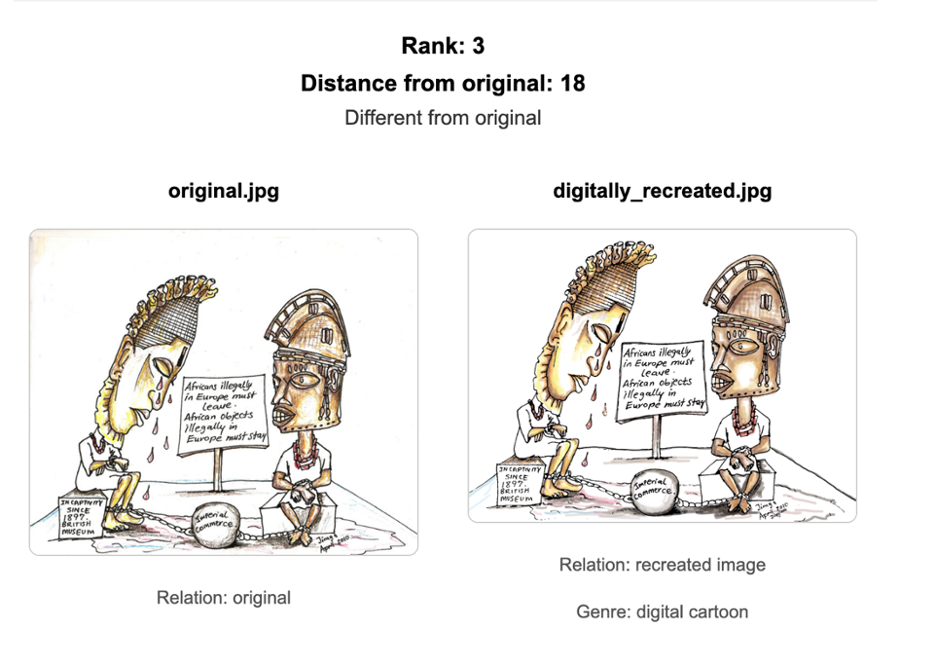
Image variant comparison

Figure 1. HTML interface showing ranked comparison of image variants against the reference image. See https://jimgaconcept.github.io/image-versioning-demo/

The dataset

The reference image is a digitized hand-drawn cartoon illustration made with pen and ink and watercolor on paper. This detail turned out to matter a great deal. I compared it to two modified copies (resized and compressed), one digitally recreated version, and three visually unrelated images, to test whether the tool could distinguish genuine variants from unrelated works.2

Results

The two modified versions, resized and compressed, both scored between zero and two, confirming their close relationship to the reference. The three unrelated images all scored above 20, well outside any similarity range. The digitally recreated version (Fig. 1) scored 18, placing it in the category that the interface labeled as different from the original.

That score of 18 was the result I did not expect, and the one worth thinking about most carefully.

What the computer sees, and what we see

The recreated image and the original share the same subject, composition, and color palette. A human viewer encountering both would almost certainly recognize them as versions of the same thing. The algorithm did not. Scoring 18, it placed the recreation closer to the unrelated images than to the two modified copies, which scored between 0 and 2.

The reason lies in what each image actually is at the data level. The original is a scan of a physical drawing, and its pixel data carries the texture of its medium: the grain of the paper, the way ink spreads at the edges of marks, the tonal variation of pigment on a physical surface. The digital recreation was built entirely within Photoshop and saved as a JPEG. Even a faithful digital reconstruction is made from digital brushes and algorithmically generated marks. There is no paper grain, no ink bleed. The two images look the same to us, but their underlying data structures are built from entirely different material.

This is a version of what computer vision researchers call the cross-depiction problem: the gap between human visual recognition, which operates on meaning and composition, and machine recognition, which operates on statistical patterns in pixel data. My experiment gave that abstract problem a specific, personal form. What appears identical to the human eye may share almost nothing in common at the data level. The computer is not seeing the image. It is reading a numerical structure, and two images that represent the same thing visually can be built from entirely different data, depending on how and where they were made.

This relates to a broader discourse within the field of digital humanities. As Drucker (2013) has articulated, digitization constitutes not merely a neutral representation but rather a form of interpretation. Factors such as resolution, lighting conditions, and the medium of capture all influence the transformation of an image into data.3 My findings exemplify this argument concretely. The scanned watercolor and the Photoshop recreation are not simply two variants of the same image; rather, they represent two distinct interpretations, which the algorithm processes accordingly.

If we are building archival systems or image databases that rely on computational similarity to group and relate works, we need to ask whose sense of “the same image” is being encoded. A tool trained on pixel-level data will consistently separate a scanned physical artwork from its digital recreation, not because they are different images in any humanistic sense, but because they are different kinds of data.

Limitations and what comes next

Perceptual hashing assesses visual similarity at the data level. It does not establish authorship, confirm provenance, nor consider contextual factors. Outcomes may also differ based on the specific hashing algorithm employed, as various implementations assign different weights to visual features. This tool serves as one component within a broader interpretive framework, rather than substituting human judgment.

This assignment illuminated a perception that is both straightforward and profound. It is evident that the computer and the human eye do not observe the same aspects, even when examining the same image. The disparity between data and meaning represents the realm where the most compelling inquiries within digital art history reside. As Burdick et al. (2012) suggest, the significance of computational tools in the humanities lies not in their capacity to resolve questions, but rather in their ability to render certain questions newly answerable.4 This experience has prompted a question I was previously unaware of having.

The live output and ranked visualization are at the project web interface. Full code is on GitHub.


  1. The imagehash library was developed by Johannes Buchner: https://github.com/JohannesBuchner/imagehash. Distance between hashes is computed using Hamming distance. See Hamming, R.W. (1950). Error detecting and error correcting codes. Bell System Technical Journal, 29(2), 147–160. doi:10.1002/j.1538-7305.1950.tb00463.x 

  2. The distance thresholds used (0 for near-identical, 1–5 for minor modification, 6–10 for significant transformation, above 10 for visually distinct) are derived from standard imagehash benchmarks and calibrated through iterative testing against the dataset. 

  3. Drucker, J. (2013). Is there a “digital” art history? Visual Resources, 29(1–2), 5–13. doi:10.1080/01973762.2013.761106. The argument that digitisation is interpretive rather than neutral runs throughout the article and is developed across pp. 5–8. 

  4. Burdick, A., Drucker, J., Lunenfeld, P., Presner, T., and Schnapp, J. (2012). Digital_Humanities. MIT Press. The claim is consistent with the book’s central thesis; p. 14 is the closest anchor. 

  •  

Professors HATE This One Weird Trick for Summarizing Your Research

Professors HATE This One Weird Trick for Summarizing Your Research

There’s an old story, almost certainly apocryphal, about former British Prime Minister John Major asking Boris Yeltsin to describe the Russian economy in one word. Yeltsin said it was “Good.”

Seeking a bit more detail, Major asked Yeltsin if he could describe it in two words. Yeltsin replied, “Not good.”

Major finally asked for a three-word summary. Yeltsin’s response? “Not good enough.”

While the exchange is most likely a myth, there is something irresistible about its structure, and it was rattling around in my head during a recent session of my dissertation seminar.

During the break, I asked someone to sum up their partner’s dissertation in one word. They said: “Empathy.” I relayed the Yeltsin joke and we decided to test whether the structure held up in summarizing academic research. Two words: “Not empathetic.” Three words: “Not empathetic enough.” Gabby, whose research is about depictions of madness in modernist literature, thought about it for a second and said: “Yeah, that’s actually not a bad summary.”

We started going around the room with it. Spencer, who is working on trans bibliography, offered “hermaphrodite” as her one-word summary, which yielded “not hermaphrodite,” and then “not hermaphrodite enough.” Applied to my own dissertation, which focuses on contemporary poems written from the perspective of animals, I get:

Animal.

Not animal.

Not animal enough.

Which, for a 3-word summary of what is supposed to be a book-length scholarly work investigating the strategic deformation of syntax, figuration, and sound that poets undertake in order to make language register as issuing from a nonhuman consciousness, is pretty good.

The question, of course, is to what extent “not X enough” is actually a useful model for summarizing research and to what extent it just feels like it works because the rhythm is satisfying. But I do think there’s something real going on in the unfolding of X, not X, not X enough. So many research projects, across disciplines, are fundamentally about some quality or condition that is absent, insufficient, or misrecognized. The three-word version locates a gap, names an inadequacy, and implies a standard that hasn’t been met. It’s a tiny argument. It can’t work for everything. But it’s a fun test and I’d argue it extends even beyond academic research to artistic projects more broadly.

So, does this method work for summarizing your research or current project? Does it not work? Does it not work well enough?

  •  

Welcoming Øyvind Eide as New President of EADH

27 Apr 2026 - 00:00

Welcoming Øyvind Eide as New President of EADH

EADH is pleased to announce the appointment of Øyvind Eide as its new President.

Øyvind’s work moves across digital humanities and cultural heritage informatics, with a long-standing engagement in modelling and how it can be used to better understand the relationships between different media. His research focuses in particular on transformative digital intermedia studies, exploring how texts and maps communicate, interact, and shape meaning in distinct ways.

His academic journey reflects both depth and continuity within the field. Øyvind holds a PhD in Digital Humanities from King’s College London (2013) and worked at the University of Oslo for nearly two decades, contributing to the development of digital humanities and cultural heritage informatics. He later held a position at the University of Passau before joining the University of Cologne, where he is currently Professor of Digital Humanities.

Øyvind has long been an active member of the international digital humanities community. He previously served as Chair of EADH (2016–19 and 2024–26) and is involved in several international organisations, including ICOM’s International Committee for Documentation (CIDOC).

As President, Øyvind will act as an additional, non-voting member of the Executive Committee, supporting its work and contributing to the association’s outreach. Drawing on his extensive experience and international network, he will help strengthen connections across the community and foster collaboration worldwide.

We warmly welcome Øyvind to this role and look forward to the perspective and continuity he brings to EADH.

  •  

Hackathon 25.03.2026

On March 25, 2026, Mayumi Ohta, Florian Nieser, Jonathan Gaede, Maria Becker, Jonas Braun, and Thomas Renkert gathered for another hackathon at the Heidelberg Center for Digital Humanities (HCDH). This time, the focus was...
  •  

DHARTI Communications Officer

作者DHARTI
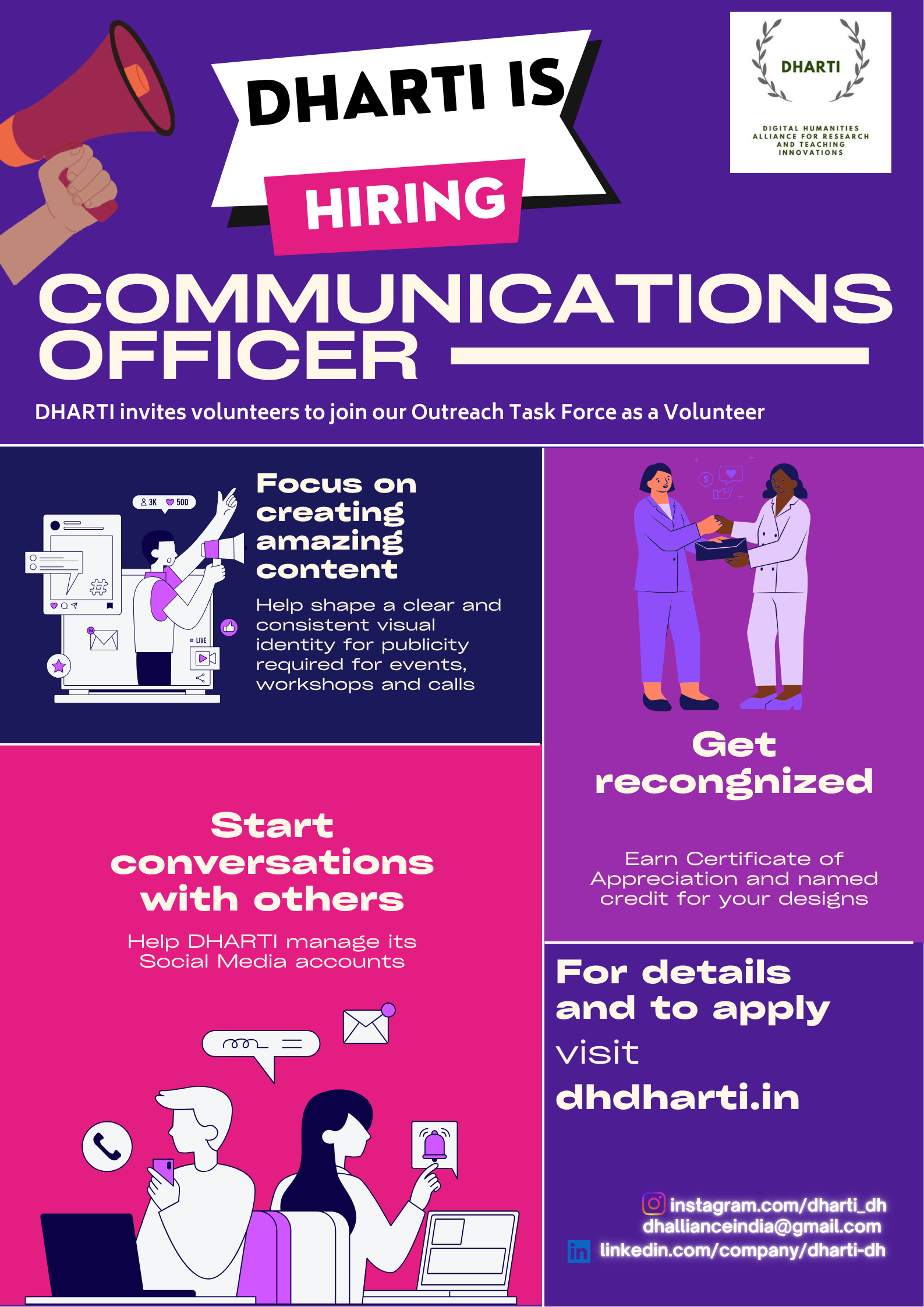
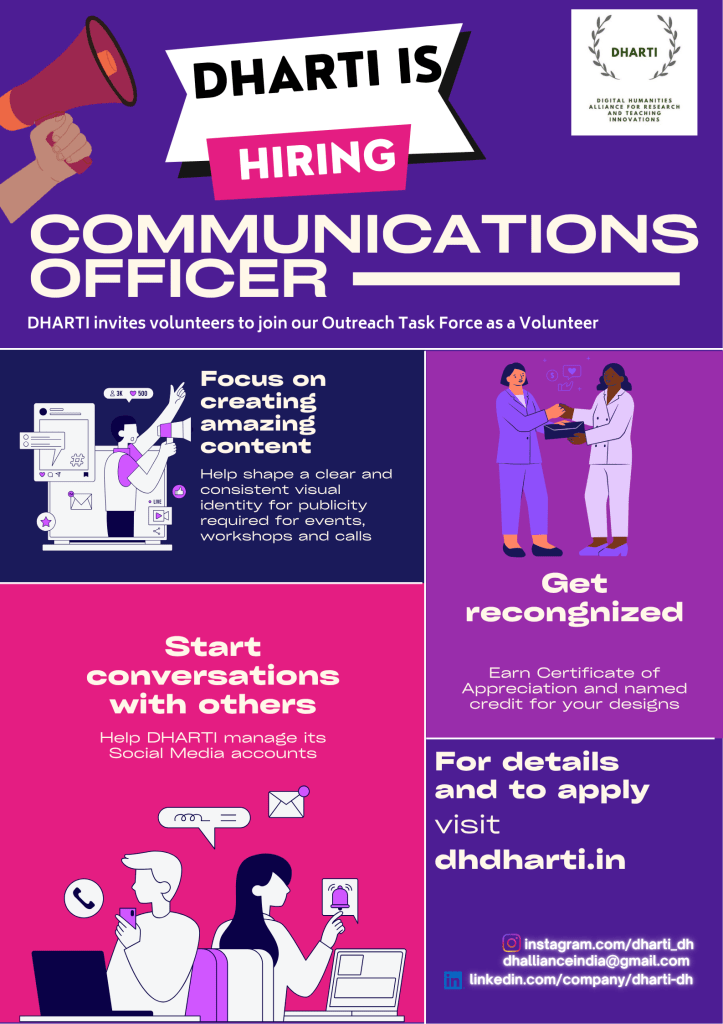
The Digital Humanities Alliance for Research and Teaching Innovations (DHARTI) warmly invites volunteers to join our Outreach Task Force as Communications Officer (Volunteer Position). About Us DHARTI, a registered non-profit organisation in India, works to enable and support digital practices in arts and humanities scholarship in India, both within and beyond academic institutes. We nurture […]

  •  

讣告 | 中国科学院院士戴汝为逝世,享年94岁

沉痛悼念的 2026-04-26 09:00 江苏

中科院院士戴汝为4月19日逝世,享年94岁,为我国智能科学等领域作出重要贡献。

来源:中国科学院大学

中国共产党党员、中国科学院院士、中国科学院大学荣誉讲席教授、中国科学院自动化研究所研究员戴汝为同志,因病医治无效,于2026年4月19日10时11分在北京逝世,享年94岁。

戴汝为同志,汉族,1932年12月31日出生于云南石屏,1986年7月加入中国共产党,1951年考入清华大学数学系(后因院系调整并入北京大学),1955年7月毕业于北京大学数学力学系,1955年7月选派到中国科学院力学研究所师从钱学森,1956年进入中国科学院自动化研究所工作。1991年当选为中国科学院学部委员(院士)。曾任第五届中国科学院学部主席团成员。

戴汝为同志是自动控制、模式识别、智能科学、思维科学专家。自20世纪50年代以来,他继承和发扬钱学森科学思想,在控制论、人工智能等领域作出了开创性的研究工作。20世纪80年代初,他率先将“模式识别”理论引入中国,提出“语义-句法模式识别”,为中国汉字识别与汉字信息化应用和普及作出重大贡献。90年代初,他与钱学森共同构建“开放的复杂巨系统及其方法论”,该方法被应用于中国经济、军事及社会发展等领域的重大问题决策中。他深耕前沿科学研究领域,提倡学科交叉,为我国科技事业发展作出了重要贡献。戴汝为同志曾获国家科技进步一等奖、中国科学院自然科学一等奖、“何梁何利”科技进步奖、中国模式识别科技终身成就奖、中国系统工程终身成就奖。

戴汝为同志毕生热爱祖国,对党忠诚,矢志科研报国。他始终潜心研究,坚持求真创新,开学术之先河,树学风之楷模。他奖掖后学,桃李满天下,为我国智能科学领域培养了大批人才。他淡泊名利,品格高尚,宽于待人,深受大家敬重与爱戴。戴汝为同志的逝世是我国科技界的重大损失。我们沉痛悼念并深切缅怀戴汝为同志!他的精神与风范长存!

遵照家属意愿,戴汝为同志丧事从简,不举行公开遗体告别仪式。有关部门、团体和个人如欲致唁电、唁函,请联系中国科学院自动化研究所及中国科学院大学。

谨此沉痛讣告。

中国科学院自动化研究所

中国科学院大学

2026年4月22日

比特人文

投稿邮箱:dhbase@126.com

扫码关注 获取更多资讯

图片

阅读原文

跳转微信打开

  •