阅读视图

Developing a Sustainable Summer Writing Practice

On June 2nd I’ll be giving a workshop for the PHD+ program here on how to develop a sustainable summer writing practice. This session will be one of the opening discussions for a daylong event that asks PhD students to take their research topic and transform it across a range of different formats: podcasts, websites, and zines. The goal for my part is to collect a number of different writing activities to show examples for how one might experiment with writing practice. For me, sustainable writing can be found through regular work, joy, and playing with constraints. To get there, I suggest students do the following:

  • Experiment with different formats for writing. For this I discuss otter.ai.
  • Distinguish between the different phases of the writing process and sit down with a clear goal in mind.
  • Scale up to a daily practice rather than experimenting to start with tons of words each day.
  • Incorporate free writing (hat tip to Sean Michael Morris here for his beautiful approach to the craft).
  • Incorporate stochastic practice as a means to jolt your creativity. I’ll use Peter Schmidt and Brian Eno’s Oblique Strategies deck here.

I then close with a short activity that asks students to brainstorm the different components for a practice of their own: format, location, frequency, amount, and method. After jotting a few ideas each for each category, I’ll guide them through a discussion of how to remix these components into something that works for them. Slides follow below. The particular deck theme I used was food themed, which felt appropriate.

Developing a Sustainable Summer Writing Practice What sustains you? My answer - Sustainable writing can be found through regular work, joy, and playing with constraints. Five verbs for sustainable practice - reformat, distinguish, scale, free, randomize Reformat - Experiment with different formats. Image of otter.ai interface Table of contents showing a book that was mostly dictated Distinguish - Separate the components of the writing process. Over image of bottles. Know your goal: brainstorming, drafting, revising, proofing, finalizing. Over image of bottles. Several different statuses a piece of writing might have. Over image of bottles. Scale - design a daily writing practice that grows. Over image of measuring cups. Describes a writing program that grows each week - one sentence daily, then two, then three. Over image of measuring cups. Free - practice free writing to get past barriers. Over image of a field. Over image of a field. Over image of miscellaneous food. Over image of miscellaneous food. Slide reiterates the discussion so far. What sustains you? Activity that asks participants to mix and match various components to develop a sustainable writing practice

  •  

“We’ve got the Data – What now?”: Graph Data, Part 2

Die fünfte Sitzung der Workshop-Reihe „We’ve got the data – what now?” am 22. April 2026 knüpfte an die Einführung in Graphdaten an und vertiefte das Thema um Methoden der Netzwerkvisualisierung und -analyse. Unter...
  •  

Task Lists - Physical to Digital

A quick one today on how I manage my task list each day and the tools I use for doing so.

For years I have used Slack to manage my working life. If you click a single message you can select “remind me later” and select a date and time. I use this religiously, scheduling out reminders for particular times and dates. If I need to follow up on a thing, it gets a date. If I need more time to reply to a message, it gets a date. You can also schedule reminders for yourself separate from messages. So, if I have an overarching task, it gets a date and reminder. It’s not uncommon for me to open slack and get 10 notifications at 9:00 AM that tell me what I am supposed to be doing for the day. Here’s a glimpse at my reminders for today:

task list in slack as conveyed through a series of reminders.

This system has worked well for years. I rarely let anything slip, because I just file everything away as a reminder and snooze if necessary. But Slack recently changed how their reminders work. DISASTER. I can’t fully grasp how to reset the way it manages this system, but now it seems to be giving me double alerts for these notifications in a way that collapses them with DMs. It’s deeply irritating. While I’m sure I could figure a workaround, I decided it was time to disentangle this particular tool from my daily task management.

So, I’m experimenting with a physical notebook for the first time in at least a decade. Here’s my daily notebook for today:

task list in a notebook with separate sections for "can do," "must do," and "waiting."

I’ve tried such things in the past but never stuck with them for long, but this run seems to be sticking. In part, I think this is because of how I’ve made working with the notebook part of a daily ritual. Each day’s page is broken into three segments: must do, can do, and waiting. I start each day by looking at the previous day by looking at the previous page to see what needs to be moved over. I’ll then check my inbox and shuffle things around based on how answering email goes. This process gives me a sense of things that are urgent and those tasks that require actions from other people. I typically close out each work day by referring to the page once more and updating things. This process is helped along by the fact that I have found a particular set of pens that are deeply, unironically joyful to use. Working with them provides a meditative tactile sensation that grounds my start and end to each day.

Sharing all this is a tad embarrassing. I have discovered writing in a journal! I have terrible handwriting! Pens are nice! But I can’t emphasize enough what a shift this has been for my working life. It’s brought an embodied ritual to each day that I didn’t have before, and I’ve found it surprising how much energy can come from shifting this foundational part of my working rhythm. So, if you’re feeling stuck, it’s never too late to change. Your process can always find new shape if you give it new tools.

  •  

automated deploy with build-ghpages

Following the advice in Brandon Walsh’s warning, “anything that gets in the middle will keep you from blogging,” I simplified the steps to update and publish my website because the situation was getting a little miserable.

GitHub Pages is a great way to host your static sites free, if you don’t mind keeping your code public. It’s an especially smooth experience if you produce your site with Jekyll because it enjoys built-in support on this hosting platform. In other words, when you upload your Jekyll code to a public GitHub repository and activate GitHub Pages, the site will deploy automatically and become live within seconds (unless something goes wrong).

But I am using 11ty, a JavaScript-based framework, and while it’s common to host other kinds of static websites on GitHub besides Jekyll, it does add some extra steps. I was so close to publishing my website, I really didn’t want to stop for the ideal solution, so I created one main branch for deployment and another deploy one to serve the html files produced after 11ty parsed my root directory. This meant manually copying, pasting, and replacing old html files for newer ones between these 2 branches to keep the site updated. It got old quick. So quick changing this workflow became my top priority issue within the site.

Thankfully, I complained about it to Brandon at the Lab the other week, and he suggested I look for an 11ty version of a “Rakefile,” a document he uses to include custom website build and deployment instructions in his Jekyll website. Some digging pointed out that GitHub Actions might be the easiest way to go.

Using Actions involves changing a setting in your repository, a 1-line edit to your package.json, and a YAML file describing your desired build and deploy workflow for GitHub Pages to host your site. True, I didn’t know what my desired workflow file should look like, but Google turned up a useful Mini-Tutorial in the 11ty documentation that explains the full deploy process and shares a YAML example ready for you to copy and use within your web project.

A two-axis coordinate plane representing the intersection of breadth and depth in DH.
Figure 1. Screenshot of the Mini-Tutorial section on 11ty's documentation page.

This worked, but I really didn’t know what was going on in the file at all, so I asked Claude Code 2.1.109 to make me a deploy.yaml file to deploy my 11ty site on GitHub Pages. The file that came out, frankly, works just as fine for my purposes the sample one. One notable difference was the simplicity of Claude’s YAML vs the sample one in the official 11ty documentation, which is thorough and filled with many options to understand.

A two-axis coordinate plane representing the intersection of breadth and depth in DH.
Figure 2. Screenshot of the two deploy.yml versions I tested with my site, one generated by Claude Code and another by 11ty.

I stuck to using the sample YAML in 11ty’s docs because it’s safer and adds caching to the deploy workflow, for example.

I kept the simpler Claude Code deploy until I felt that I had a general sense of what was going on in the file. GitHub’s “Workflow Syntax” page was key to understanding what is going on in the file, and what the commands mean. It’s messy, though, and hard to navigate. I skimmed through 75% of it before I found the answer to one of the questions that bothered me the most: “What the heck is that actions/setup-node@v4 doing?” I knew it was setting up Node.js version 4, somehow, but how? Turns out it’s accessing and serving a contained version of Node used by through GitHub Actions to parse and deploy my 11ty site.

name: Deploy
on:
  push:
    branches: [main]

concurrency: 
  group: pages
  cancel-in-progress: true

jobs:
  build-and-deploy:
    runs-on: ubuntu-latest
    steps:
      - uses: actions/checkout@v4
      - uses: actions/setup-node@v4
        with:
          node-version: 20
          cache: npm
      - run: npm ci
      - uses: actions/configure-pages@v5
      - run: npm run build
      - uses: actions/upload-pages-artifact@v3
        with:
          path: ./_site

  deploy:
    needs: build-and-deploy
    runs-on: ubuntu-latest
    permissions:
          pages: write
          id-token: write
    environment: 
      name: github-pages
      url: $
    steps: 
      - uses: actions/deploy-pages@v4
        id: deploy

Figure 3. Code block with the simpler GitHub Actions workflow generated by Claude Code 2.1.109 to build and deploy my 11ty website. A.k.a. deploy.yaml

  •  

Debs Invites Arrest

Clyde Miller hated what he was hearing. It was June 1918, and the U.S. had been at war for a little over a year, and the man on the platform in the park in Canton, Ohio was speaking — passionately, mockingly — about the many ways that the war had undermined the rights of American citizens. Socialists had been sent to jail for criticizing the war, complained Eugene Debs, the most famous Socialist in America: “It is extremely dangerous to exercise the constitutional right of free speech in a country fighting to make democracy safe in the world.” There was knowing laughter from the crowd of picnicking socialists.

  •  

Roy Rosenzweig Prize for Creativity in Digital History Winner

Congratulations to Envisioning Seneca Village on being selected as the 2025 winner of the American Historical Association’s Roy Rosenzweig Prize for Creativity in Digital History!

Envisioning Seneca Village is a project depicting what this significant nineteenth-century village might have looked like in the spring of 1855, about two years before it was destroyed by the City of New York to build Central Park. It features an interactive 3D model, a non-interactive tour through the 3D model (A Tour through the Visualization), a printable PDF guide with maps (A Map-based Tour), and supplementary materials. The project is anchored in extensive scholarship and aims to make the village’s history visible to a wide audience.

  •  

Lost in the Park: Roy Rosenzweig's Public History Legacy

I first learned of Seneca Village in 2020. That summer, people tired of having to explain why Black Lives Matter and with an online audience freshly enraged at racism turned to history to popularize further examples of how Black people in the United States had been systematically dispossessed and disempowered by the forces of White power. At the time I was researching Black park use in Kansas City, Missouri where Troost Boulevard, and later Highway 71, were used to displace Black “slums,” leaving lasting economic and health disparities.1 I was finding, like other historians before me, that “although not created as a racial barrier, the parks and boulevards system served as one.”2 The news of a Black village buried under what is now Central Park was not surprising. The renewed popular interest in Seneca Village prompted the Central Park Conservancy to install several historical markers at the site.3 They formed a large outdoor exhibit near the existing New York Parks & Recreation marker.4 What I did not know at the time was that this was not the first time Seneca Village became popular.

  •  

American Religious Ecologies Team Completes Digitization

American Religious Ecologies seeks to understand how congregations from different religious traditions related to one another by creating new datasets, maps, and visualizations for the history of American religion. After years of photographing, editing, cataloging, and uploading schedules to the American Religious Ecologies website, we are excited to announce that we have uploaded the last of the 1926 religious census schedules. Although our website indicates that we are only 98% complete, we have digitized every schedule from the 1926 Religious Bodies Census housed at the National Archives in Washington, D.C. Unfortunately, over time, many of these schedules have been lost or destroyed. Paper is not a permanent object. It is easily lost, destroyed, and deteriorates over time. The work being done, not just by the Religious Ecologies team, but at RRCHNM as a whole, is essential to ensuring that future generations have access to archival materials. The American Religious Ecologies project is an excellent example of this work and the benefits it can bring to historians’ understanding of various facets of United States history. The completion of the digitization aspect of this project will enable us to focus more on analyzing the data we have gathered, creating maps, and examining various statistics to better understand the distribution of churches and religion in the United States around 1926.

  •  

Graduate Student Reflections: Sustainability Summer

This past summer I had the opportunity to work on RRCHNM’s sustainability team. Our work focused on flattening websites built with content management systems (CMS), such as Drupal, Omeka, and WordPress. Flattening refers to the process of simplifying dynamic, database-backed websites to static versions built with only HTML, CSS, and JavaScript. This minimizes server space and reduces security risks. However, flattening comes with trade-offs, such as losing dynamic features like a search function. One of my main roles this summer was creating a static site search for these flattened websites.

  •  

RRCHNM Receives Funding to Create Teaching Guides on the American Revolution

Funded through the American Historical Association as part of the Library of Congress Teaching with Primary Sources Program, the teaching guides will support history educators in teaching a more comprehensive and complete history of American independence.

RRCHNM is proud to announce new grant funding to create two teaching guides for teachers on the history of the American Revolution. The guides are funded by a grant from the Library of Congress Teaching with Primary Sources Mid-Atlantic & US Territories Region, managed by the American Historical Association. These free online resources feature activities for students to engage with Library primary sources to better understand the complex relationships to independence experienced by various groups during the revolutionary era particularly the Black Americans and Indigenous Americans fighting for their own independence on both sides of the conflict. The guides provide activities where students engage with primary sources and model historians’ approach of understanding people in the past through the evidence they left behind. They also contain guidance for incorporating these activities into a typical history curriculum.

  •  

Report from the Seventh Conference on Digital Humanities and Digital History

From March 19th to March 21st, 2025, the German Historical Institute (GHI) in Washington, DC hosted the Seventh Conference on Digital Humanities and Digital History. The conference theme, real-time history, drew on Roy Rosenzweig’s call to action that historians need to directly address the methodological potential and risks of the digital age.

Designed as a forum, the conference prompted attendees to share what opportunities, problems, and concerns arise while “documenting the now.” To allow space for unstructured creativity after long days of conferencing, the GHI team and I also arranged a zine-making workshop in which attendees crafted and exhibited their own mini magazines (just for fun!). As a first-time attendee to the DH conference, I was especially struck by how each presenter chose and justified different methodologies to achieve their project goals. The self-management evident in the still-emerging field reminded me of a Do-It-Yourself ethos usually applied to art and music. Scholars, practitioners, and activists discussed the following topics while sharing their experiences tackling real-time archiving.

  •  

Carrying On When the Grants Go Away

Over the past three decades, RRCHNM has received many awards from the National Endowment for the Humanities (NEH). We’ve used a truly tiny portion of the federal budget to have a huge impact on individuals and communities. Students in public schools use our teaching resources. Visitors to public history sites learn more from our websites. Citizens wondering about the origin of our nation listen to our podcast about the American Revolution. For literally pennies per person we reach, we’ve had a huge impact on public understandings of the past.

  •  

Celebrating Women's History Month

Since RRCHNM’s founding in the 1990s, we have been committed to highlighting the contributions women made in the past. One of our first projects was a CD-ROM version of the textbook Who Built America? which grew out of efforts to reinterpret American history from “the bottom up”—drawing on studies of workers, women, consumers, farmers, African Americans, and immigrants—that has helped transform our understanding of the past. This textbook highlighted perspectives often neglected in traditional teachings of American history, including women’s history.

  •  

Teaching, Writing, and Research with AI

When Chat GPT first appeared in November 2022, the almost universal reaction in the humanities community could be summed up in one word – Yikes! Almost without warning this new tool seemed ready to make it incredibly easy for students to “write” essays using prompts that took no more than a minute to produce and then, if they were crafty, another 30 minutes to modify a bit so that it wasn’t quite so obvious that the essay had been written by a large language model (LLM).

  •  

Celebrating Black History Month

Just a couple miles from RRCHNM is the campus of Woodson High School, part of the Fairfax County Public School system. Until this past year the school was named for W. T. Woodson, the long time superintendent of FCPS and an opponent of school desegregation. Now the school is named after Carter G. Woodson. Born in 1875, Woodson was the second Black man to receive a PhD from Harvard University. Excluded from the American Historical Association and other professional historical circles, Woodson was a creator of institutions to understand and study Black history. Among the many institutions he founded was Negro History Week, founded nearly a century ago in 1926. Woodson’s observance was the precursor to Black History Month, first observed in 1970 and then federally recognized in 1976 for the bicentennial.

  •  

Graduate Student Reflections: AHA Presentations

At the start of January, I had the privilege of attending the American Historical Association and presenting a poster for the Religious Ecologies project. While it was fun to put the poster together and answer the questions from people who came up during the poster session, my favorite part, the most valuable part, was the time spent outside the sessions.

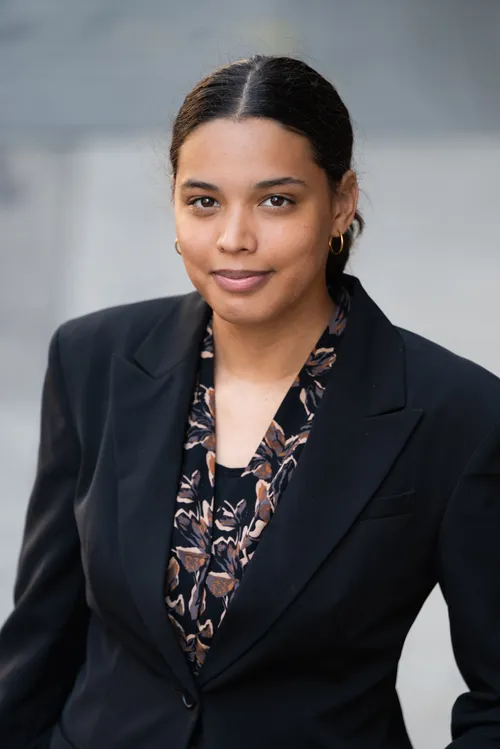
Rae Whyte standing in front of her poster at the American Historical Association's annual meeting
Rachel Whyte with her Religious Ecologies Poster
  •