We are pleased to announce that the deadline for abstract submissions for the DHARTI Conference has been extended to 20 September 2026 (Sun.).
However, if you are planning to submit, we strongly recommend that you initiate your registration on the submission portal within the next two days, as your e-mail account needs to be activated before you can proceed with the final abstract submission.
We highly recommend registering with your institutional e-mail ID, as this allows the account to be activated in under a day. If you register with a G-Mail ID, activation may take up to six days — so please register with plenty of time in hand, ideally within the next two days.
Early registration will allow sufficient time to receive the activation e-mail, complete the required formalities, and submit your abstract comfortably before the deadline.
In case technical problems still persist and you are unable to register or submit through the open review system, you may send your submission directly to both of the following e-mail IDs: dhalliance@gmail.com and conference.ksll@kiit.ac.in.
We look forward to receiving your research, ideas, provocations, and Digital Humanities conversations.
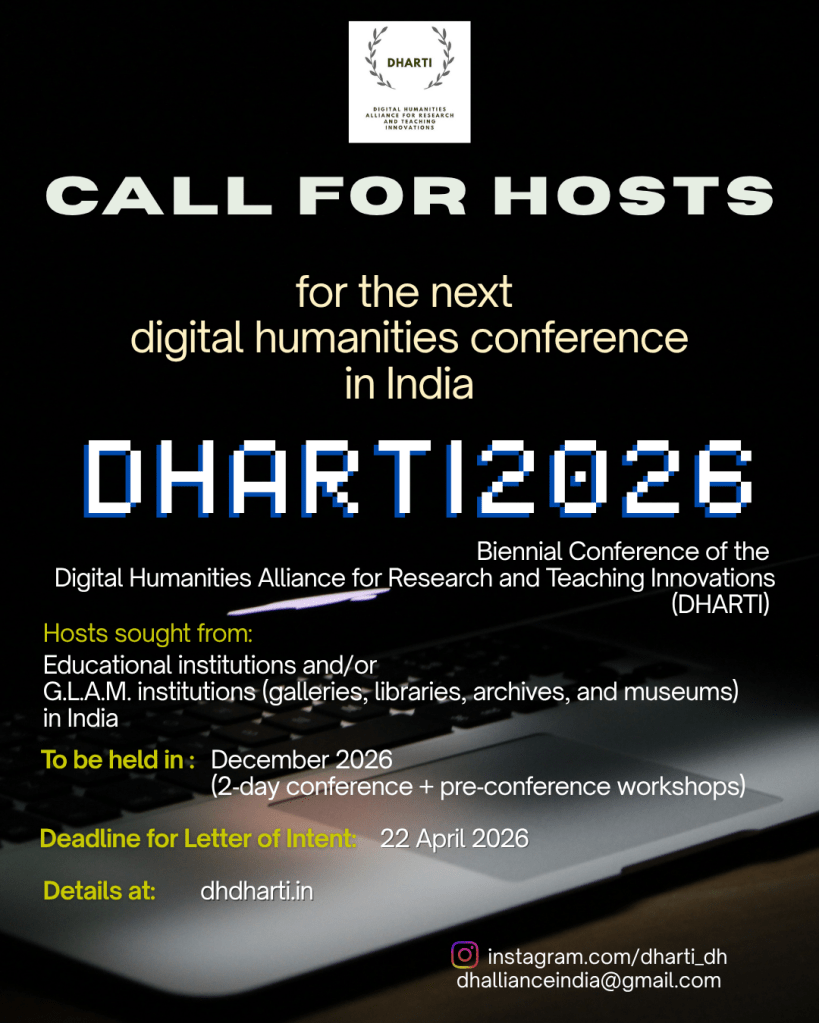
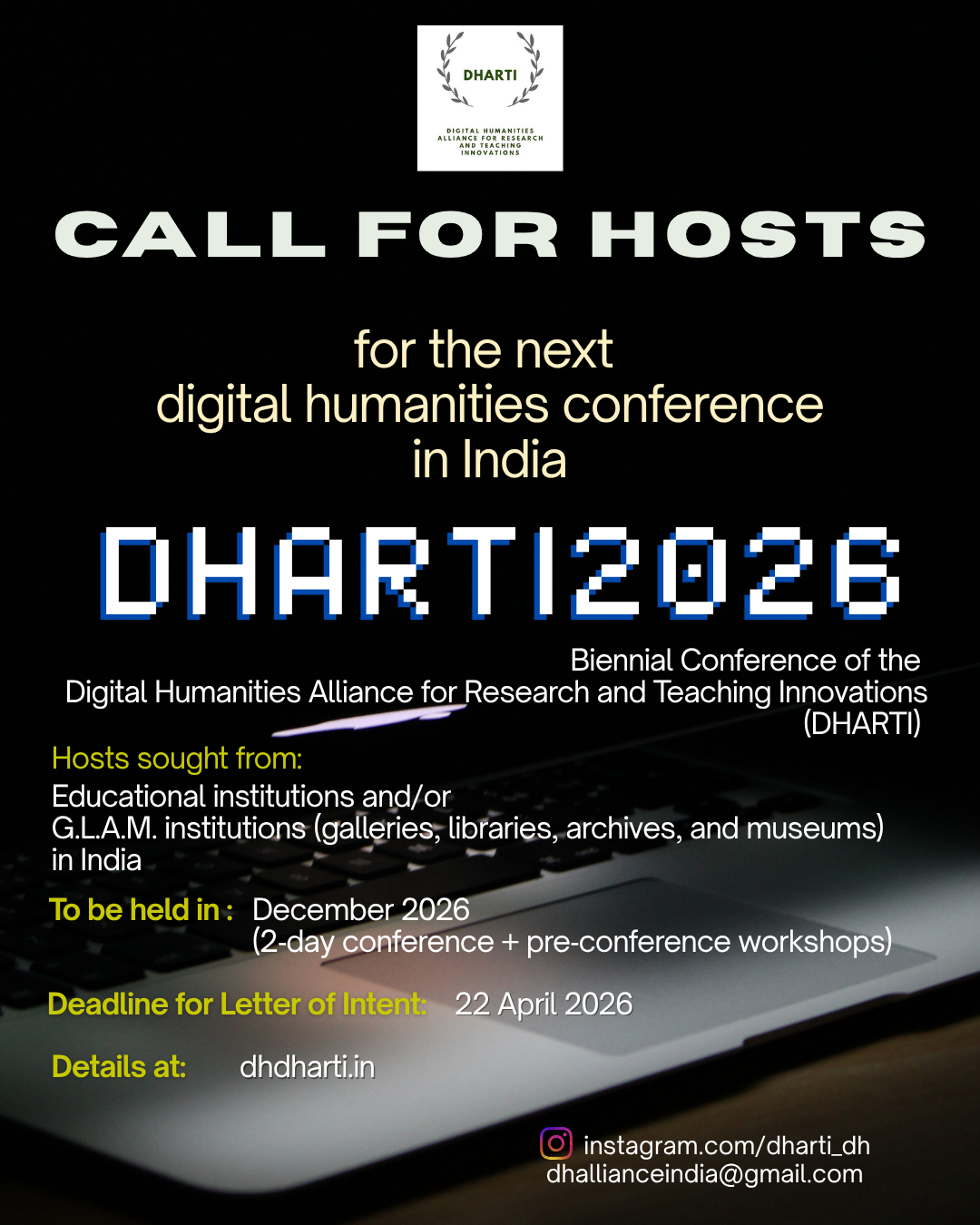
The Digital Humanities Alliance for Research and Teaching Innovations (DHARTI) is seeking proposals from educational institutions and/or stakeholders from the G.L.A.M. [galleries, libraries, archives, and museums ]sector in India to host the DHARTI 2026 biennial conference scheduled to take place in December 2026.
Based on the previous conferences organised under the aegis of DHARTI, DHARTI 2026 will be:
A 2-day conference with multiple parallel sessions
Accompanying pre-conference workshops
A respectful, collaborative platform stimulating debates on past, present, and future of Digital Humanities in India in all configurations
ORGANIZATIONAL CONTEXT AND BRIEF OVERVIEW OF PAST CONFERENCES
The Digital Humanities Alliance for Research and Teaching Innovations or DHARTI, is an initiative toward organizing and facilitating digital practices in arts and humanities scholarship in India, both within and beyond academic institutes. DHARTI is India’s first Digital Humanities Collective and is affiliated as a Constituent Organization of the The Alliance of Digital Humanities Organizations (ADHO) DHARTI, in its previous avatar as the Digital Humanities Alliance of India (DHAI) successfully held its inaugural conference in June 2018 at IIM Indore, which was organized jointly by IIM Indore and IIT Indore. The two-day conference with the theme: “Contestations, Connections and Collaborations” saw participation from more than 50 national and international delegates from 16 Indian states and 5 countries. DHARTI 2020 conference organized as India’s first twitter conference in January 2020 that also saw tremendous participation from DH enthusiasts from across the world.
The second DHARTI 2022 biennial conference was held from February 21 to 25, 2022, with the theme: “The Digital Divides: Discontents, Debates and Discussions” and with the aim to acknowledge the vertiginous divides, celebrate the productive debates, and encourage new models of thinking about humanistic inquiry in a post-Covid digital landscape. Thus far, participation at all DHARTI events has been transdisciplinary with representation from diverse disciplines including (but not limited to) Language, Literature, Visual Art, Performance / Theatre Studies, Media Studies, History, Sociology, Psychology, Language Technologies, Library Studies, Methodologies as well as Software and Critical Computational Studies. These modes of participation are representative of the aims of DHARTI, namely, to provide a methodological commons to promote and accommodate the diverse nature of DH studies within the Humanities, Social Sciences, and beyond through interdisciplinary research and pedagogy. DHARTI also aims to foster connections and associations with fellow DH organizations from the Global South that are similarly committed toward a decolonized praxis of DH.
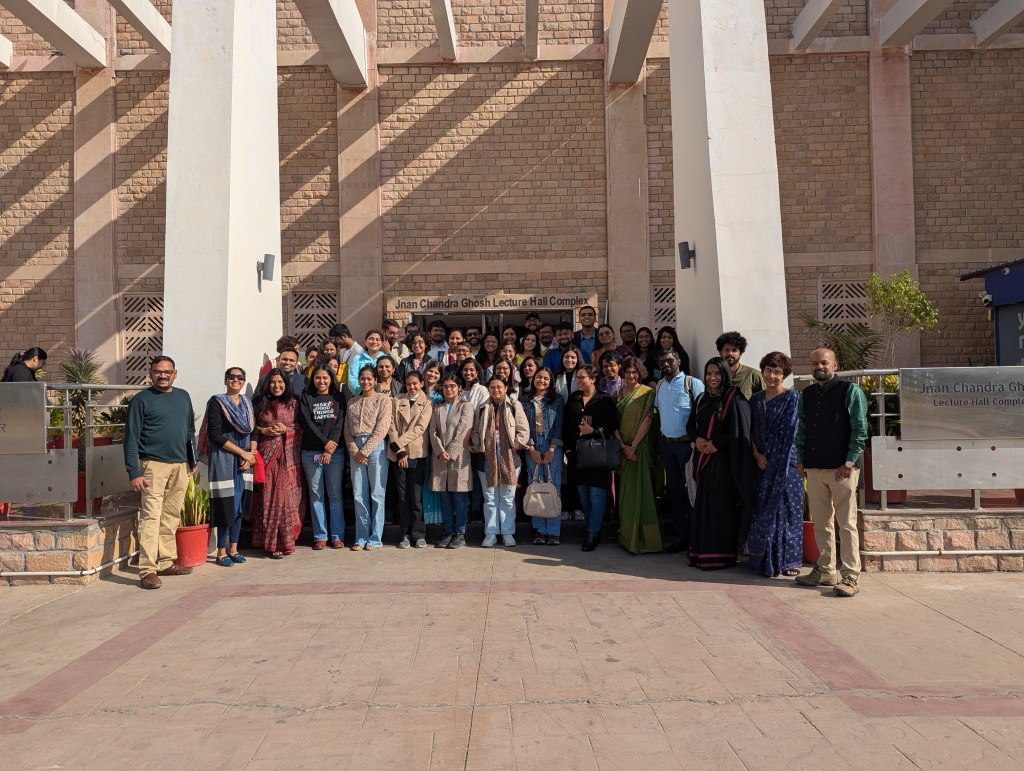
The third DHARTI 2024 biennial conference was held from 10–13 December 2024 at IIT Jodhpur, with the theme “Digital Subject/ivities in the Global South.” The conference brought together scholars, practitioners, and students to discuss emerging methods, pedagogies, and critical debates in Digital Humanities within Global South contexts.
Besides conferences, DHARTI also conducts workshops and talk series. In July 2020, a DHARTI panel on “Toward a Postcolonial/Decolonial Digital Humanities” for DH2020 was held online, streamed live on YouTube, and archived on the Humanities Commons Portal. In December 2020, DHARTI launched the DHARTI Speaks! Webinar series with a talk on Electronic Literature as DH-Perspectives from Ghana and India. In August and September 2025, the talks on electronic literature and AI were conducted as part of the series and we have an upcoming talk series which will be regularly posted on our website. This online series aims at facilitating a sustained dialogue between Global Voices and/in Local Conversations on the Global South.
We are particularly interested in proposals from institutions/ groups of institutions that:
Have developed or are developing digital humanities communities and organizations
Have not previously hosted a DH conference and/or
Are interested in developing new modes of engagement for DH
Are similarly committed toward a decolonized praxis of DH
Scope of Proposal
The selected educational institution(s) and/or stakeholders from the G.L.A.M. [galleries, libraries, archives, and museums ]sector will be responsible for the following:
Event Planning
Develop the conference website, a comprehensive event plan outlining key milestones, and timelines.
Coordinate with DHARTI functionaries to understand the conference objectives, theme, and target Audience.
The academic aspects of the conference, including overall intellectual direction, will be overseen by the DHARTI Governing Body. The members from the host and DHARTI Governing Body members will be in the programme committee.
Venue Selection and Logistics
Identify and secure a suitable venue that aligns with the conference requirements for Hybrid (if preferred) and offline participation (including room sizes and technical capabilities, hotel, options for student housing, and other accommodations, arrangements for access accommodations
Manage logistics, including audio-visual equipment, catering, signage, and seating Arrangements.
A decision regarding the inclusion of hybrid participation will be made jointly by DHARTI and the host[s]. If hybrid options are adopted, the host[s] must ensure conducive facilities and reliable technical infrastructure for seamless online and offline engagement.
The decided number of participants will be based on the capacity of the host.
Program Development
Collaborate with DHARTI functionaries to create a diverse and engaging conference program.
Source and coordinate speakers, panelists, and workshop facilitators. DHARTI will liaison with the keynote speakers.
Marketing and Promotion
Develop promotional strategies to promote the conference and invite participation.
Create promotional materials, including brochures, banners, and online content.
Registration and Attendee Management
Implement an efficient registration system for participants.
Handle attendee inquiries and manage participant communications.
Sponsorship and Exhibitor Coordination
Secure sponsorships and manage relationships with sponsors.
Coordinate exhibitor logistics, including booth assignments and setup.
Financial structure will be mutually decided.
DHARTI may offer a few bursaries for the presenters.
On-Site Management
Oversee on-site logistics and ensure smooth event execution.
Provide event staff for registration, information, and support.
Post-Event Evaluation
Collect feedback from participants, sponsors, and exhibitors.
Prepare a comprehensive post-event report, including recommendations for future conferences.
Proposal Submission: Interested institutions are invited to submit a letter of intent that addresses their suitability for hosting the conference as well as a few proposed conference themes. Thereafter, a detailed proposal should be submitted.
The proposal should include the following:
Institutional background and experience in conference planning
Suggestions for conference theme and subthemes
Proposed event plan and timeline
Budget estimate, including a breakdown of costs and sources of funding.
Previous experience with similar events and references
Marketing and promotional strategies
Submission of Letter of Intent: 22 Apr 2026 Submission of Detailed Proposal: 8 May 2026 Proposal Submission Address: dhallianceindia@gmail.com
Proposals will be evaluated based on the following criteria:
Access for attendees with disabilities is mandatory at all venues and events associated with the conference. This includes accommodations in presentation rooms for participants who are sight- and/or hearing-impaired. If excursions cannot be made accessible to people with disabilities, this should be clearly noted in the registration materials.
Experience and expertise in conference planning and event management. Proposed budget and cost-effectiveness. References and past performance. Marketing and promotional strategies.
DHARTI reserves the right to reject any or all proposals or to negotiate separately with educational institutions deemed to be the most qualified.
We look forward to receiving your proposal.Sincerely, DHARTI Governing Body dhallianceindia@gmail.com
Radhika Gajjala (PhD, University of Pittsburgh, 1998) is Professor of Media and Communication (joint appointed faculty in American Culture Studies) at Bowling Green State University.
She has published books on Cyberculture and the Subaltern (Lexington Press, 2012) and Cyberselves: Feminist Ethnographies of South Asian Women was published (Altamire, 2004). She has co-edited collections on Cyberfeminism 2.0 (2012), Global Media Culture and Identity (2011), South Asian Technospaces (2008) and Webbing Cyberfeminist Practice (2008).
She is currently continuing work on two interrelated projects on microfinance online, digital financialization to P2P lending and borrowing based in social media practices, marketing, philanthropy and neoliberal entreprenuership with a focus on “women’s work”, value and tacit practices/contributions in transitioning economic times through an (auto)ethnographic focus on craft communities (book in-progress as of 2013 Summer). This project continues to link with examinations of the ITization and NGOization of Global socio-economic work and play environments started in Cyberculture and the Subaltern and examines the connections between money and presentations of self/identity and value in global work-space, virtual worlds and on coding and placement of affect and labor in DIY and craft networks.
She is also a member of the Fembot Collective and FemTechnet and is co-editor (with Carol Stabile) of ADA: Journal of Gender, New Media and Technology.
Note on Digital Humanities
My work with what has now come to be termed as “Digital Humanities” dates back to the 1990s when we used to call it “Humanities for Computing,” “Technology and the Humanities” and so on. Early collaborations supported by the Institute Advanced Technology in the Humanities (when John Unsworth was Director of the institute) included my work with the Spoon collective (as moderator of the Postcolonial listproc and founder of a couple other listprocs focused on women) and explorations in the PMCMOO and Lingua MOO. My research into South Asian Digital Diasporas through postcolonial and subaltern studies framewords resulted in further engagements in various digital environments. In addition I have used immersive environments such as textbased MUDs and MOOs, secondlife, various social media tools and gaming environments in my teaching at both graduate and undergraduate levels. My research continues to investigate issues around “digital subalternity” and women’s digital labor in contemporary global spaces of work and play. Explorations around cyberculture and the subaltern have led me to offline spaces in rural India and to look at issues around craft communities, women and microfinance, women and mobile phone apps, carework and gendering of space/place through the deskilling of labor. I am particularly engaged in researching contradictions around digital inclusion and the production of archives of subalternity and asking what the “decolonizing” of “Digital Humanities” would look like.
Rahul Krishna Gairola, Ph.D. (U of Washington, USA), is Assistant Professor of English & Comparative Literature in the Department of Humanities & Social Sciences (HSS) at the Indian Institute of Technology Roorkee, Uttarakhand, India.
He is the author of Homelandings: Postcolonial Diasporas and Transatlantic Belonging (Rowman & Littlefield International, London & New York, Sept. 2016) and co-editor (with Amritjit Singh and Nalini Iyer) of Revisiting India’s Partition: New Essays on Memory, Culture, & Politics (Orient Blackswan, New Delhi, October 2016/ Lexington Books, Washington, D.C., June 2016).
He is currently working on two book projects: the first critically re-thinks shifting meanings of “home” in digital identities & cultures of 21st-century South Asia, while the second examines gender and home economics in recalibrated kinship relations of migrants from rural regions of Garhwal to urban metropoles in North India. He is an Article Editor for Postcolonial Text.
Note on Digital Humanities
I have been interested in digital humanities and culture, and where and how both intersect with postcolonial and South Asian studies, for many years. I began curating these interests while a Lecturer at the University of Washington, where I attended DH sessions at The Simpson Center for the Humanities, and later held a modest Mellon Fellowship for The Humanities and Technology Camp (THAT Camp) at UW Bothell. Soon after, I organized and presented at MLA 2013 on “South Asian-izing the Digital Humanities,” the first panel of its kind to bring DH into dialogue with South Asian Studies. Since then, I have been involved in a number of DH events and workshops, most recently the Digital Humanities Summer School at Oxford University and the European Summer University in Digital Humanities at the University of Leipzig, Germany, in summer 2017. My current interests in DH include digital pedagogy, social and new media, digital literacy, mapping, and theoretical paradigms for re-thinking human subjectivity and its constitutive identities in the digital milieu.
Keywords
Postcolonialism, migration, diaspora, home, race, class, gender, sexuality, ability, nationality, intersectionality, cultural studies, social media, critical theory, world literature, ethnic American literature, film studies, Partition, South Asia, digital humanities, DH tool, DIY, mapping.
Projects
I am developing a few projects that deal with partition, Indian art history, digital literacy/ pedagogy, and and counter-mapping archives, and are in process over the next few years – including DH special topic issues of two reputable, peer-reviewed journals: South Asian Review and Asiascape.
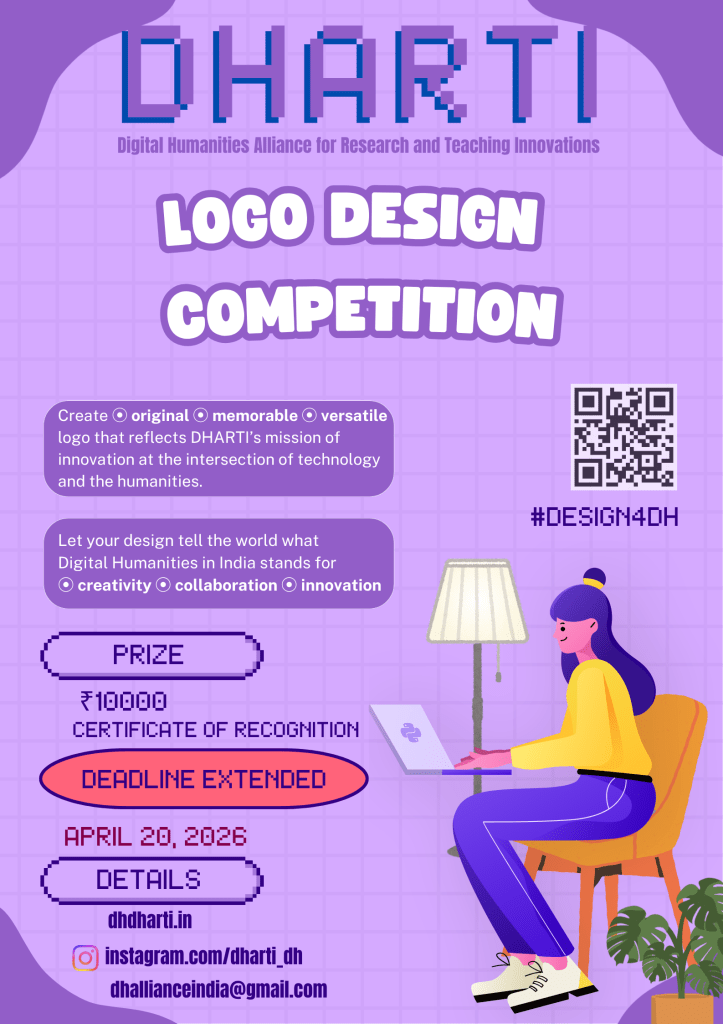
We are pleased to announce an exciting opportunity to design a distinctive logo that will represent our organization globally.
Deadline Extended!
About Us DHARTI, a registered Non Profit organisation in India, is an initiative towards enabling and facilitating digital practices in arts and humanities scholarship in India, both within and beyond academic institutes. As an organisation, we nurture and mentor Digital Humanities projects across India, provide a platform to showcase and validate humanities projects, develop research networks for Digital Humanities scholars, and give global recognition to projects from India through international forums. Know More
Submission Guidelines:
The submission requires the logo with a short concept note (100-150 word). Please submit the files named as FirstName_LastName_Logo. Please read the following guidelines carefully:
Technical Specifications: :
Submit vector files (.AI or .SVG) and high-resolution raster files (PNG transparent 300 DPI min, JPEG 300 DPI, PDF 300 DPI).
Must include full color (RGB digital/CMYK print) + black & white versions with RGB/CMYK values (max 5 colors, accessible contrast).
Designs must be original, simple, and versatile. Should work across multiple formats and platforms.
Design incorporates “DHARTI” (optional, if the design itself reflects the name).
Design MUST not infringe existing intellectual property (IP).
Designs will be evaluated on:
Originality & Creativity
Visual Impact & Memorability
Representation of DHARTI’s Mission
Versatility & Adaptability
IP & Copyrights note:
The winning entry will become the intellectual property of DHARTI upon announcement.
DHARTI reserves the right to modify and use the winning design across all media platforms.
Winners must provide all editable source files along with a declaration of transferring copyright of the logo to DHARTI.
Non-winning designs remain the property of the designer.
All submissions are confidential until official announcement.
TERMS & CONDITIONS
Submissions must be original work (not AI generated) created specifically for this competition.
Designers warrant that the design does not:
violate any existing copyrights or trademarks.
use any AI generated artwork/output to avoid related copyright issues.
Violation will lead to disqualification.
One entry per designer/team.
Designs must not contain offensive or politically sensitive content.
Late or incomplete submissions will NOT be accepted.
Jury decisions are final and binding.
DHARTI reserves the right to request minor modifications from winners for technical compatibility.
What will you gain?
The winning entry will be awarded a cash prize of Rs 10,000/-.
Winners will be featured on the website and provided a Certificate of Recognition by DHARTI.
The landscape of digital humanities, corollary to the rapid social and technical evolutions, undergoes a constant and profound methodological transformation, necessitating a continuous and critical reevaluation of contemporary methods and practices used by DHers. In light of this, the upcoming session of DHARTI Speaks series convenes to examine the complex intersections & evolution of design, historiography, and digital archiving. We are privileged to host Ishita Shah—distinguished curator, designer, historian, and the founding visionary behind Curating for Culture.
Join us for her talk, “My Dilemmas, as a Curator: Research, Writing, or Coding”, where she reflects on the challenges and choices that shape contemporary curatorial practice. Date: Tuesday, 31 March 2026 Time: 7:30 PM IST Exclusively for DHARTI members This members-only event is part of our ongoing series that brings together scholars, practitioners, and educators in Digital Humanities to reflect, debate, and imagine new futures. To join DHARTI, if you haven’t already, visit: http://dhdharti.in
About Ishita: Ishita Shah is trained as an interior designer and an architectural historian. Over the last few years, she has been developing a community-based curatorial practice, which focuses on cultural preservation and creative collaborations across individuals, families, and organizations with an intention to deepen the culture for archiving in India and across South Asia. Her work is situated under the aegis of a self-founded collective, Curating for Culture. She is also a consulting archivist and/or curator at Pattani Archives, Glenmorgan Estate, and Shreyas Foundation. She also teaches across various programs and cities.
Two critical projects that she has self-initiated are: Constructing Personal Archives, an incubation program for archival projects from across South Asia, and Women of Vaastukala Archive, a digital repository of oral histories of women practitioners from architecture, design, planning, and allied disciplines in India.
Ishita has previously worked with Queer Ink to lay foundation for Queer India Archives as a consulting archivist, Biome Environmental Solutions Pvt. Ltd. to curate their recent publication, Biome Diaries: Ecological Architecture from India (2021), as well as collaborated with organizations like the National Centre for Biological Sciences, INTACH Bengaluru, Arthshila Ahmedabad, the Ministry of Culture India; to curate and develop a wide range of public interpretation projects. Before this, she was an educator and the coordinator of the UNESCO Chair in Culture, Habitat, and Sustainable Development at the Srishti-Manipal Institute of Art, Design, and Technology. She has also been the founding archivist and oral historian at CEPT Archives and worked with the Royal Institute of British Architects (UK), INSITE Magazine, SPADE India Research Cell, and Design Innovation and Craft Resource Centre.
Ishita is also a Graham Foundation Grant recipient (2020), a Khoj CISA Fellow (2021), a former fellowship student and community member at The Alternative Art School (2022), and a TEDx Speaker (2024). Ishita is also a contributor to the Feminist Spatial Practices Group and a thematic Director at PATIO Network.
You can follow Ishita Shah’s work here: https://www.linkedin.com/in/ishitasha/
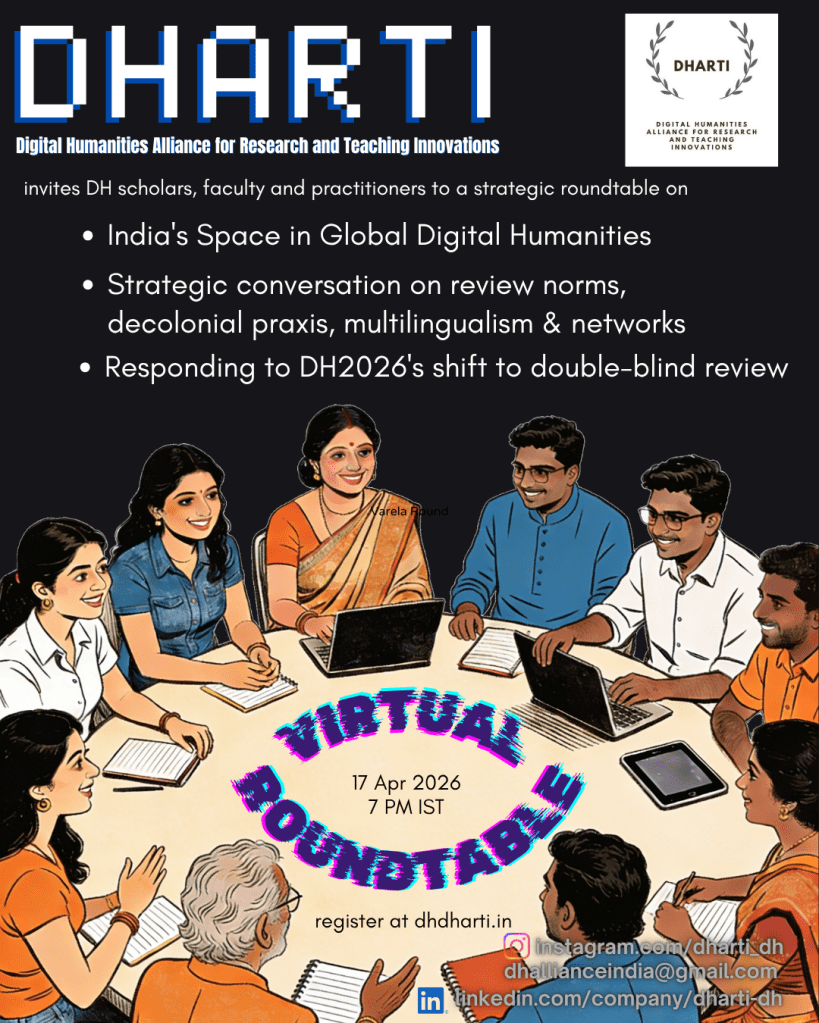
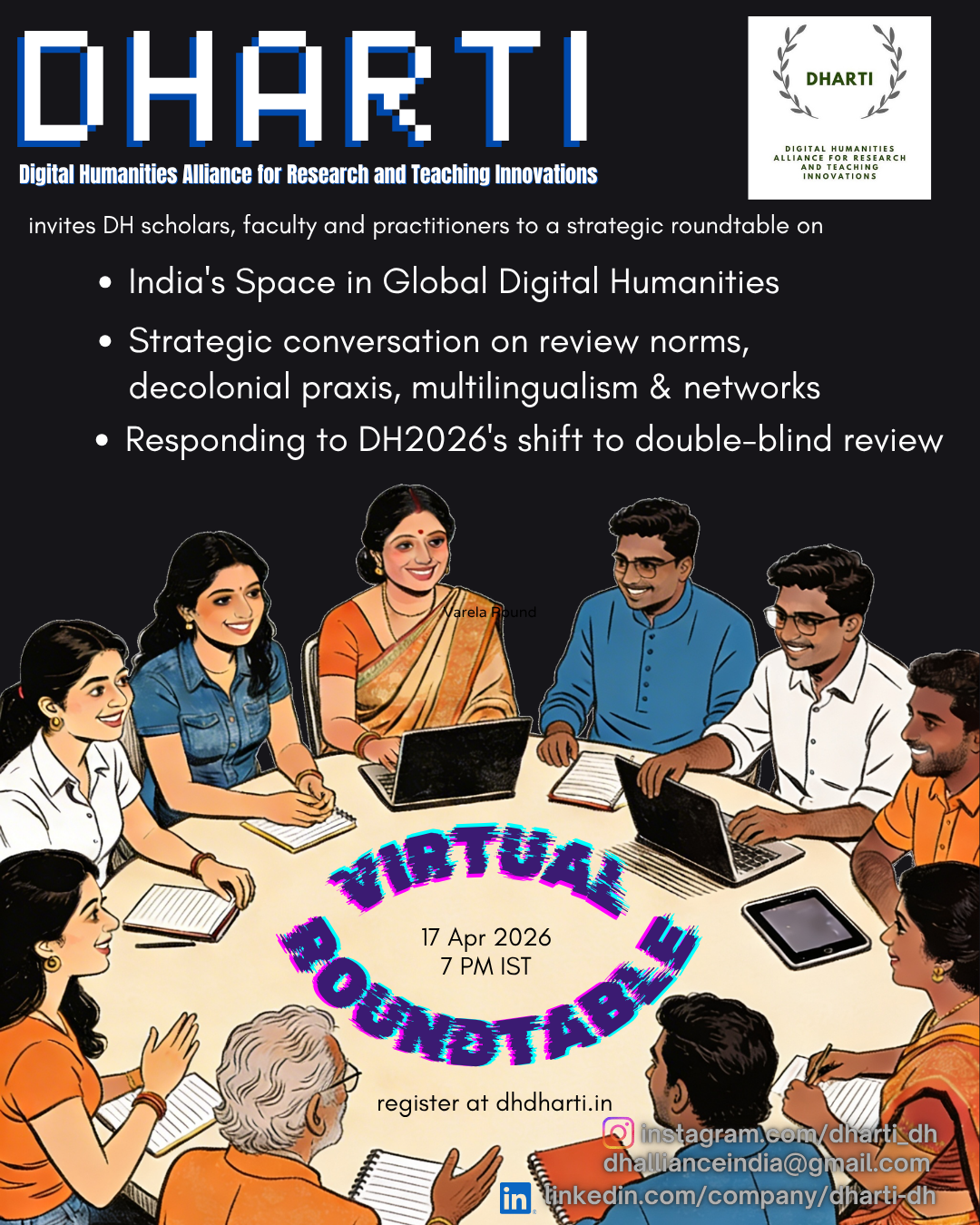
The DHARTI Governing Body invites scholars, faculty, and practitioners to a strategic conversation on India’s evolving role in the international DH community and how DHARTI can deepen digital humanities work across India.
The recent ADHO decision to adopt double-blind review for DH2026 has sparked essential global discussions about fairness, inclusion, and review practices. This is our moment to articulate Indian perspectives on:
What unique contributions can India bring to global DH from the Global South?
How do multilingualism, decolonial approaches, infrastructure needs, and interdisciplinary networks shape our work?
What role can DHARTI play in mentoring, networking, and amplifying Indian DH internationally?
Who should join: Leaders from humanities, social sciences, libraries, and technology shaping DH ecosystems in India.
DHARTI is pleased to announce that the DHARTI2026 Biennial Digital Humanities Conference will be hosted by Kalinga Institute of Industrial Technology (KIIT), Bhubaneswar, in December 2026.
Type: Part-time / 4-8 hrs per week for 6 months Location: Remote / India-based preferred Honorarium: Rs. 8000 per month About the Organisation The Digital Humanities Alliance for Research and Teaching Innovations or DHARTI, is an initiative towards organising and facilitating digital practices in arts and humanities scholarship in India, both within and beyond academic […]
Please visit the conference website for further details. The sessions’ details can be found on the website under the ‘Highlights’ section.
Conference theme: Digital Subject/ivities in the Global South
The theme builds upon DHARTI’s last conference in 2022, which explored ‘digital divides’ in DH spaces across India and the globe. In the process, it hopes to create a platform for crucial dialogue between the scientific-technological discourses, and humanities and sociological research so that they may act together, in complementary ways, affecting timely interventions. Because of, or even despite the digital divide we witness, it is important, to not just study digitality in Global South societies, but also how cultural meaning- making play a key role in negotiations of agency and accessibility of resources across social networks within the Global South, and vis-a-vis the Global North.
We invite proposals from interested scholars, educators, researchers, industry personalities, artists, and other stakeholders in the field of Digital Humanities and other allied areas.
The Digital Humanities Alliance for Research and Teaching Innovations (DHARTI) is seeking proposals from educational institutions in India to plan and execute the DHARTI 2024 biennial conference scheduled to take place in 2024. ORGANIZATIONAL CONTEXT AND BRIEF OVERVIEW OF PAST CONFERENCESThe Digital Humanities Alliance for Research and Teaching Innovations or DHARTI, is an initiative toward […]
Faculty:Arjun, Professor, Department of Humanities and Social Sciences, IIT Delhi
Schedule: 28 Feb to 11 Mar 2022, 10 days. Mon – Fri. 3-4PM IST (UTC +530).
Objectives of the workshop: To introduce participants to the basic operations on R and enable them to use these skill to work on humanities data. The workshop will cover the following: Variables, Loops, Pipes, Strings, data structures, data wrangling, text analysis and visualization.
Modules: Vectors, Arrays, Lists, Data Structures, Data Frames, String Manipulation, Ggplot
Eligibility:
1. Applicants should have at least a Bachelor’s degree in a humanities discipline.
2. The workshop is open for those who don’t have any background in coding/ programming. If you are someone who has any experience in working with another programming language like Python, Java etc. this workshop is not for you.
Technology requirements:
Participants will have to install RStudio on their machines. Detailed instructions will be provided.
Seats limited. If the number of applicants exceed the capacity of the workshop some of the applicants would be waitlisted and/or accommodated at a repeat workshop.
All workshop participants will be awarded an eCertificate.
Faculty: Arjun, Professor, Department of Humanities and Social Sciences, IIT Delhi
Date and time: 5 March 2022, 3-5 PM IST (UTC +530)
Objective: To enable participants to scrape data from websites. The workshop will offer hands on live demonstration of the tool with exercises
Eligibility:
1. Applicants should have at least a Bachelor’s degree in a humanities discipline.
2. The workshop is open for those who don’t have any background in coding/ programming. If you are someone who has any experience in working with another programming language like Python, Java etc. this workshop is not for you.
Technology requirements: Google Chrome/ Chromium browser
Seats limited. If the number of applicants exceed the capacity of the workshop some of the applicants would be waitlisted and/or accommodated at a repeat workshop.
All workshop participants will be awarded an eCertificate.
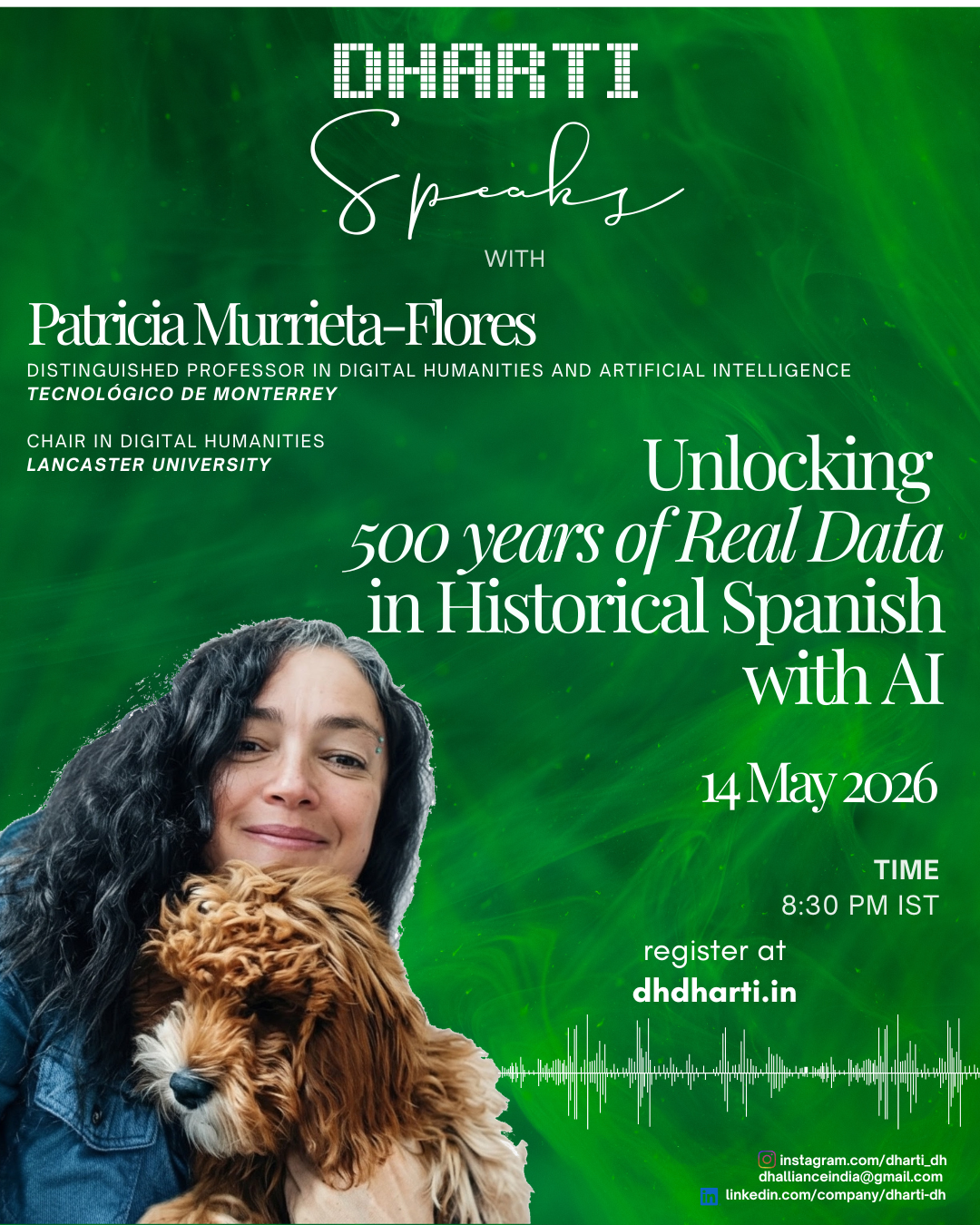
Title:Unlocking 500 years of Real Data in Historical Spanish with AI Speaker:Prof Patricia Murrieta-Flores, Distinguished Professor in Digital Humanities and Artificial Intelligence at Tecnológico de Monterrey, and Chair in Digital Humanities at Lancaster University Date and time:14 May 2026, 8:30 PM IST Registration:Registration is free for DHARTI members. DHARTI members need to register for the […]
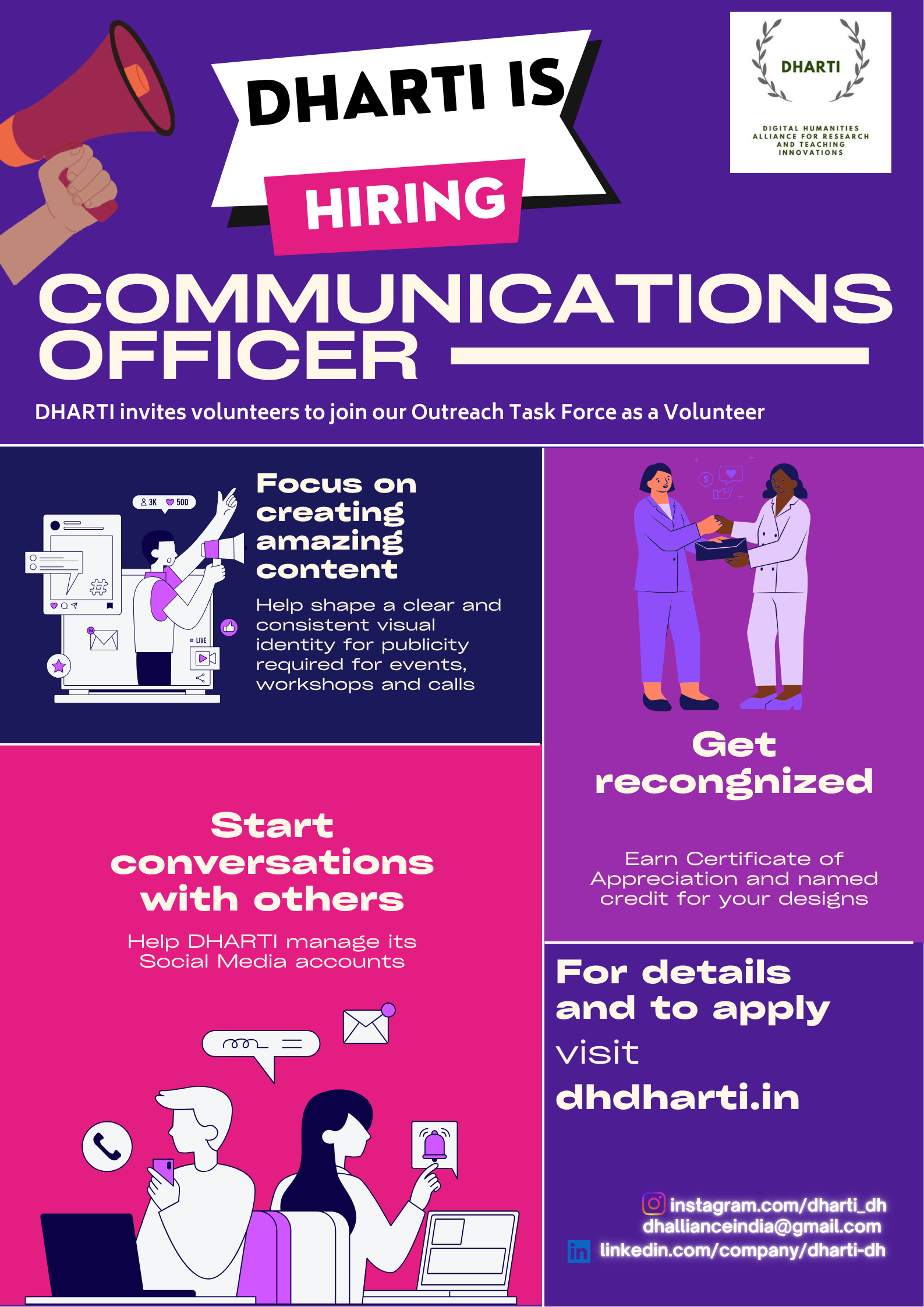
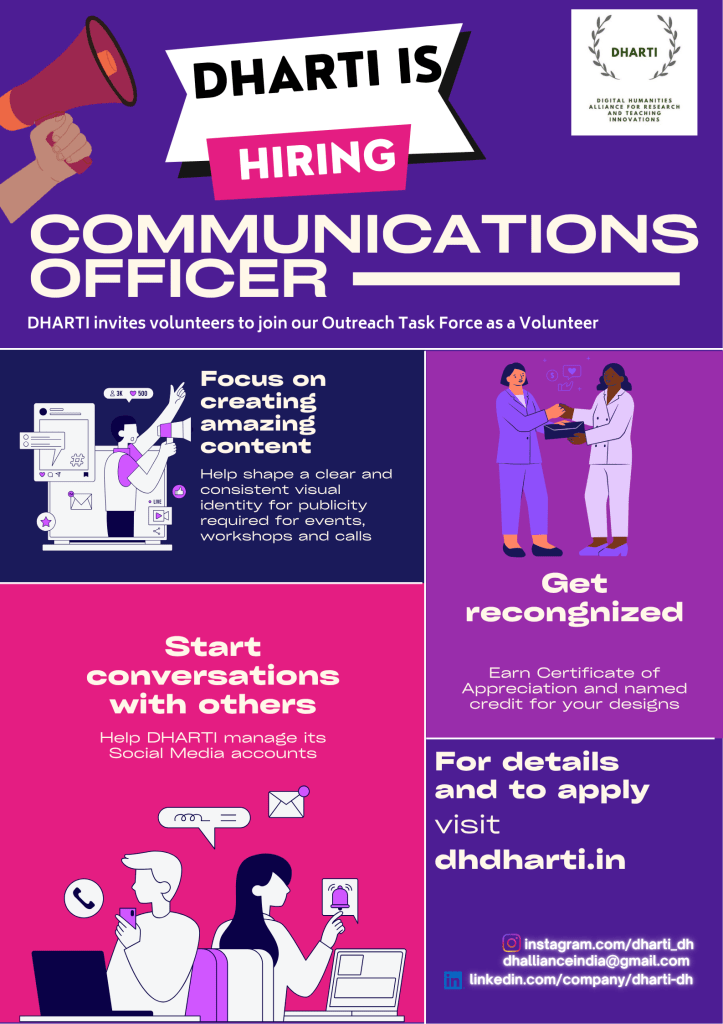
The Digital Humanities Alliance for Research and Teaching Innovations (DHARTI) warmly invites volunteers to join our Outreach Task Force as Communications Officer (Volunteer Position). About Us DHARTI, a registered non-profit organisation in India, works to enable and support digital practices in arts and humanities scholarship in India, both within and beyond academic institutes. We nurture […]
Friday, April 17, 2026 | 7:00 PM IST | Virtual The DHARTI Governing Body invites scholars, faculty, and practitioners to a strategic conversation on India’s evolving role in the international DH community and how DHARTI can deepen digital humanities work across India. The recent ADHO decision to adopt double-blind review for DH2026 has sparked essential […]
The Digital Humanities Alliance for Research and Teaching Innovations (DHARTI) is seeking proposals from educational institutions and/or stakeholders from the G.L.A.M. [galleries, libraries, archives, and museums ]sector in India to host the DHARTI 2026 biennial conference scheduled to take place in December 2026. Based on the previous conferences organised under the aegis of DHARTI, DHARTI […]

 登录
登录