阅读视图

Stuffed animals, creativity, and other thoughts

When I was a kid, I spent hours playing with stuffed animals in a society I had created for them called AnimalLand. I remember designing and building homes using cardboard for the walls, which I then decorated with acrylic paint and wrapping paper (as wallpaper). I cobbled together a set of indoor furniture, complete with old dollhouse pieces and the three-legged miniature “tables” that were occasionally placed in the center of a pizza. I immersed myself fully in this world, creating and building on storylines that detailed the everyday lives of the stuffed animals. They lived in different towns (each named after rooms of the house, such as Kitchen Town), had friends and families, attended concerts and baseball games, and read The AnimalLand Gazette daily. Many of these stories are memorialized in old photos, home videos, and art projects that my brother and I created.

You may be familiar with stories such as The Velveteen Rabbit by Margery Williams, Winnie the Pooh by A.A. Milne, and Calvin and Hobbes by Bill Watterson. In each of these stories, inanimate toys become filled with life through the children who play with them. This also describes my childhood relationship to my stuffed animals; they took on a new meaning beyond simply being stationary textile objects.

Today, I have a similarly imaginative outlook. I am delighted by seeing little birds hop along the sidewalk, and I craft stories in my head about them. I pause to observe trees and imagine different ways in which their stories could be told. Of course, my relationship to these entities is different from my relationship to my stuffed animals, as the trees and birds are part of the world around me and do not belong to me. However, I am filled with a similar sense of creative inspiration when I spend time admiring my surroundings. This tendency towards storytelling and creativity serves as the foundation for my work in music composition. One of my main goals is to reach people through stories that are meaningful, and I hope to accomplish this goal through music and multimedia projects that not only communicate stories and concepts but also speak to people on an emotional level.

I have always seen music as a wonderful tool for communicating something, whether it be ideas, stories, or emotions. In my PhD work, I have begun to more deeply explore music’s potential as a powerful and compelling storytelling tool. One example of this exploration is a piece I created in the fall of 2023 titled “On the Strangest Sea”, whose aim is to tell the story of the saltmarsh sparrow. This tidal marsh species is threatened by sea level rise and human development, and could go extinct before 2050. My piece depicts the projected population trajectory of the saltmarsh sparrow through a technique called sonification, which broadly entails the conveyance of information through sound. The piece maps population to musical density. The tracks are meant to mirror the shape of a graph from a scientific paper - for example, when all 14 tracks are layered, that corresponds to the peak in the projected population. When there are more sparrows, the music is denser. Then fewer and fewer tracks remain as the population decreases, and the piano music eventually dies away. The number of tracks at any given point is proportional to the population at that point on the graph (7 seconds of music elapsed = 1 year has gone by in the graph).

To create this piece, I recorded individual tracks, each comprising a different set of pitches from one overarching collection, to represent the birds. I listened to previously recorded tracks while I played, improvising with myself to mimic the unpredictability of the birds. They are quiet and shy, so much of what they do is left to the imagination, especially if you’re not a scientist observing them. A pulse, which I recorded on my electric violin, is heard every 7 seconds to denote each year that passes on the graph.

The graph on which the piece was based is from Field, Christopher R., et al. “High‐resolution tide projections reveal extinction threshold in response to sea‐level rise.” Global Change Biology 23.5 (2017): 2058-2070.” Below I have a screenshot of my Logic Pro project depicting how the different piano tracks layer on top of one another and mirror the shape of the graph.
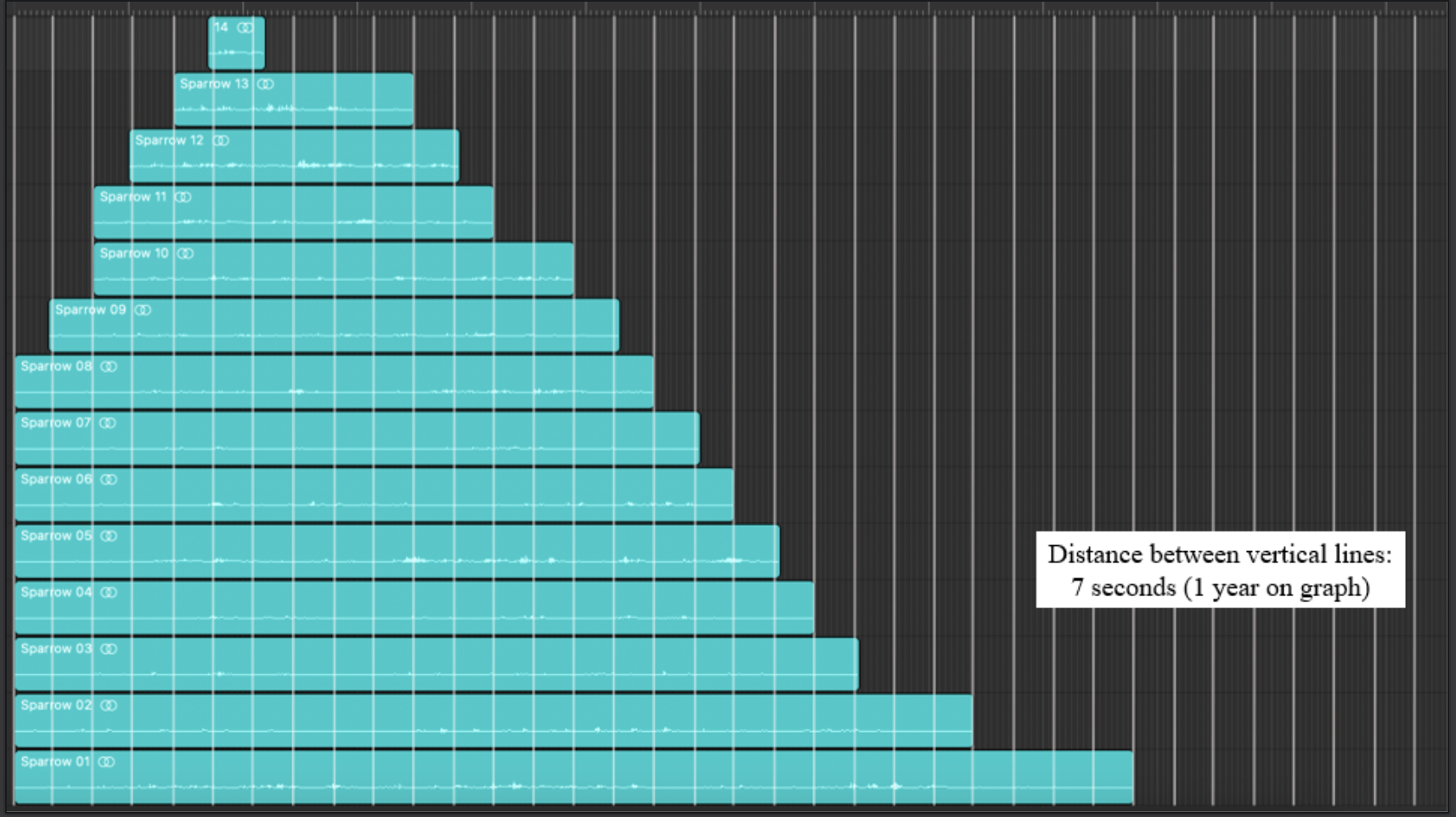
Image of Logic Pro project

You can listen to the piece here.

As I progress through graduate school, I intend to continue exploring this sort of storytelling through music projects. Some of my ideas include collaborating with animators, creating stop-motion short films, and combining music with photography. I have for several years enjoyed pursuing amateur photography, which allows me to engage more deeply with the world around me and gather inspiration for my creative process. When I take photos, I tend to zoom in on the small details so that I can examine them in relation to the bigger picture: the context within which they are situated.
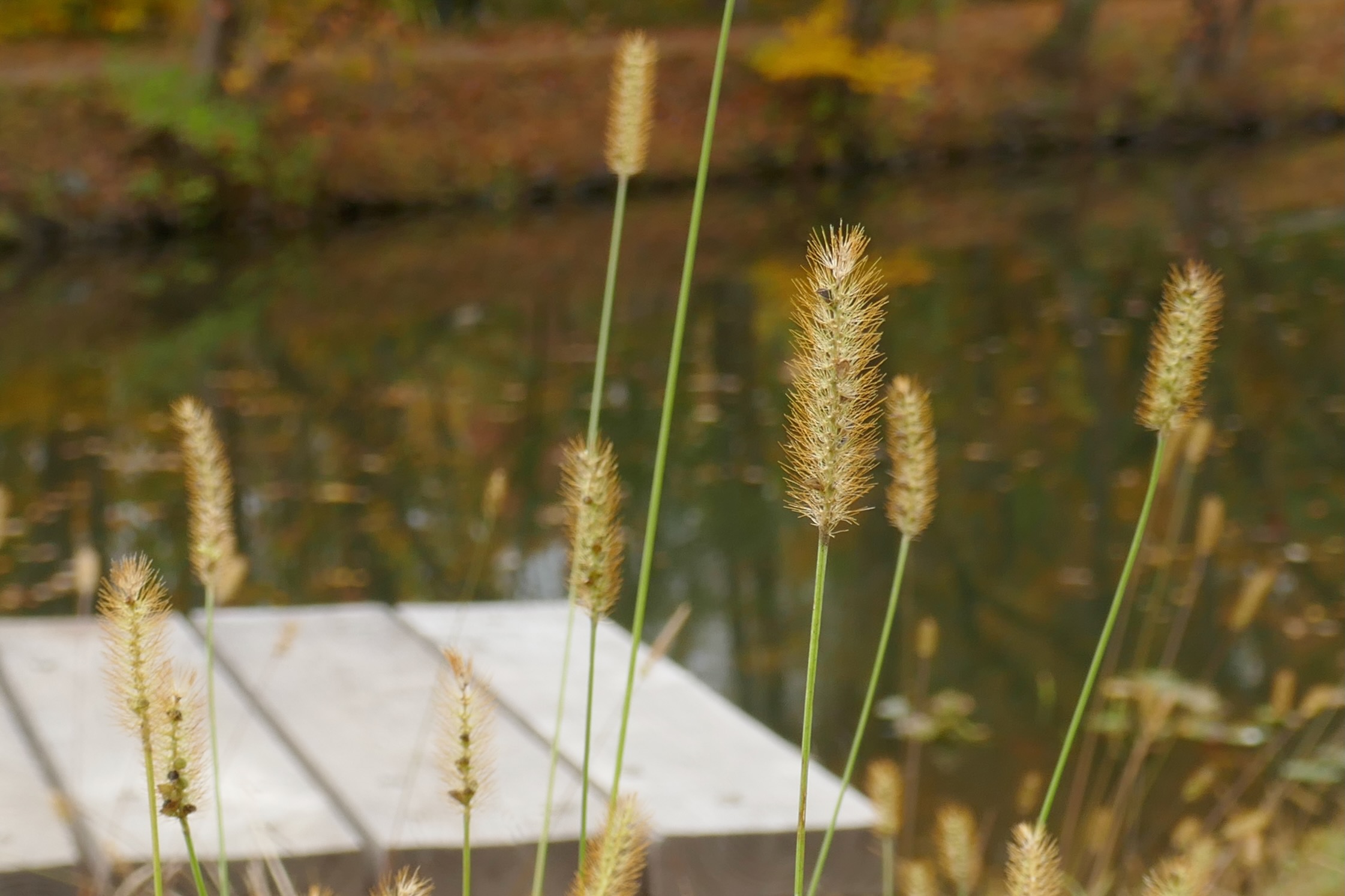
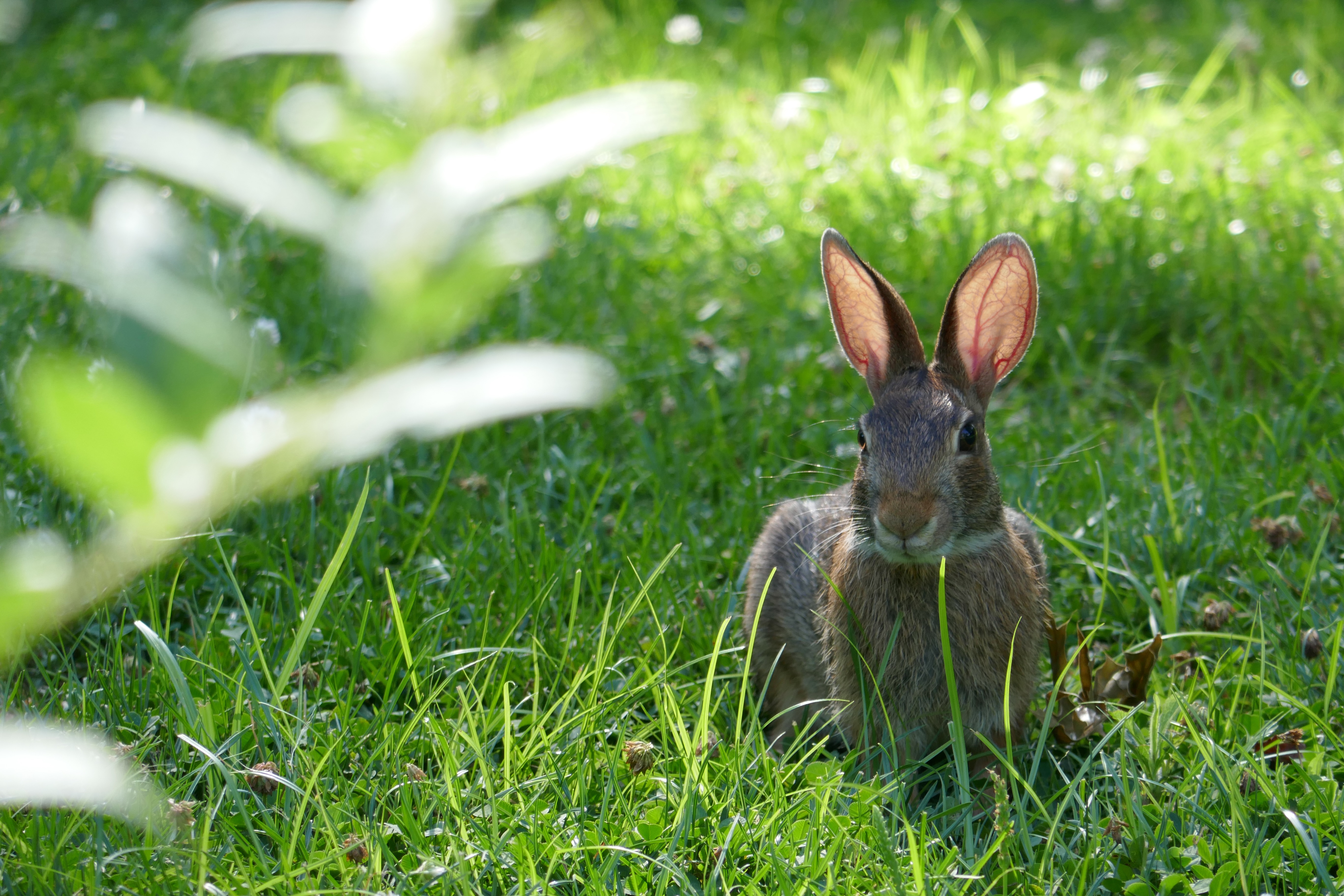
Photo of plants by a canal

Photo of a bunny in the grass

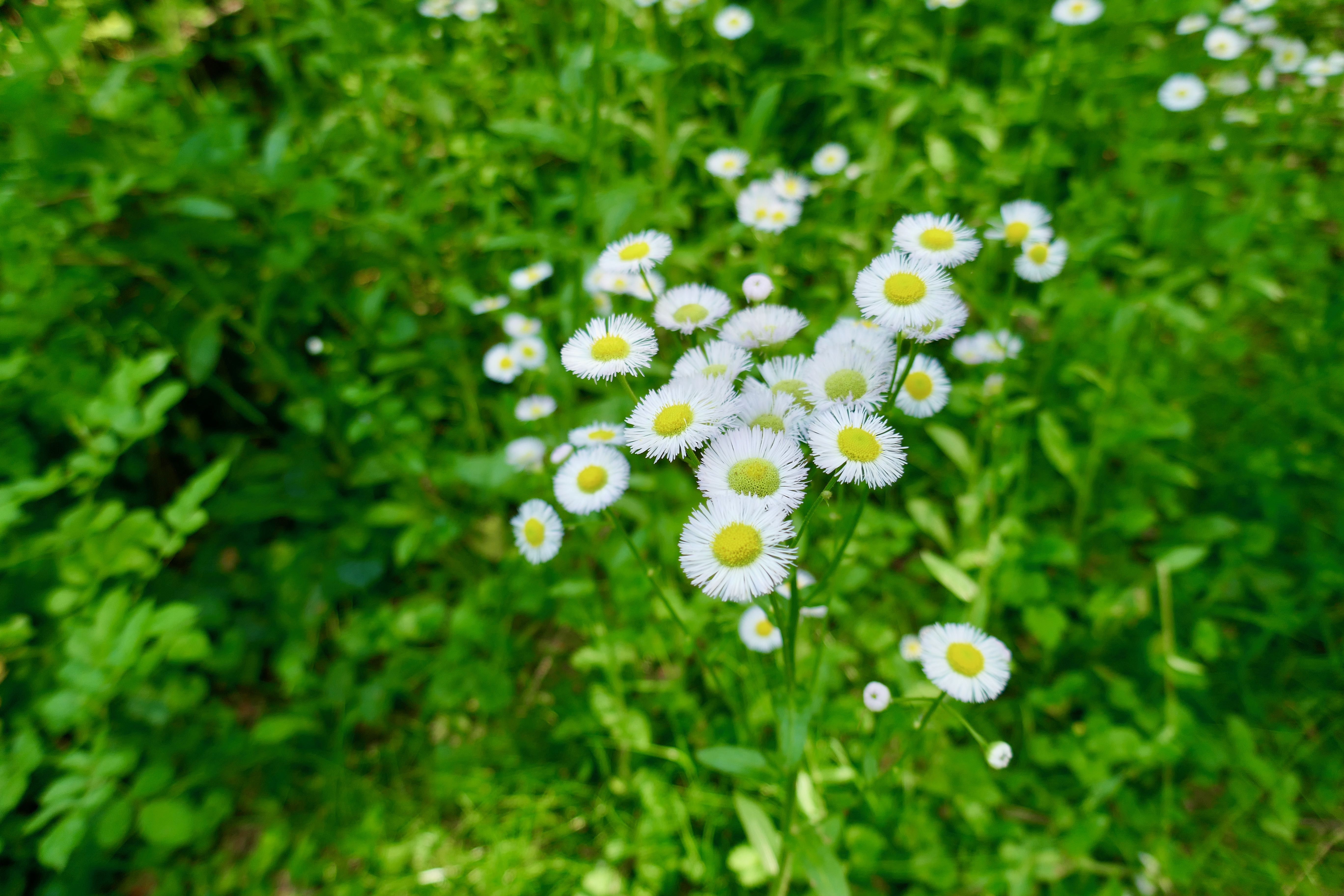
Photo of white flowers

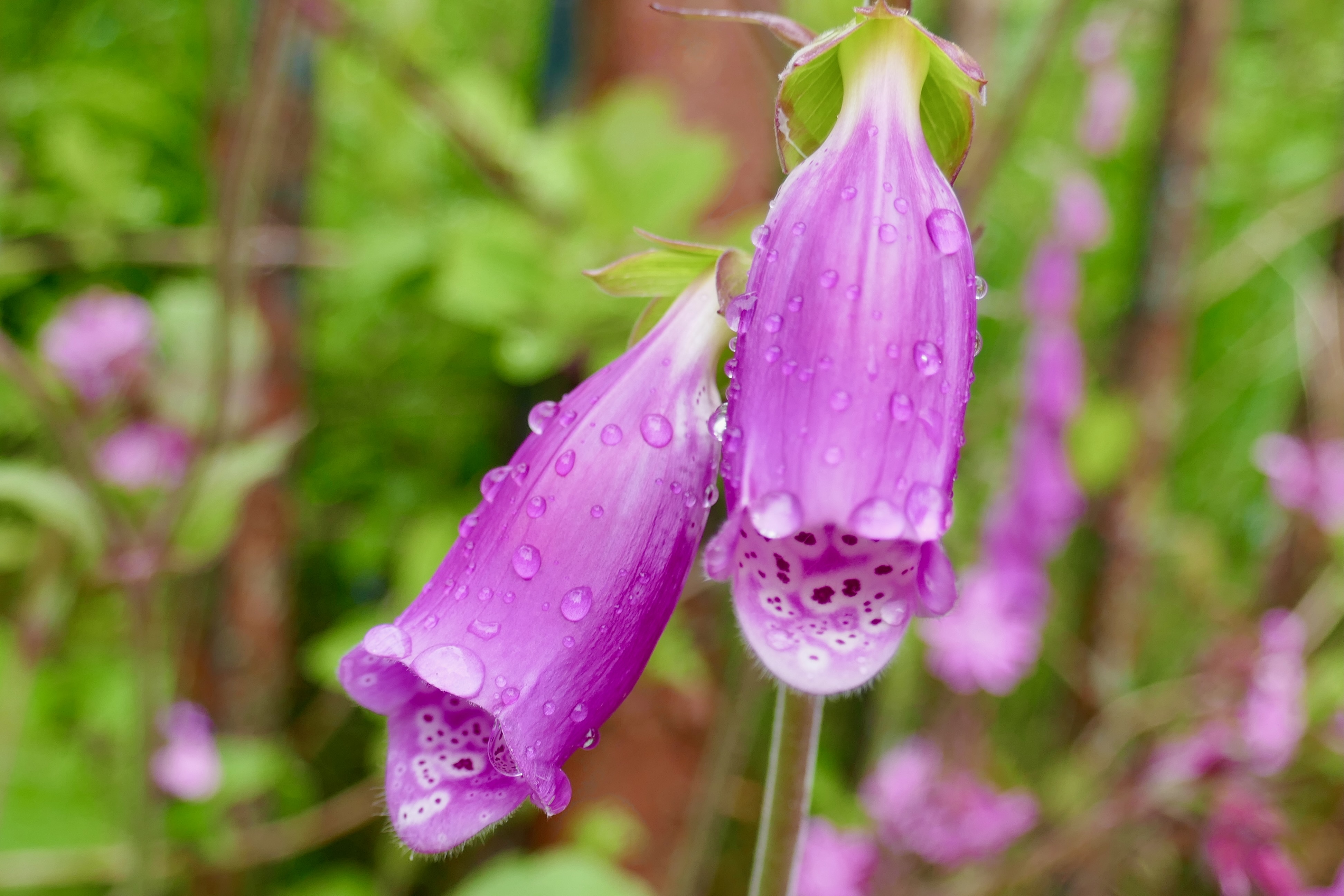
Photo of pink flowers with water droplets

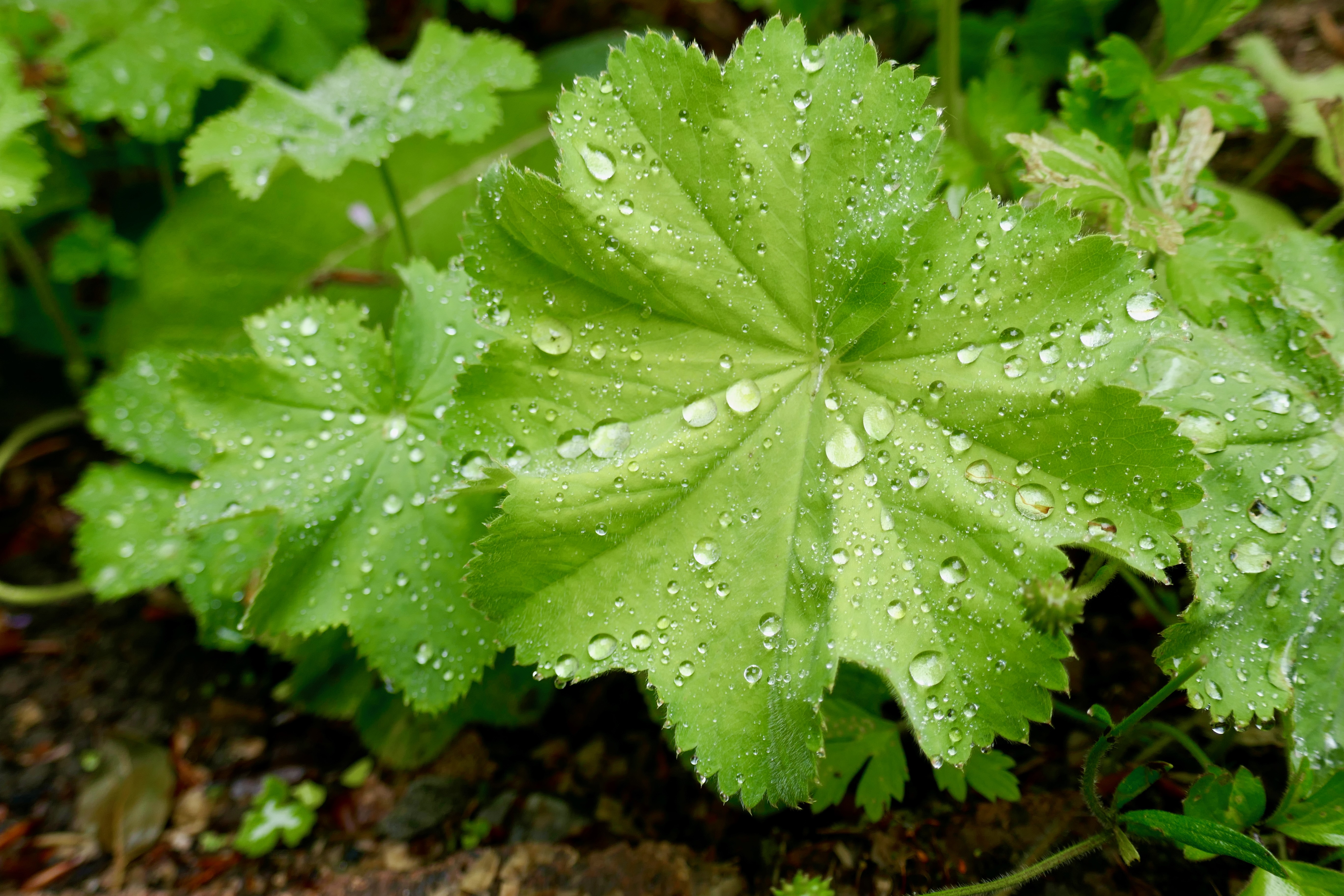
Photo of green leaves with water droplets

I think that the Praxis Program will serve as an ideal environment for me to learn new modes of storytelling and become better acquainted with different audiences. I am excited to learn how to use various digital humanities tools and to learn how others use these tools in their work. In addition, I am looking forward to exploring possibilities for collaborating with scholars in other disciplines. I can’t wait to collaborate with the Praxis fellows and the staff of the Scholars’ Lab!

My stuffed animals are still treasured companions. I often reflect on the time I spent in childhood imagining worlds for them; every scrap of paper I drew on, every newspaper article I wrote, and every stuffed animal’s story holds immense meaning. All of this “pretend play” served as a crucial aspect of my development as an artist and musician, helped me to develop my creativity, and deeply influenced my approach to the work I do. I’m excited to explore new worlds of storytelling through my time in the Praxis Program!
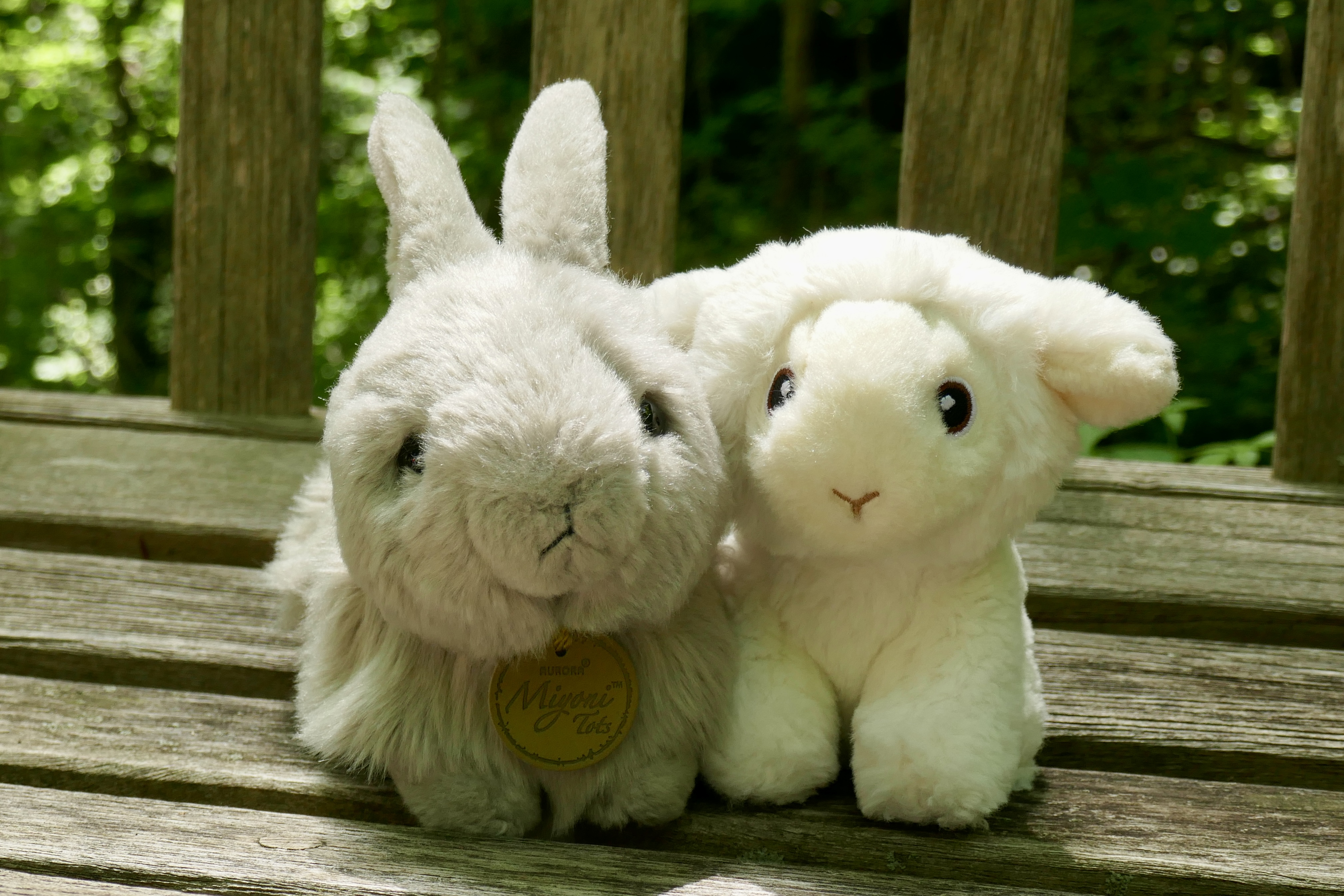
Photo of stuffed bunny and lamb Bun & Lambie, some recent additions to my collection!

  •  

How to Build a DH Scene

I’m in the middle of listening to an audiobook of David Byrne’s How Music Works. The book is a fascinating glimpse into the music industry, but I almost had to pull my car over when he started talking about digital humanities centers.

Okay–Byrne was actually in the middle of a whole chapter describing the special character of CBGB, the renowned music club that opened in 1973 and that was the frequent haunt of punk and new wave bands. But I was struck by just how resonant so much of his advice for cultivating a special and identifiable community was to me, someone who spends a lot of time working to do the same with students new to digital humanities. Once I parked, I quickly made some notes riffing on Byrne’s own eight characteristics of a successful music scene. I’ll share Byrne’s elements below and then riff on them as they relate to our own practice of cultivating collective DH experiences. You can find out more about Byrne’s own points by reading David A. Zimmerman’s summarizing blog post about the text.

  1. There must be a venue that is of appropriate size and location in which to present material.
    • Space matters. It’s challenging to develop a sense of DH community without a space to gather, a place to house the energies of the group. One of the first tasks of a DH scene is often figuring out where it takes place. If physical space is not available to you—such locations are typically contested and hard won—take stock of other options. Virtual space, social media, community by mail, and more might be viable options, and they each offer their own affordances and limitations. And then make those spaces available to your people—as a student, it was impossible for me to reserve space. So friendly librarians who helped me do so meant the world to me.
  2. The artists should be allowed to play their own material.
    • It’s not enough for community members to be passive contributors to the projects of others. They must be given the space and resources to allow their own creativity and their own original research projects to flourish. This also means making space for intentional play as a pathway to finding projects. Don’t ask people to show their DH project credentials at the door in order to get in!
  3. Performing musicians must get in for free on their off nights (and maybe get free beer too)
    • Belonging should come cheap and often for those who want to join. In the Scholars’ Lab, we try to offer free tea and coffee to folks as often as possible. This might seem flippant, but it actually contributes in large ways to a sense of buy in with our group. Besides offering a ritual of belonging—we make this together for you—free coffee also offers a pathway into the Lab for those with economic hardship. Such resources are scarce for different communities, but it’s worth taking stock of what you can offer cheaply. What levers do you have?
  4. There must be a sense of alienation from the prevailing music scene
    • For a DH scene to matter to someone, it has to stand for something. And that something typically stands in opposition to the larger institution around it. Look to your group’s larger context—what is left out? Who? How can your specific scene make space for those absences, center them, and give them a home? Discuss these values intentionally and find ways to act on them.
  5. Rent must be low – and it must stay low
    • For Byrne, this was a larger commentary on the challenges of low-rent housing in a gentrifying area of New York City. For our own purposes, keep in mind that this work costs, but it should not cost the community. To keep your scene sustainable, it is worth regularly revisiting your prior assumptions about what is necessary to keep it flourishing. What might need to be sacrificed to maintain the ideological cohesion of your group? How does the changing financial landscape of your institution affect the underlying budgetary structures that make your work possible?
  6. Bands must be paid fairly
    • Those who cultivate a DH scene have a responsibility to provide equitable compensation for the labor that its community members take on. Pay a living wage when possible. Advocate for better wages when it is not. Recognize and support labor organizing activities in the broader institution as you are able. Healthy labor practices ensure that your community knows you stand for and with them. They will notice.
  7. Social transparency must be encouraged
    • Your community members make up your scene as much as the administrators who work in private to make it possible. Allow outside voices to help shape your practices—that’s how they become insiders. To cultivate the kind of DH scene your people want to see you need to ask them what they want. Ask what you can do for them—actions, events, speakers, and the like mean more when they come from community interest.
  8. It must be possible to ignore the band when necessary
    • A flexible scene allows many smaller groups and communities to flourish. That is to say, a DH scene accommodates more than one use at one time. This is not to say smaller initiatives need be neglected. On the contrary—it allows your community to be agile, to flexibly act in many directions at once. Walk and chew gum at the same time. There are limitations to a group’s energies, of course, so be mindful of when you can ignore one aspect so as to safeguard energies for where you are needed.

I found, in particular, Byrne’s commentary on the intersections between spaces, policies, and creativity to be illuminating. Obviously there is much more to be said, and the analogy to Byrne’s music scene is not a 1:1 comparison. All communities have limitations, and we cannot be all things to all people. But hopefully these quick notes riffing on Byrne are helpful as we all work to cultivate a sense of belonging and community in our own DH spaces. As you try to find your own scene.

Let’s jam.

  •