阅读视图

First Look 2025: Gemini for STEM, DeepSeek for Everything Else

First Look 2025: Gemini for STEM, DeepSeek for Everything Else

The semester always starts the same way. New classes, new tabs, and the same question: which AI should I actually use when the work gets real. After testing both tools with problem sets, lab PDFs, emails, and drafts, a pattern kept showing up. Gemini handles STEM with more structure and fewer surprises. DeepSeek moves faster on writing and day-to-day tasks.

Why Gemini belongs in STEM

You already live in JupyterHub and Google Colab for labs, at least I do as a data science major. Gemini fits your routine without asking you to learn a new app or change how you turn in work. Think of it as a lab partner that sits inside your notebook. You type a plain sentence about what you are trying to do, and it gives you code, an explanation, or both, right next to your data and plots. Because everything stays in the same notebook, it is easy to show your work to a TA and to remember why a change fixed the problem.

On JupyterHub, the appeal is that nothing about your class workflow changes. You still open the same notebook your instructor gave you, run the same cells, and submit the same file at the end. The only difference is that you can ask for help in place. Instead of leaving the notebook to search for a StackOverflow post, you can write a short prompt in a cell that explains the situation. For example, you might say that a KeyError is coming from a pandas selection and ask for two safe ways to fix it. Gemini responds with the explanation and short code you can run immediately. If it works, you keep the cell as part of your record. If it needs a tweak, you edit it and add a sentence explaining what you changed. The point is that the fixing and the learning happen in the same space where you already code, so your reasoning ends up in your submission rather than scattered through browser tabs.

Colab feels just as natural. You open a notebook, connect to a runtime, and talk to Gemini the way you would talk to a classmate who already knows your toolkit. If you say you have a CSV in Drive and want to fill missing values with the median, Colab can receive that request and return runnable cells that import the right libraries, read the file, do the cleaning, and make a simple plot. Because those cells are regular Python, you can immediately adjust column names, change the fill strategy, or add a comment in your own words. For team projects, this helps you get to a shared starting point quickly. Everyone sees the same code and the same comments, and you can divide the next steps without arguing about setup.

The best part for STEM courses is how this supports the “show your work” expectation. In statistics or data science, points are often tied to the justification, not just the final number. When Gemini suggests an approach, you can ask it to include a one or two line reason. If you are testing a model, you can request a tiny checklist that explains when the test is appropriate and what to look for in the output. When you run the cell and get results, you type a short note beneath it that says what you see and whether it matches the assumption. That habit turns a notebook into a readable story that graders appreciate, and it makes studying easier when you look back later.

Gemini also helps with common classroom pain points. When a plot will not render the way you expect, you can ask for a clear axis label and a sentence that states the main takeaway. When a loop is slow, you can ask for a vectorized pandas version and a quick timing check to prove it is faster. When you are stuck on a bug right before lab ends, you can paste the stack trace into a cell and ask for a short, plain English summary with two paths to try. None of this replaces learning the tools. It just removes the friction that keeps you from getting to the idea you want to test.

There are a few good habits to keep this useful and fair. After any code that Gemini suggests, ask for a brief explanation in everyday language so you can repeat it out loud later. Run the code and add one comment of your own about what happened. Most important, only submit work you understand. If a line of code looks mysterious, ask Gemini to rewrite it in a simpler form or to annotate it with comments. Your goal is to make the notebook readable to a future you who is tired and studying for an exam.

If you already rely on JupyterHub and Colab, you do not need a new mental model to use Gemini. You stay in the notebook, keep your code and explanations together, and move faster from problem to test to result. For a typical week in a STEM class, that means less time fighting setup and more time thinking about the question your instructor actually cares about.

Why DeepSeek carries the rest of your week

DeepSeek works best as your “all-courses” helper. Where Gemini sits inside your STEM notebooks, DeepSeek meets you in the places you write, read, and plan. You open a blank doc, a Canvas discussion, or an email, and instead of staring at the cursor you ask for a rough first pass you can shape. The goal is not to sound like a robot. It is to get past the awkward start and move quickly toward a draft that sounds like you.

Start with messy notes. Paste the scattered lines from your phone, a few quotes from last night’s reading, and a sentence about what your instructor actually asked. Tell DeepSeek the audience and the tone. It will turn that pile into a short outline with topic sentences you can approve or reject. Once the outline feels right, ask it to expand one section at a time so you stay in control of the voice. When a paragraph feels wooden, ask for a lighter, student-y rewrite that keeps your claims but changes the phrasing. If a citation is required, ask for help formatting the sources you already have rather than inventing new ones. You are steering the ship. DeepSeek is the wind that gets you moving.

For shorter writing, like emails to professors or internship applications, think of DeepSeek as a coach that keeps you clear and polite without sounding stiff. You say what you need, when you need it, and any details that might matter. It returns a two or three sentence draft you can paste into your mail app and tweak to match your voice. The same pattern works for résumés and cover letters. Feed it a bullet list of your experiences, the role you are applying for, and the skills the posting mentions. It will suggest a structure and accomplishment lines with verbs and numbers you can verify. If you have a draft already, ask for a pass that tightens the verbs and cuts filler so the page breathes.

DeepSeek is also useful for readings and study sessions outside STEM. When an article is dense, copy a small section and ask for a plain-English summary with the author’s claim, the evidence they use, and one question you could bring to discussion. If you have midterms coming up, give it the list of topics and the date, then ask for a week plan that spreads practice in a way that fits your schedule. It can turn your own lecture notes into a one-page study sheet with key terms, two example questions, and a short checklist of things to review. Because the raw material comes from you, the output stays close to what your instructor emphasized.

Group work gets easier when someone can break the ice. Share a prompt and your team’s rough ideas, then have DeepSeek propose a project outline with roles and deadlines. Nobody is locked in by the first draft, but it gives everyone something concrete to react to. When it is your turn to compile slides, you can paste each section’s notes and ask for a slide-friendly version with a title, three concise points, and a line you could say out loud. If a slide looks crowded, ask for the same content reduced to what absolutely must be on the screen, then put the rest in the speaker notes.

Good habits make all of this work for you rather than against you. Keep your prompts short and specific about the task, the audience, and the length. Bring your own sources and quotes so the content stays grounded. After DeepSeek produces text, read it once for accuracy, once for voice, and once for assignment fit. Add a sentence in your own words wherever a claim might be questioned. If your class requires disclosure, include a brief note that you used an AI assistant for drafting or editing. The aim is to learn faster and present your thinking clearly, not to hand in something you cannot explain.

If Gemini feels like a partner that lives inside your notebooks, DeepSeek is the partner that lives in your docs, emails, and to-do lists. It helps you start, helps you organize, and helps you finish with a clean draft that still sounds like you. On a typical week with readings, short responses, a club update, and a job application, that means less time stalled at the top of the page and more time refining ideas you actually care about.

Head to head in real situations

Use Gemini when you are in a notebook and want help that stays next to your code, plots, and results. It fits JupyterHub and Colab, explains errors in plain language, and helps you turn fixes into clean, graded cells. Use DeepSeek when you are writing or organizing outside the notebook. It is best for turning notes into outlines, polishing emails and essays, and shaping slides or study sheets.

If you are choosing for a single task, ask where the work lives. Code and data in a notebook point to Gemini. Drafts, messages, and planning docs point to DeepSeek. Most weeks you will touch both, with Gemini speeding up lab work and DeepSeek helping you finish clear, readable writing.

The simple rule to remember

Both tools can do a little of everything. The point is not to force a single model to be your entire workflow. The point is to use each one where it makes your life easier. If you start the semester with that split in mind, you will spend less time wrestling with your tools and more time getting your work done.
  •  

Call for Proposals: Digital Dissertation Fellowship 2023

Carolina Digital Humanities is soliciting proposals for Digital Dissertation Fellowships. These Fellowships will support graduate students wishing to include significant digital components in their dissertation research projects in the humanities, arts, and humanistic social sciences. This year’s fellowships provide funding of $3,000. The funding will be received as a one-time award.

Recipients will integrate digital approaches into a significant portion of their dissertation research. Recipients will develop a significant aspect of a digital component of their dissertation research during the spring of 2023.  Recipients will also meet as a cohort three times during the semester, culminating with a public presentation of their research. Recipients will also submit a brief reflection on their experience.

Submit an application using the online form no later than 11:59 PM on January 23rd, 2023.

The submission will include:

  • A statement of interest that should be no more than two single-spaced pages. The statement should include a description of the research project to be pursued; an initial survey of digital methods relevant to the project; and discussion of plans for incorporating the research into a digital component of a dissertation.
  • The application form will also allow applicants to provide details about relevant experience with digital research methods.

For questions related to the proposal process, contact Daniel Anderson (iamdan@unc.edu).

You can learn more about the program and past fellows here.

toto togel
maxwinbos
situs spaceman
maxwinbos
maxwinbos
maxwinbos
maxwinbos
maxwinbos
maxwinbos
maxwinbos
maxwinbos
maxwinbos
maxwinbos
slot thailand
slot pulsa
slot maxwin
sbobet

  •  

Call for Proposals: Digital Dissertation Fellowship 2020

Carolina Digital Humanities is soliciting proposals for Digital Dissertation Fellowships. These Fellowships will support graduate students wishing to include significant digital components in their dissertation research projects in the humanities, arts, and humanistic social sciences. Fellowships provide funding of $4,000. The funding will be received as a one-time award.

Recipients will integrate digital approaches into a significant portion of their dissertation research. Recipients will develop a significant aspect of a digital component of their dissertation research during the summer of 2020.  Recipients will also meet as a cohort three times during the fall of 2020, culminating with a public presentation of their research. Recipients will also submit a brief reflection on their experience.

Submit an application using the online form no later than 11:59 PM on May 24th.

The submission will include:

  • A statement of interest that should be no more than two single-spaced pages. The statement should include a description of the research project to be pursued; an initial survey of digital methods relevant to the project; and discussion of plans for incorporating the research into a digital component of a dissertation.
  • The application form will also allow applicants to provide details about relevant experience with digital research methods.

For questions related to the proposal process, contact Daniel Anderson (iamdan@unc.edu).

You can learn more about the program and past fellows here.

  •  

Fall 2020 Digital Humanities Graduate Certificate Courses

Course offerings are subject to change. Contact department staff or faculty for the most up-to-date information.


Biomedical Engineering

BMME 775 (Cross listed with COMP 775): Image Processing & Analysis

TuTh 3:30 PM – 4:45 PM, Sitterson F007, Stephen Pizer

Prerequisites, COMP 665, MATH 547, and STOR 435. Approaches to analysis of digital images. Scale geometry, statistical pattern recognition, optimization. Segmentation, registration, shape analysis. Applications, software tools.Considerable prior experience in programming and mathematics is absolutely necessary for success in grad-level Computer Science courses.
Instructor permission required


Communications

COMM 431: Advanced Audio Production

TuTh 9:30 AM – 10:45 AM, Swain Hall 200A, Mark Robinson

Prerequisite, COMM 130 or 150; Grade of C or better in COMM 130; permission of the instructor for students lacking the prerequisite. Advanced analysis and application of the principles and methods of audio production.


COMM 635: Documentary Production

Tu 11AM – 12:15 PM, Swain Hall 200A, Julia Haslett

Prerequisite, COMM 230. A workshop in the production of video and/or film nonfiction or documentary projects. The course will focus on narrative, representational, and aesthetic strategies of documentary production.


COMM 638: Game Design

TuTh 11AM – 12:00 PM, Swain Hall 115A, Joyce Rudinsky

Prerequisite, COMM 150. Permission of the instructor for non-majors. Studio course that explores gaming critically and aesthetically. Practice in game design and production including three-dimensional worlds and scripting.


COMM 654: Motion Graphics, Special Effects, and Compositing

MoWe 12:20PM – 2:15PM, Swain Hall 200A, Edward Rankus 

Prerequisites, COMM 130 or COMM 150 with a C or better, Department Consent Required. In this course course students will learn a wide range of post-production techniques for video projects, using primarily After Effects (and Photoshop to a lesser extent). Topics explored include: Compositing, that is to say the integration and collage-ing of multiple video/film/still/text layers. Motion Graphics deals with the movement through 2D and 3D screen space of these layers, and Visual Effects will consider the myriad ways one can distort, color manipulate, and modify these layers, or create such phenomena as clouds, fire, etc. Besides creating projects using these techniques, we will also screen and analyze how this form of image manipulation is used in television and motion pictures.


Computer Science

COMP 410: Data Structures

MoWe 1:25PM – 2:40PM, Genome Sciences Bldg G100, Paul Stotts 

Prerequisite, COMP 401. The analysis of data structures and their associated algorithms. Abstract data types, lists, stacks, queues, trees, and graphs. Sorting, searching, hashing.


COMP 411: Computer Organization

Section 001, MoWe 11:15PM – 12:30PM, Genome Sciences Bldg G100, Montek Singh

Section 002, TuTh 3:30 PM – 4:45PM, Murphey 116, Brent Munsell

Prerequisite, COMP 401. Digital logic, circuit components. Data representation, computer architecture and implementation, assembly language programming. Require Recitation


COMP 426: Modern Web Programming

TuTh 3:30PM – 4:45PM, Genome Science Bldg G100, Ketan Mayer-Patel 

Prerequisites, COMP 401 and 410. Developing applications for the World Wide Web including both client-side and server-side programming. Emphasis on Model-View-Controller architecture, AJAX, RESTful Web services, and database interaction.


English

ENGL 709: Technologies of Literary Production

F 9:05AM – 12:05PM, Greenlaw 526A, Martin Johnson

This course introduces the history of technologies used to produce and circulate literature, from medieval Europe to the twenty-first-century. Proceeding chronologically, this history provides a broad overview of the material conditions of possibility for the emergence of literary form and genre in the Anglophone tradition.


Geography

GEOG 491: Introduction to GIS

MWF 11:15AM – 12:05PM, Carolina Hall 220, Jun Liang

Prerequisite, GEOG 370. Permission of the instructor for students lacking the prerequisite. Stresses the spatial analysis and modeling capabilities of organizing data within a geographic information system. (GISci) Required Recitation


GEOG 591: Applied Issues in GIS

TuTh 11:00AM – 12:15PM, Carolina Hall 322, Javier Nazario 

Prerequisite, GEOG 477, 491, or equivalent. Through a novel research workshop format, this graduate and undergraduate course explores political and geographical dimensions of technological change around key environmental issues–energy, water, and waste. The class is largely a research-project oriented course. Examples of the work produced can be found on the course’s page on Digital Atlases and Resource Pages.


GEOG 592: Geographic Information Science Programming

MWF 2:00PM – 3:20PM, Carolina Hall 322, Jun Liang 

Prerequisite, GEOG 370 or 491. This course will teach students the elements of GISci software development using major GIS platforms. Students will modularly build a series of applications through the term, culminating in an integrated GIS applications program.


Information and Library Science

INLS 509: Information Retrieval

Section 001: Mo 5:45PM – 8:30PM, Manning 001, Jaime Arguello 

Section 002: TuTh 11:00AM – 12:15AM, Manning 208, Yue Wang

Study of information retrieval and question answering techniques, including document classification, retrieval and evaluation techniques, handling of large data collections, and the use of feedback.


INLS 520: Organization of Information

Section 001: Tu 11:00AM – 12:15PM, Manning 001, Melanie Feinberg

Section 002: Tu 12:30PM – 1:45PM, Manning 001, Melanie Feinberg

Online, Staff

Introduction to the problems and methods of organizing information, including information structures, knowledge schemata, data structures, terminological control, index language functions, and implications for searching.


INLS 523: Intro to Database Concepts and Applications

Section 002: Mo 5:45PM – 8:15PM, Manning 208, Adam Lee

Section 003: TuTh 9:30AM – 10:45AM, Manning 001, Robert Capra

Online, Stephanie Haas

Pre- or corequisite, INLS 161 or 461. Design and implementation of basic database systems. Semantic modeling, relational database theory, including normalization, indexing, and query construction, SQL.


INLS 560: Programming for Information Professionals

Section 001: TuTh 2:00PM – 3:15PM, Manning 001, Sayamindu Dasgupta

Online, Gotz

Introduction to programming and computational concepts. Students will learn to write programs using constructs such as iteration, flow control, variables, functions, and error handling. No programming experience required.


INLS 572: Web Development I

Section 001: F 11:15 AM – 1:45PM, Manning 001, Joan Boone

Prerequisite, INLS 161 or 461. Introduction to Internet concepts, applications, and services. Introduces the TCP/IP protocol suite along with clients and servers for Internet communication, browsing, and navigation. Examines policy, management, and implementation issues.


INLS 573: Mobile Web Development

Section 001: F 11:15 AM – 1:45PM, Manning 001, Joan Boone

An introduction to techniques and technologies for the development of mobile websites and applications. Topics include responsive web design, content strategy for mobile, performance considerations, using mobile frameworks, such as W3.CSS, Bootstrap, and Foundation. Basic Knowledge of HTML is required, and familiarity with CSS and JavaScript is recommended.


INLS 582: Systems Analysis

Section 001: MoWe 1:25PM – 2:40PM, Manning 307, Lukasz Mazur 

Section 003: We 5:45PM-8:30PM, Manning 307, Selina Sharmin

Introduction to the systems approach to the design and development of information systems. Methods and tools for the analysis and modeling of system functionality (e.g., structured analysis) and data represented in the system (e.g., object oriented analysis) are studied. Undergraduates are encouraged to take INLS 382 instead of this course.


INLS 613: Text Mining

MoWe 11:15AM – 12:30PM, Manning 307, Jaime Arguello

This course will allow the student to develop a general understanding of knowledge discovery and gain a specific understanding of text mining. Students will become familiar with both the theoretical and practical aspects of text mining and develop a proficiency with data modeling text. Offered annually.


INLS 623: Database Systems II: Intermediate Databases

We 5:45PM – 8:15PM, Manning 001, Ramanarao Chamarty

Prerequisites, INLS 382 or 582, and 523. Intermediate-level design and implementation of database systems, building on topics studied in INLS 523. Additional topics include MySQL, indexing, XML, and non-text databases.


INLS 690-01W: Fundamentals of Programming Applications for Applied Data Science

Rob Capra (1.5 credits)


INLS 690-02W: Data Ethics for Applied Data Science

Amelia Gibson (1.5 credits)


INLS 690-230: Community Data Lab

Th 2:00PM- 4:45 PM, Manning 304 Amelia Gibson (1.5 credits, meets 10/15/20-12/2/20)

Community data lab is a 1.5 credit course focused on community-facing and community-related datasets, and supporting technology. Students in the course will plan and execute a single (collective) face-to-face or virtual DiscoTech (“Disover Technology” https://www.alliedmedia.org/ddjc/discotech) program focused on the needs of a specific triangle area community. If SILS/UNC is still in the middle of the COVID management, the class will be held online with weekly workshop sessions/check-ins, and the DiscoTech will be a virtual event. Final project materials will be posted publicly on the CEDI Lab website (https://cedi.unc.edu/).  The majority of the semester will be focused on planning For more on DiscoTechs, see https://youtu.be/R3dZScVODPw. 

INLS 690-270: Data Mining: Methods & Applications

TuTh 12:30PM – 1:45PM, Manning 303, Yue Wang

Pre-reqs: INLS 560 and one or more of the following classes; 509, 512, 613 and 625. Recent years have seen explosive growth of data generated from myriad sources, in various formats, and of different quality. Analyzing information and extracting knowledge contained in these data sets become challenging for researchers in many disciplines. Automatic, robust, and intelligent data mining techniques have become essential tools to handle heterogeneous, noisy, unstructured, and large-scale data sets. This is a graduate-level seminar course on advanced topics in data mining. It takes a data-centered perspective by surveying the state-of-the-art methods to analyze different genres of data: item sets, matrices, sequences, texts, images, networks, and more. It will emphasize the practical applications of data mining methods, instead of theoretical foundations of machine learning and statistical inference. The course is suitable not only for students who are doing research in data mining related fields, but also for students who are consumers of data mining techniques in their own disciplines, such as natural language processing, information retrieval, human computer interaction, health informatics, informetrics, digital humanities, and business intelligence.


INLS 690-271: Community Archiving

Tu 2:00PM – 4:45PM, Manning 307, Megan Winget


INLS 700: Scholarly Communication

TuTh 11:00AM – 12:15PM, Manning 303, Bradley Hemminger

Addresses how scholarship is communicated, shared, and stored. Includes scholars approach to academic work; social relationships within academia; external stakekholders in the scholarly communication system; and emerging technologies’ impact upon work practices. Topics covered include academic libraries and presses, publishing, serials crisis, open access, peer review and bibliometrics. Offered in the fall


INLS 718: User Interface Design

Tu 5:45PM – 8:30PM, Manning 208, Fei Yu

Prerequisite: INLS 582. Basic principles for designing the human interface to information systems, emphasizing computer-assisted systems. Major topics: users’ conceptual models of systems, human information processing capabilities, styles of interfaces, and evaluation methods.


INLS 720: Metadata

Online,TBA

Examines metadata in the digital environment. Emphasizes the development and implementation of metadata schemas in distinct information communities and the standards and technological applications used to create machine understandable metadata. Explores the limits of metadata standards and critically examines the inevitable role of interpretive diversity for information systems. Our semester-long project will engage the challenge of designing and implementing standards and guidelines for interoperable metadata while acknowledging the messy reality of interpretive diversity.


INLS 752: Digital Preservation and Access

Tu 1:25PM – 4:10PM, Manning 14, Tibbo

Focuses on best practices for the creation, provision, and long-term preservation of digital entities. Topics include digitization technologies; standards and quality control; digital asset management; grant writing; and metadata.


Media and Journalism

MEJO 581: UX Design and Usability

TuTh 12:30PM – 1:45PM, Carroll 0011, Laura Ruel 

 Prerequisite, MEJO 187. Permission of the instructor for students lacking the prerequisite. Theory and practice of multimedia design with an emphasis on usability, design theory, and evaluative methodologies, including focus groups, survey research, eye-track testing, and search engine optimization.


MEJO 582: Advanced Documentary Storytelling

MoWe 2:00PM – 3:45PM, Carroll 0060, Chad Heartwood

MoWe 12:00PM – 1:45PM, Carroll 0060, Chad Heartwood

Permission of the instructor. Students work on a semester-long documentary multimedia project that includes photo and video journalists, audio recordists, designers, infographics artists, and programmers. Open by application to students who have completed an advanced course in visual or electronic communication.


MEJO 585: 3D Design Studio

MoWe 8:00AM – 9:45AM, Carroll 0059, Spencer Barnes

Prerequisites, MEJO 187 and 182. Permission of the instructor. The use of 3D design and animation to create visual explanations.


MEJO 671: Social Media Marketing Campaigns

MoWe 12:30PM – 1:45PM, Carroll 340A, Seth Noar

Social marketing is the application of marketing concepts and practices to bring about behavior change for a social good. This course is designed as a service learning course and fulfills the experiential education requirement.


MEJO 721: Usability and Multimedia

TBA, Melissa Eggleston

Introduces students to five basic areas of multimedia design and develops expertise in each. By examining the latest eye-tracking research and usability testing, students will assess the practical application of many concepts. Through critiques and original storyboards, students will work to expertly integrate all this knowledge into well-designed packages


MEJO 782: Multimedia Storytelling

TuTh 3:30PM – 5:15PM, TBA, Laura Ruel 

Theories and practices of multimedia content creation. Students gain critical understanding of various multimedia presentation methods. Hands-on experience with audio/video collection/editing.

  •  

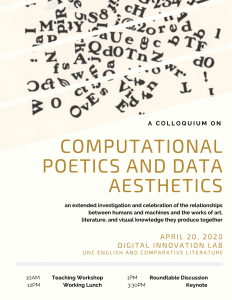
Colloquium on Computational Poetics and Data Aesthetics

作者siteslab

On April 20, 2020, the Digital Innovation Lab (DIL) will hold a Colloquium on Computational Poetics and Data Aesthetics, as an extended investigation and celebration of the relationships between humans and machines and the works of art, literature, and visual knowledge they produce together.

The advent of computing has changed the work of artists and writers. Tools for working with data have similarly foregrounded aesthetic choices when representing knowledge. This colloquium seeks to showcase exciting and original work and research at the intersections of digital humanities and arts, expand our horizons through a roundtable and workshop led by working artists, scholars, and digital practitioners, and discuss emergent ethical questions in the field, as they relate to labor practices, data, and digital infrastructure.


Proposals for roundtable presenters are welcome on any aspect of these themes, in particular, but not limited to:
—The relationships between humans and machines
—The relationships between computation, quantitative methods, and aesthetics
—Ethical questions related to visualizations and computation
—E-poetry and the frontiers of poetry at intersection of technology and literature
—Digital labor practices, digital infrastructures, and funding mechanisms
—Art and digital practice, digital aesthetics
—The relationship between digital arts and digital humanities

The deadline is March 16 to submit a proposal for the roundtable.

For more information about the Digital Innovation Lab or for any questions about the upcoming colloquium, please contact Dan Anderson (iamdan@live.unc.edu) or Carly Schnitzler (cschnitz@live.unc.edu).

  •  

Spring 2020 Digital Humanities Certificate Classes

Course offerings are subject to change. Contact department staff or faculty for the most up-to-date information.


Communications


COMM 635: Documentary Production

TuTh 9:30AM – 12:15 PM, Swain Hall 106A, Julia Haslett

Prerequisite, COMM 230. A workshop in the production of video and/or film nonfiction or documentary projects. The course will focus on narrative, representational, and aesthetic strategies of documentary production.

COMM 638: Game Design

TuTh 11:00AM – 12:15 PM, Swain Hall 115A, Joyce Rudinsky

Prerequisite, COMM 150. Permission of the instructor for non-majors. Studio course that explores gaming critically and aesthetically. Practice in game design and production including three-dimensional worlds and scripting.


COMM 650: Cultural Politics of Global Media Culture

MoWe 1:25PM- 2:40 PM, Phillips 228, Michael Palm

Prerequisite, COMM 140. Permission of the instructor for students lacking the prerequisite. Primary subjects will be popular culture and media technology, and guiding questions will be organized around the relationships of each to commerce and/as social change.


COMM 654: Motion Graphics, Special Effects, and Compositing

MoWe 9:05AM – 10:05AM, Swain Hall 108A, Edward Rankus 

Prerequisites, COMM 130 or COMM 150 with a C or better, Department Consent Required. In this course course students will learn a wide range of post-production techniques for video projects, using primarily After Effects (and Photoshop to a lesser extent). Topics explored include: Compositing, that is to say the integration and collage-ing of multiple video/film/still/text layers. Motion Graphics deals with the movement through 2D and 3D screen space of these layers, and Visual Effects will consider the myriad ways one can distort, color manipulate, and modify these layers, or create such phenomena as clouds, fire, etc. Besides creating projects using these techniques, we will also screen and analyze how this form of image manipulation is used in television and motion pictures.


COMM 666: Media in Performance

TBA

In Media in Performance, students will acquire advanced skills and explore critical approaches that are necessary for creating advanced, professional multi-media works in concert with live performance. Working collaboratively, using text, music, and devising processes, students will refine their understanding of the concepts and processes of creating multi-media theatre and build performance works that marry live and mediated elements in a fully integrated experience.


Computer Science

COMP 410: Data Structures

MoWe 1:25PM – 2:40PM, Stone Center 103, Paul Stotts 

Prerequisite, COMP 401. The analysis of data structures and their associated algorithms. Abstract data types, lists, stacks, queues, trees, and graphs. Sorting, searching, hashing.


COMP 411: Computer Organization

MoWe 11:15AM – 12:30PM, Coker 201, Montek Singh

TuTh 3:30PM – 4:45PM, Sitterson 0014, Brent Munsell

Prerequisite, COMP 401. Digital logic, circuit components. Data representation, computer architecture and implementation, assembly language programming.


COMP 585: Serious Games

MoWe 11:15AM – 12:30PM, Sitterson 011, Diane Pozefsky

Fr 11:15AM – 12:30PM, Sitterson 0014, Diane Pozefsky

Prerequisite, COMP 410 or 411. Concepts of computer game development and their application beyond entertainment to fields such as education, health, and business. Course includes team development of a game.


Geography

GEOG 491: Introduction to GIS

TuTh 11:00AM – 12:15PM, Carolina Hall 0220, Andres Vina-Vizcaino

Prerequisite, GEOG 370. Permission of the instructor for students lacking the prerequisite. Stresses the spatial analysis and modeling capabilities of organizing data within a geographic information system. (GISci)


GEOG 591: Applied Issues in GIS

TuTh 9:30AM – 10:45AM, Carolina Hall 0322, Jun Liang

Prerequisite, GEOG 477, 491, or equivalent. Through a novel research workshop format, this graduate and undergraduate course explores political and geographical dimensions of technological change around key environmental issues–energy, water, and waste. The class is largely a research-project oriented course. Examples of the work produced can be found on the course’s page on Digital Atlases and Resource Pages.


GEOG 592: Geographic Information Science Programming

TuTh 12:30AM – 1:45AM, Carolina Hall 0322, Jun Liang 

Prerequisite, GEOG 370 or 491. This course will teach students the elements of GISci software development using major GIS platforms. Students will modularly build a series of applications through the term, culminating in an integrated GIS applications program.


Information and Library Science

INLS 509: Information Retrieval

Section 001: Mo 5:45PM – 8:30PM, Manning 001, Jaime Arguello

Section 002: TuTh 9:30AM – 10:45AM, Manning 208, Yue Wang

Study of information retrieval and question answering techniques, including document classification, retrieval and evaluation techniques, handling of large data collections, and the use of feedback.


INLS 512: Applications of Natural Language Processing

TuTh 12:30PM – 1:35PM, Manning 001, Stephanie Haas

Prerequisite: COMP 110, COMP 116, or COMP 121.
Students with graduate standing in SILS may take the course without the prerequisite. Applications of natural language processing techniques and the representations and processes needed to support them. Topics include interfaces, text retrieval, machine translation, speech processing, and text generation. Cross-listed as COMP 486.


INLS 520: Organization of Information

Section 001: Tu 2:00PM – 4:45PM, Manning 301, Megan Winget

Section 002: Tu 5:45PM – 8:30PM, Manning 307, Megan Winget

Introduction to the problems and methods of organizing information, including information structures, knowledge schemata, data structures, terminological control, index language functions, and implications for searching.


INLS 523: Intro to Database Concepts and Applications

Section 001: Mo 5:45PM – 8:30PM, Manning 208, Adam Lee

Section 002: TuTh 12:30PM – 1:45PM, Manning 307, Eric Chernoff

Section 003: Web, Stephanie Haas

Pre- or corequisite, INLS 161 or 461. Design and implementation of basic database systems. Semantic modeling, relational database theory, including normalization, indexing, and query construction, SQL.


INLS 525: Electronic Record Management

Web, Heather Barnes

Explores relationships between new information and communication technologies and organizational efforts to define, identify, control, manage, and preserve records. Considers the importance of organizational, institutional and technological factors in determining appropriate recordkeeping strategies.


INLS 541: Information Visualization 

MoWe 10:10AM – 11:25PM, Manning 307, Bradley Hemminger

An introduction to information visualization through reading current literature and studying exemplars. The course reviews information visualization techniques, provides a framework for identifying the need for information visualization, and emphasizes interactive electronic visualizations that use freely available tools. Students will construct several visualizations. No programming skills are required.


INLS 560: Programming for Information Professionals

Section 001: TuTh 12:30PM – 1:45PM, Manning 014, Sayamindu Dasgupta

Section 002: Th 5:45PM – 8:30PM, Manning 014, Jason Carter

Online, Stephen Pearson

Introduction to programming and computational concepts. Students will learn to write programs using constructs such as iteration, flow control, variables, functions, and error handling. No programming experience required.


INLS 572: Web Development I

Section 001: TuTh 9:30AM – 10:45AM, Manning 0014, Joan Boone

meets 1/9/2020-2/25/2020

Prerequisite, INLS 161 or 461. Introduction to Internet concepts, applications, and services. Introduces the TCP/IP protocol suite along with clients and servers for Internet communication, browsing, and navigation. Examines policy, management, and implementation issues.Introduction to programming and computational concepts. Students will learn to write programs using constructs such as iteration, flow control, variables, functions, and error handling. No programming experience required.


INLS 573: Mobile Web Development

Section 001: TuTh 9:30AM – 10:45AM, Manning 0014, Joan Boone

meets 2/27/2020-4/23/2020

An introduction to techniques and technologies for the development of mobile websites and applications. Topics include responsive web design, content strategy for mobile, performance considerations, using mobile frameworks, such as W3.CSS, Bootstrap, and Foundation. Basic Knowledge of HTML is required, and familiarity with CSS and JavaScript is recommended.


INLS 582: Systems Analysis

Section 001: MoWe 1:25PM – 2:40PM, Manning 307, Lukasz Mazur 

Section 002: We 5:45PM – 8:30PM, Manning 001, Selina Sharmin

Introduction to the systems approach to the design and development of information systems. Methods and tools for the analysis and modeling of system functionality (e.g., structured analysis) and data represented in the system (e.g., object oriented analysis) are studied. Undergraduates are encouraged to take INLS 382 instead of this course.


INLS 613: Text Mining

Section 001: MoWe 10:10AM – 11:25AM, Manning 001, Jaime Arguello

This course will allow the student to develop a general understanding of knowledge discovery and gain a specific understanding of text mining. Students will become familiar with both the theoretical and practical aspects of text mining and develop a proficiency with data modeling text. Offered annually.


INLS 623: Database Systems II: Intermediate Databases

We 5:45PM – 8:30PM, Manning 208, Ramanarao Chamarty

Prerequisites, INLS 382 or 582, and 523. Intermediate-level design and implementation of database systems, building on topics studied in INLS 523. Additional topics include MySQL, indexing, XML, and non-text databases.


INLS 718: User Interface Design

Tu 5:45PM – 8:30PM, Manning 208, Fei Yu

Prerequisite: INLS 582. Basic principles for designing the human interface to information systems, emphasizing computer-assisted systems. Major topics: users’ conceptual models of systems, human information processing capabilities, styles of interfaces, and evaluation methods.


INLS 740: Digital Libraries 

Online, Grace Shin

Research and development issues in digital libraries, including collection development and digitization; mixed mode holdings; access strategies and interfaces; metadata and interoperability; economic and social policies; and management and evaluation.


INLS 756: Data Curation and Management

Online, Helen Tibbo

Explores data curation lifecycle activities from design of good data, through content creator management, metadata creation, ingest into a repository, repository management, access policies, and implementation, and data reuse.


Music

MUSC 676: Digital Media and Live Performance

Mo 4:00PM-6:45PM, Swain 104, Joseph Megel, Lee Weisert


Media and Journalism

MEJO 581: UX Design and Usability

TuTh 12:30PM – 1:45PM, Carroll 011, Laura Ruel

Prerequisite, MEJO 187. Permission of the instructor for students lacking the prerequisite. Theory and practice of multimedia design with an emphasis on usability, design theory, and evaluative methodologies, including focus groups, survey research, eye-track testing, and search engine optimization.


MEJO 583: Advanced Interactive Media

MoWe 12:00PM-1:45PM, Carroll 0058, Steven King

Prerequisite, JOMC 187. Permission of the school. Advanced course in multimedia programming languages that includes designing and building dynamic projects.


MEJO 671: Social Marketing Campaigns

TuTh 9:30AM-10:45AM, Carroll 0058, Seth Noar

Social marketing is the application of marketing concepts and practices to bring about behavior change for a social good. This course is designed as a service learning course and fulfills the experiential education requirement.


MEJO 712: Visual Communication and Multimedia

Section 001: TBA, Melissa Eggleston

Section 002: TBA, Xiaoxin Zhu

Focusing on the new communication technologies that have created new media, new language and new visual interfaces, this course introduces the student to principles and concepts of visual communication and design and how they are being used in this new cyber medium. Students will learn the rich history of visual images and the conceptual framework of visual communication.

They will examine elements of visual images to learn basic design theory and techniques. These visual information concepts will then be applied to the Internet. Students will learn to analyze how diverse visual elements are used in graphics and graphics design, page design, site planning and navigation, and computer system and human interface design, as well as usability, navigation and accessibility. This course is offered online. JOMC 712 is open to non-JOMC graduate students on a space-available basis.

  •  

2019 Graduate Certificate Recipients

The Graduate Certificate in Digital Humanities recognizes students who have expertise in digital approaches to teaching and research. This year, four graduate students received the certificate, each bringing their own unique perspective and experience to their work.

Mary Currin, Family Recruitment Coordinator at UNC, applies her data management and research expertise to medical fields, but her work in the program required her to branch out. “The Digital Humanities Certificate offered me the chance to explore data in a different context,” she says. “The majority of my courses were taken in the Information and Library Science Department, and I also had the opportunity to complete a placement at the State Archives.” Her work incorporated studies such as programming, metadata, and data curation.
Carlos Vázquez Cruz worked to complete an online edition of the picaresque gay novel from Puerto Rican writer Juan Antonio Rodríguez Pagán, Ondergraund.com. The novel began on a blog, but Pagán died before he was able to complete the full story. “While taking the courses leading to the DH Certification, my idea of completing Rodríguez Pagán’s work changed drastically,” says Carlos. In an effort to honor the “hypertext version initially proposed by Rodríguez Pagán,” Carlos added hyperlinks and tooltips. “But this is not the end of it,” he says. “I would like to join a DH community in the future to turn this project into a hypermedia novel.”
Kristen Foote, a PhD student in French and Francophone Studies, has been working in the digital humanities for years, most recently in the Digital Innovation Lab on campus, gaining experience with digital pedagogy, text analysis, and the administration of digital humanities programs. She is currently pursuing a fellowship in France, continuing her work to develop a digital corpus in order to analyze a disputed sixteenth-century French text.
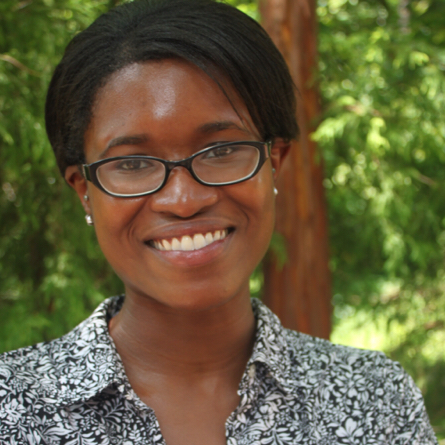
Laurel Foote-Hudson, PhD student in English and Comparative Literature, has worked with several disciplines and digital tools while pursuing the certificate. “Over the years, I have worked with methods such as cultural and literary analysis,” she says, “but this program provided me with a new context to pursue several of the technical skills I have, but have not directly applied to my research.” Her first project involved establishing “a database and related taxonomy to build a comparison-focused data visualization (using tools such as D3 and Tableau),” while her second project saw “the development of an original short demo of an adaptation of the Japanese kabuki play Chūshingura using the Unity 3D game engine.”
This year’s recipients report that the Graduate Certificate Program has helped them leave their comfort zones and find new ways to approach their work. “I found I really enjoyed working in this program because I could directly apply the skills I learned as a comparatist in a totally different way,” Laurel says. Due to the nature of the digital humanities, the program often finds participants crossing over into other disciplines and working with students and professionals in different fields. Mary says, “I found it surprising that the fundamentals and practice of data and data management translate so seamlessly between disciplines.”

The program also brings students into a larger digital humanities academic community. Kristen believes that one of the program’s main rewards is “exposure to the variety of DH-related projects that people are doing right now at UNC and in the Triangle.” So while these digital humanities projects require a student’s unique personal perspective, many elements of the program are collaborative in nature. Laurel describes the importance of working with fellow students and faculty, saying, “Some of the most rewarding moments for me involved working on projects with peers in Information Science to resolve problems affecting healthcare workers, as well as working on a separate project in education technology to build a chatbot interface prototype for Rhetoric and Composition instructors interested in lesson plans related to 3D printing.”

Collaboration is also necessary between students and professors, and Carlos says that a key factor of his success in the program was the availability of his teachers. “In my case, pursuing the DH Certificate required intensive individual attention,” says Carlos. He cites Dr. Alicia Rivero, “who first introduced [him to] digital literature and talked about the DH certificate in 2015,” as well as Dr. Whitney Trettien, Dr. Laura Ruel, and Dr. Daniel Anderson.

The benefits of the Graduate Certificate Program continue long after graduation. When discussing her experiences in the program, Kristen says that they “opened my eyes to new possibilities for projects, directions, and collaborations that I hope to pursue in the future.”

“One of the largest benefits was that the certificate served as a segue for my volunteer and freelance projects after graduating,” Laurel says. “This has grown my professional network and ultimately shaped the disciplines in which I would like to further expand my career.” Carlos has also seen the advantages to working in the program, and is excited for his future work. As the result of his Digital Humanities Project, he was invited to be the keynote speaker at the 2020 Caribbean Literatures Conference at Marquette University. In regards to Digital Humanities work, Mary stated that, “I hope to continue with this course of study by exploring the ways that data is shaping the future of public history and the preservation of information over time.”

The digital humanities continue to expand, especially at Carolina, and the opportunities for students will only increase. As Kristen says, “[The Digital Humanities] are so broad and flexible that anyone in the humanities with an interest can get involved!”


  •  

People, Ideas, and Things (PIT) Journal: Special Issue

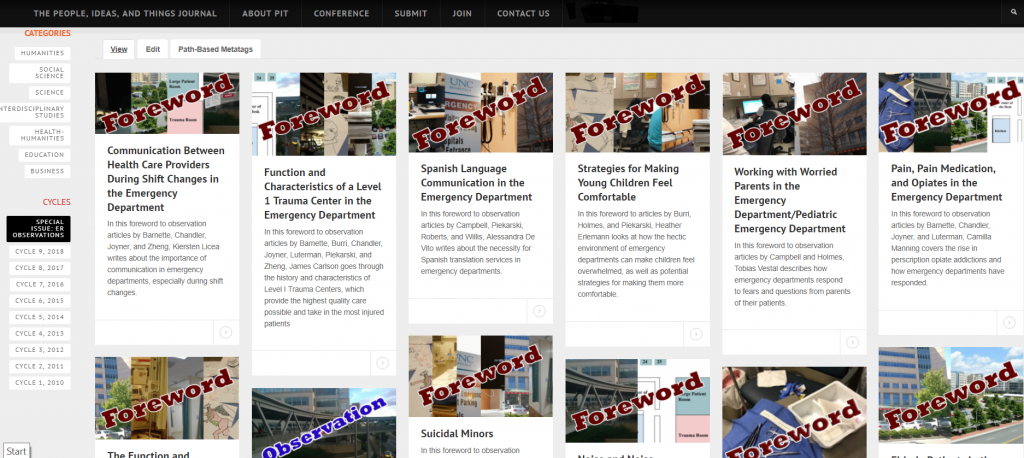
This year marks the beginning of the DIL’s support for the People, Ideas, and Things (PIT) Journal. The journal provides a platform for undergraduates to experiment with digital publishing. As part of our inaugural collaboration, we have been working on a first special issue, focusing on the observations of UNC undergraduates while shadowing in the Emergency Department at UNC Hospital. During the 2018 Fall Semester, Professor Marc Cohen’s English 105 class was allowed to spend time in the hospital and follow its doctors and nurses as they worked through their regular shifts. Using what they saw, the students went on to write articles in the observational style of journalists such as Sheri Fink. These articles were fascinating, offering a look into the complex lives of both emergency department employees and their patients. The experiences documented were incredibly diverse, and the themes varied from opioid addiction and homelessness to elderly care and noise pollution. Then, Professor Cohen’s Spring 2019 English 105 students wrote foreword articles that introduce these themes and observation pieces.

Together, these foreword and observation articles give readers a glimpse into the daily routines of emergency department professionals as they deal with everything from mundane issues to complicated social problems. The articles can be found here, on the PIT Journal website:

http://pitjournal.unc.edu/cycles/special-issue-er-observations

  •  

Charlotte Fryar Digital Dissertation

The Digital Innovation Lab would like to congratulate Charlotte Fryar on completing her digital dissertation, Reclaiming the University of the People: Racial Justice Movements at the University of North Carolina at Chapel Hill. Fryar was a 2018 Digital Dissertation Fellow, and has now completed a fully digital dissertation—a first in the humanities at UNC-CH. In addition to her connection to the Digital Innovation Lab through the digital dissertation fellowship, Fryar completed the Digital Humanities Graduate Certificate and worked for several years as a graduate research assistant in the Digital Innovation Lab.

Completed as a documentary website, Fryar’s project includes essays, maps, and audio archives that “interpret the history of how Black students and workers engaged in movements for racial justice at the University of North Carolina at Chapel Hill from 1951 to 2018 and challenged the University’s dominant cultural landscape of white supremacy.” Using a methodology that brings together public digital humanities and oral histories, Fryar has created a resource for anyone looking into racial justice at the University of North Carolina at Chapel Hill.

Congratulations Charlotte!

  •  

Fall 2019 Digital Humanities Certificate Classes

Course offerings are subject to change. Contact department staff or faculty for the most up-to-date information.


American Studies 

AMST 671: Introduction to Public History

Tu 3:30 PM – 6:00 PM, Carolina Hall 322, Anne Whisnant

Introduces the theory, politics, and practice of historical work conducted in public venues (museums, historic sites, national parks, government agencies, archives), directed at public audiences, or addressed to public issues.


Art History 

ARTH 851: alt-Methods: Digital Art History

TuTh 9:30 AM – 10:45 AM, Caldwell Hall 208, JJ Bauer

This course introduces students to current digital art history projects and practices as well as methods for approaching art historical research in new ways. We will explore concepts and case studies in digital art history and the digital humanities, experiment with software and tools, and discuss emerging trends and developments in the discipline as well as professional opportunities.


Biomedical Engineering

BMME 775 (Cross listed with COMP 775): Image Processing & Analysis

TBA, TBA, TBA

Prerequisites, COMP 665, MATH 547, and STOR 435. Approaches to analysis of digital images. Scale geometry, statistical pattern recognition, optimization. Segmentation, registration, shape analysis. Applications, software tools.Considerable prior experience in programming and mathematics is absolutely necessary for success in grad-level Computer Science courses.
Instructor permission required


Communications

COMM 431: Advanced Audio Production

TuTh 9:30 AM – 10:45 AM, Swain Hall 200A, Mark Robinson

Prerequisite, COMM 130 or 150; Grade of C or better in COMM 130; permission of the instructor for students lacking the prerequisite. Advanced analysis and application of the principles and methods of audio production.

COMM 453: Everyday Media Technology 

TuTh 2PM – 3:15 PM, Dey Hall 208, Michael Palm

Prerequisite, COMM 140. The starting point for this course, chronologically and conceptually, is the emergence of popular media technology. Our purview includes transformative innovations in mediated communication, such as telephony and e-mail, alongside familiar media technologies such as televisions and computers.


COMM 635: Documentary Production

TuTh 11AM – 12:15 PM, Swain Hall 106A, Julia Haslett

Prerequisite, COMM 230. A workshop in the production of video and/or film nonfiction or documentary projects. The course will focus on narrative, representational, and aesthetic strategies of documentary production.

COMM 638: Game Design

TuTh 11AM – 12:15 PM, Swain Hall 115A, Joyce Rudinsky

Prerequisite, COMM 150. Permission of the instructor for non-majors. Studio course that explores gaming critically and aesthetically. Practice in game design and production including three-dimensional worlds and scripting.

COMM 644: Documentary Production: First Person Filmmaking

TuTh 12:30PM- 1:45 PM, Swain Hall 106A, Julia Haslett

Prerequisite, COMM 230. Permission of the instructor for students lacking the prerequisite. Students create documentaries emphasizing the filmmaker’s personal perspective and experience: essay, diary, and autobiographical films, and pieces in which the filmmaker performs a role for expressive or political ends. Significant class time is devoted to work-shopping student films.


COMM 654: Motion Graphics, Special Effects, and Compositing

MoWe 12:20PM – 2:15PM, Swain Hall 106A, Edward Rankus 

Prerequisites, COMM 130 or COMM 150 with a C or better, Department Consent Required. In this course course students will learn a wide range of post-production techniques for video projects, using primarily After Effects (and Photoshop to a lesser extent). Topics explored include: Compositing, that is to say the integration and collage-ing of multiple video/film/still/text layers. Motion Graphics deals with the movement through 2D and 3D screen space of these layers, and Visual Effects will consider the myriad ways one can distort, color manipulate, and modify these layers, or create such phenomena as clouds, fire, etc. Besides creating projects using these techniques, we will also screen and analyze how this form of image manipulation is used in television and motion pictures.


Computer Science

COMP 410: Data Structures

MoWe 1:25PM – 2:40PM, Genome Sciences Bldg G100, Paul Stotts 

Prerequisite, COMP 401. The analysis of data structures and their associated algorithms. Abstract data types, lists, stacks, queues, trees, and graphs. Sorting, searching, hashing.


COMP 411: Computer Organization

Section 001, MoWeFr 1:25PM – 2:40PM, Sitterson 0014, Henry Fuchs

Section 002, MoWeFr 11:15AM – 12:30PM, Caroll 0111, Montek Singh

Prerequisite, COMP 401. Digital logic, circuit components. Data representation, computer architecture and implementation, assembly language programming.


COMP 426: Modern Web Programming

TuTh 3:30PM – 4:45PM, Genome Science Bldg G100, Ketan Mayer-Patel 

Prerequisites, COMP 401 and 410. Developing applications for the World Wide Web including both client-side and server-side programming. Emphasis on Model-View-Controller architecture, AJAX, RESTful Web services, and database interaction.


English

ENGL 801: Research Methods in Rhetoric Composition

TuTh 11:00AM – 1:50PM, Greenlaw 301, Jordynn Jack 

This course explores the impacts of information technology on teaching and scholarship in the humanities. Students critique and learn to integrate emerging technologies into their pedagogy and research interests.


Geography

GEOG 410: Modelling of Environmental Systems

TuTh 11:00AM – 12:15PM, Carolina Hall 0322, Conghe Song

Uses systems theory and computer models to understand ecosystem energy and matter flows, such as energy flow in food webs, terrestrial ecosystem evapotranspiration and productivity, related to climate, vegetation, soils, and hydrology across a range of spatial and temporal scales.


GEOG 491: Introduction to GIS

TuTh 2:00PM – 3:15PM, Carolina Hall 0220, Xiaodong Chen

Prerequisite, GEOG 370. Permission of the instructor for students lacking the prerequisite. Stresses the spatial analysis and modeling capabilities of organizing data within a geographic information system. (GISci)


GEOG 541: GIS for Public Health

Mo 3:35PM – 6:35PM, Carolina Hall 0322, Paul Delamater

Explores theory and application of geographic information systems (GIS) for public health. The course includes an overview of the principles of GIS in public health and practical experience in its use. (GISci)


GEOG 591: Applied Issues in GIS

TuTh 9:30AM – 10:45AM, Carolina Hall 0322, Jun Liang

Prerequisite, GEOG 477, 491, or equivalent. Through a novel research workshop format, this graduate and undergraduate course explores political and geographical dimensions of technological change around key environmental issues–energy, water, and waste. The class is largely a research-project oriented course. Examples of the work produced can be found on the course’s page on Digital Atlases and Resource Pages.


GEOG 592: Geographic Information Science Programming

TuTh 2:00PM – 3:15PM, Carolina Hall 0322, Jun Liang 

Prerequisite, GEOG 370 or 491. This course will teach students the elements of GISci software development using major GIS platforms. Students will modularly build a series of applications through the term, culminating in an integrated GIS applications program.

GEOG 650: Technology and Democracy

TuTh 2:00PM – 3:15PM, Hamilton Hall 150, Scott Kirsch

Are technological choices open to democratic participation? Through a novel research workshop format, this graduate and undergraduate course explores political and geographical dimensions of technological change around key environmental issues–energy, water, and waste. The class is largely a research-project oriented course. Examples of the work produced can be found on the course’s page on Digital Atlases and Resource Pages.


Information and Library Science

INLS 509: Information Retrieval

Section 001: Mo 5:45PM – 8:30PM, Manning 001, Jaime Arguello 

Section 002: TuTh 9:30AM – 10:45AM, Manning 208, Yue Wang

Study of information retrieval and question answering techniques, including document classification, retrieval and evaluation techniques, handling of large data collections, and the use of feedback.


INLS 520: Organization of Information

Section 001: Tu 2:00PM – 4:45PM, Manning 307, Megan Winget 

Section 002: Tu 5:45PM – 8:15PM, Manning 307, Megan Winget

Online, Staff

Introduction to the problems and methods of organizing information, including information structures, knowledge schemata, data structures, terminological control, index language functions, and implications for searching.


INLS 523: Intro to Database Concepts and Applications

Section 001: MoWe 12:20PM – 1:35PM, Manning 001, Eric Chernoff

Section 002: Mo 5:45PM – 8:15PM, Manning 117, Adam Lee

Section 003: TuTh 9:30AM – 10:45AM, Manning 001, Robert Capra

Online, Staff

Pre- or corequisite, INLS 161 or 461. Design and implementation of basic database systems. Semantic modeling, relational database theory, including normalization, indexing, and query construction, SQL.


INLS 525: Electronic Record Management

Th 5:45PM – 8:15PM, Manning 208, Alexandra Chassanoff

Explores relationships between new information and communication technologies and organizational efforts to define, identify, control, manage, and preserve records. Considers the importance of organizational, institutional and technological factors in determining appropriate recordkeeping strategies.


INLS 534: Youth and Technology in Libraries

We 10:10AM – 12:40PM, Manning 014, Sandra Hughes- Hassell 

This course encourages students to explore the array of technologies available to children and adolescents, the issues surrounding the use of technology, the role of care givers, and potential impacts on development.


INLS 560: Programming for Information Professionals

Section 001: TuTh 11:00AM – 12:15PM, Manning 117, Boone

Section 002: Th 5:45PM – 8:30PM, Manning 001, Jason Carter

Online, Gotz

Introduction to programming and computational concepts. Students will learn to write programs using constructs such as iteration, flow control, variables, functions, and error handling. No programming experience required.


INLS 582: Systems Analysis

Section 001: MoWe 1:25PM – 2:40PM, Manning 307, Lukasz Mazur 

Section 002: Mo 5:45PM – 8:30PM, Manning 307, Staff

Section 003: We 5:45PM-8:30PM, Manning 307, Andreas Orphanides

Introduction to the systems approach to the design and development of information systems. Methods and tools for the analysis and modeling of system functionality (e.g., structured analysis) and data represented in the system (e.g., object oriented analysis) are studied. Undergraduates are encouraged to take INLS 382 instead of this course.


INLS 613: Text Mining

MoWe 11:15AM – 12:30PM, Manning 307, Jaime Arguello

This course will allow the student to develop a general understanding of knowledge discovery and gain a specific understanding of text mining. Students will become familiar with both the theoretical and practical aspects of text mining and develop a proficiency with data modeling text. Offered annually.


INLS 620: Web Information Organization

TuTh 11:00AM – 12:15PM, Manning 208, Patrick Golden

Prerequisites, INLS 520 or 560. Similar programming background needed. Understand the Web as a platform for information organization systems. Learn how the Web has been designed to be a service platform, data publishing platform, and application platform.


INLS 623: Database Systems II: Intermediate Databases

We 5:45PM – 8:15PM, Manning 001, Ramanarao Chamarty

Prerequisites, INLS 382 or 582, and 523. Intermediate-level design and implementation of database systems, building on topics studied in INLS 523. Additional topics include MySQL, indexing, XML, and non-text databases.


INLS 700: Scholarly Communication

TuTh 11:00AM – 12:15PM, Manning 304, Bradley Hemminger

Addresses how scholarship is communicated, shared, and stored. Includes scholars approach to academic work; social relationships within academia; external stakekholders in the scholarly communication system; and emerging technologies’ impact upon work practices. Topics covered include academic libraries and presses, publishing, serials crisis, open access, peer review and bibliometrics. Offered in the fall


INLS 718: User Interface Design

Tu 5:45PM – 8:30PM, Manning 208, Fei Yu

Prerequisite: INLS 582. Basic principles for designing the human interface to information systems, emphasizing computer-assisted systems. Major topics: users’ conceptual models of systems, human information processing capabilities, styles of interfaces, and evaluation methods.


INLS 720: Metadata

Online,TBA

Examines metadata in the digital environment. Emphasizes the development and implementation of metadata schemas in distinct information communities and the standards and technological applications used to create machine understandable metadata. Explores the limits of metadata standards and critically examines the inevitable role of interpretive diversity for information systems. Our semester-long project will engage the challenge of designing and implementing standards and guidelines for interoperable metadata while acknowledging the messy reality of interpretive diversity.


INLS 752: Digital Preservation and Access

Tu 2:00PM – 4:45PM, Manning 304, Tibbo

Focuses on best practices for the creation, provision, and long-term preservation of digital entities. Topics include digitization technologies; standards and quality control; digital asset management; grant writing; and metadata.


Media and Journalism

MEJO 581: UX Design and Usability

TuTh 12:30PM – 1:45PM, Carroll 0011, Laura Ruel 

 Prerequisite, MEJO 187. Permission of the instructor for students lacking the prerequisite. Theory and practice of multimedia design with an emphasis on usability, design theory, and evaluative methodologies, including focus groups, survey research, eye-track testing, and search engine optimization.


MEJO 582: Advanced Documentary Storytelling

MoWe 2:00PM – 3:45PM, Carroll 0060, Chad Stevens

Permission of the instructor. Students work on a semester-long documentary multimedia project that includes photo and video journalists, audio recordists, designers, infographics artists, and programmers. Open by application to students who have completed an advanced course in visual or electronic communication.


MEJO 585: 3D Design Studio

MoWe 8:00AM – 9:45AM, Carroll 0059, Spencer Barnes

Prerequisites, MEJO 187 and 182. Permission of the instructor. The use of 3D design and animation to create visual explanations.


MEJO 671: Social Media Marketing Campaigns

MoWe 12:30PM – 1:45PM, Carroll 340A, Seth Noar

Social marketing is the application of marketing concepts and practices to bring about behavior change for a social good. This course is designed as a service learning course and fulfills the experiential education requirement.


MEJO 721: Usability and Multimedia

TBA, Laura Ruel

Introduces students to five basic areas of multimedia design and develops expertise in each. By examining the latest eye-tracking research and usability testing, students will assess the practical application of many concepts. Through critiques and original storyboards, students will work to expertly integrate all this knowledge into well-designed packages


MEJO 782: Multimedia Storytelling

TuTh 3:30PM – 5:15PM, Carroll 058, Laura Ruel 

Theories and practices of multimedia content creation. Students gain critical understanding of various multimedia presentation methods. Hands-on experience with audio/video collection/editing.

  •  

Graduate Certificate Interview: Bradley Erickson

Bradley Erickson completed the Graduate Certificate in Digital Humanities in Spring 2018. Current DIL student staff member Henry McKeand checked in with him a year later.

Brad Erickson

What was the subject of your Certificate research? Did your work in the program differ from what you had done before?

For my certificate project, I created 3D models of a series of cuneiform tablets housed in the special collection of Wilson Library. Because these tablets are delicate and housed in special collections, it can be difficult for other scholars or the public to access them. The end product was a display of the series of 3D models online (they can be viewed here: https://skfb.ly/6wwvF) as well as a series of 3D prints of the tablets.

To make the models, I used the process of Structure-from-Motion and photogrammetry to complete the models. These processes involves taking and using 2D photographs to generate a 3D object. I have been practicing photogrammetry since learning about it, and I have used a similar method in creating 3D models for my dissertation, which explores the ancient Jewish use of astronomy in the architecture of the ancient synagogue.

While completing the digital humanities certificate, I was fortunate to take a range of classes that let me explore creating 3D models, making maps, and using a number of different programming languages to complete tasks. Taking courses for the completion of the certificate has made it possible for me to engage with research that I never knew was possible before coming to UNC.

Describe your experience in the program. What were the challenges and rewards?

The series of courses that I took while completing the digital humanities certificate taught me new, critical ways to approach large projects. For example, before beginning a digital project a number decisions must be made about how the project will be presented at conferences, to the general public, and how the digital components will be preserved. Thinking about the ultimate end of a digital project forced me to structure the project’s work in a way to address those end goals. For example, one project included the fabrication of ancient glass oil lamps that would have hung in an ancient monumental building. I was interested in measuring the light output of such a lamp to envision how many light sources would be required. To complete the project I created a polycandelon (i.e. an ancient chandelier) and then built and 3D printed a series of oil lamps. I met with a glass blower who turned the 3D prints into actual pieces of glass. A colleague and I then filled the oil lamps with olive oil, wove flax wicks, and lit the lamps. We measured the light output using a luxmeter, which I then incorporated into 3D models of ancient synagogue buildings. This project is nearly complete and will be available for anyone to access the process and data. Such a large project took a lot of planning, and at the same time, it also took flexibility.

What was your biggest takeaway from the program? In what ways, if any, has receiving the Certificate benefited you?

The biggest take away from the program has been the spirit of collaboration between so many different fields. Digital humanities is not a solitary field, but requires everyone to bring skills to the table for mutual benefit. New jobs have opened for me both on and off campus that I would not have been able to do before completing the digital humanities certificate. I appreciate the professors and certificate directors who have opened these new career doors for me.

  •